I. Introduction: Packaging Is Becoming a Market Entry Requirement
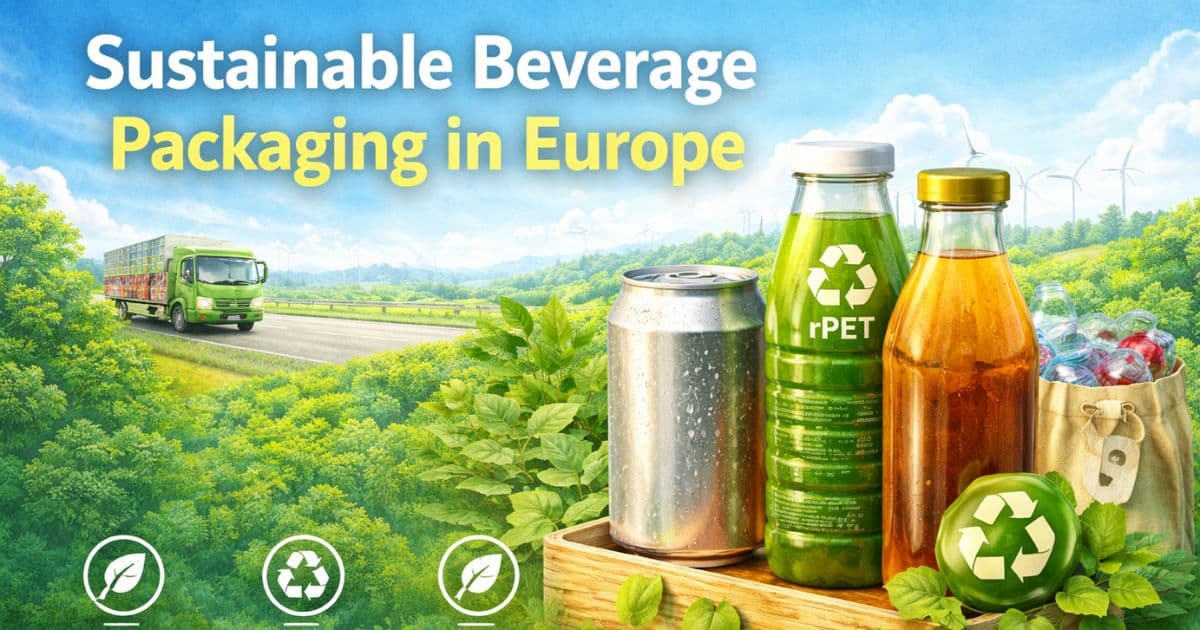
By 2026, the European beverage market is undergoing a structural shift where packaging is no longer just a functional element—it is a regulatory requirement and competitive differentiator.
Driven by policies such as the Packaging and Packaging Waste Regulation (PPWR), Extended Producer Responsibility (EPR), and Deposit Return Schemes (DRS), companies must align their packaging strategies with sustainability standards to maintain access to the EU market.
At the same time, consumer expectations are rising. According to the European Investment Bank, more than 60% of EU consumers consider environmental impact when making purchasing decisions. This means packaging now directly influences both compliance and commercial success.
II. Sustainable Packaging: Compliance, Cost & Competitiveness
In Europe, sustainable packaging sits at the intersection of three critical factors:
Compliance: Meeting EU regulations (PPWR, SUPD, EPR)
Cost Efficiency: Reducing EPR fees and optimizing logistics
Market Positioning: Aligning with eco-conscious consumers
According to the European Commission, all packaging must be recyclable by 2030, with implementation phases already impacting 2026 operations.
What is PPWR and why does it matter?
PPWR is the EU’s core regulation on packaging waste. It requires packaging to be recyclable by design, reduces unnecessary materials, and enforces stricter labeling and waste management standards.
III. Key Regulatory Changes in 2026
1. Recyclable-by-Design Becomes Mandatory
Packaging must be designed for recyclability:
Eliminate complex or mixed materials
Improve sorting and labeling systems
Align with circular economy standards
Will all packaging need to be recyclable?
Yes. Non-recyclable packaging risks being restricted or excluded from the EU market.
2. Recycled Content Requirements (PET Focus)
Under the Single-Use Plastics Directive (SUPD):
PET bottles must include 25% recycled content by 2025
Increasing to 30% by 2030
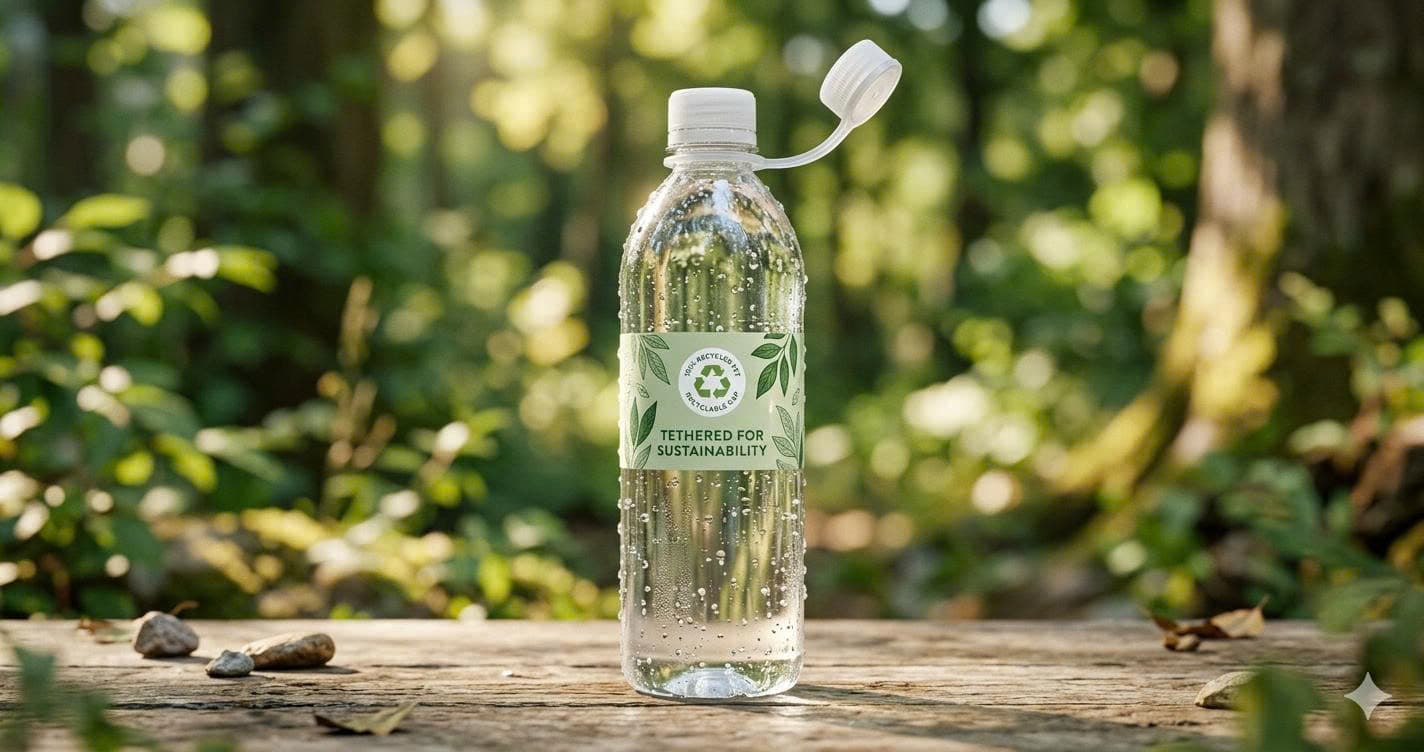
This creates strong demand for rPET, with supply expected to be limited.
Why is rPET critical?
Because it is both a regulatory requirement and a key factor in reducing plastic waste and EPR costs.
3. Expansion of Deposit Return Schemes (DRS)
DRS systems are expanding across Europe:
Countries like Germany and Norway achieve over 90% return rates
Strong influence on packaging selection
What is DRS?
A system where consumers return empty containers for a refund, significantly increasing recycling rates.
4. Extended Producer Responsibility (EPR)
EPR shifts the financial burden of waste management to producers.
How does EPR affect beverage brands?
Companies using less sustainable packaging pay higher fees, while recyclable materials reduce long-term costs.
IV. Why Material Choice Matters?
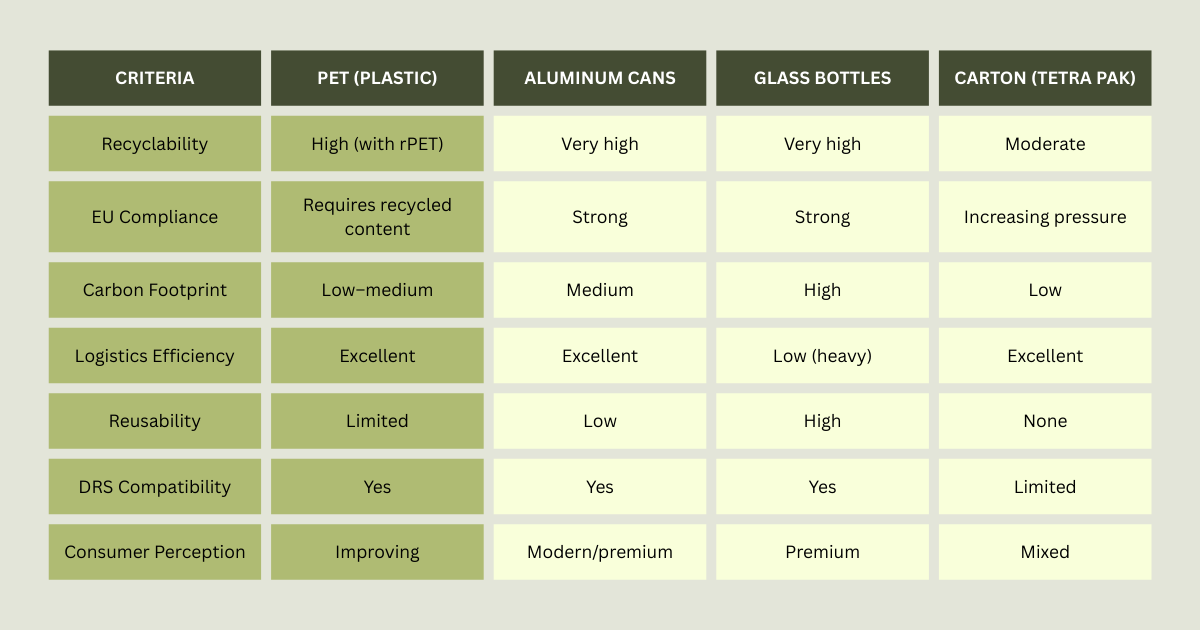
Material selection is central to compliance and sustainability performance.
According to Eurostat:
Glass recycling rate: ~76%
Metal recycling rate: ~76%
Plastic recycling rate: ~41%
Additionally:
Recycling aluminum saves up to 95% of energy (European Aluminium)
Over 75% of all aluminum ever produced is still in use today
Which material is most sustainable?
Aluminum and glass lead in recyclability, while rPET is becoming the standard for plastic packaging.
V. Conclusion: Packaging Will Define Market Success
By 2026, packaging is no longer just a container—it is:
A compliance requirement
A cost driver
A brand differentiator
Companies that proactively adapt to sustainable packaging standards will not only avoid regulatory risks but also unlock long-term growth in the European market.
Why is sustainable beverage packaging critical for the European market by 2026?
By 2026, sustainable packaging will transition from an environmental initiative to a strict regulatory requirement. Driven by frameworks like the Packaging and Packaging Waste Regulation (PPWR) and Extended Producer Responsibility (EPR), compliant packaging is essential for securing EU market access and meeting the demands of over 60% of eco-conscious consumers.
What is the Packaging and Packaging Waste Regulation (PPWR)?
The PPWR is the European Union's foundational regulatory framework for packaging waste. It mandates that all packaging must be recyclable by design, restricts the use of superfluous materials, and enforces rigorous standards for labeling and end-of-life waste management.
Will all beverage packaging in Europe need to be recyclable?
Yes. The European Commission mandates that all packaging must be fully recyclable by 2030, with critical implementation phases taking effect by 2026. Non-compliant packaging will face severe market restrictions, prohibitive tariffs, or outright exclusion from the European Economic Area (EEA).
What are the specific recycled content requirements for PET beverage bottles in Europe?
Under the Single-Use Plastics Directive (SUPD), PET beverage bottles must incorporate a minimum of 25% recycled content by 2025. This mandatory quota will increase to 30% by 2030, requiring beverage brands to proactively adjust their procurement and manufacturing strategies.