Quick Answer
I. Two Popular Refreshing Drinks with Unique Characteristics
In the global beverage market, both aloe vera drink and coconut jelly drinks are widely enjoyed for their refreshing taste and unique texture. These beverages are especially popular in warm climates and are often served chilled for a more refreshing experience.
Although they may appear similar at first glance—both containing chewy jelly-like pieces inside a sweet beverage—aloe vera drinks and coconut jelly drinks are quite different in terms of ingredients, texture, flavor, and consumer appeal.
Understanding these differences can help consumers and beverage businesses choose the right product for different markets and preferences.
II. Ingredient Source
The main difference between these two drinks lies in their primary ingredients.
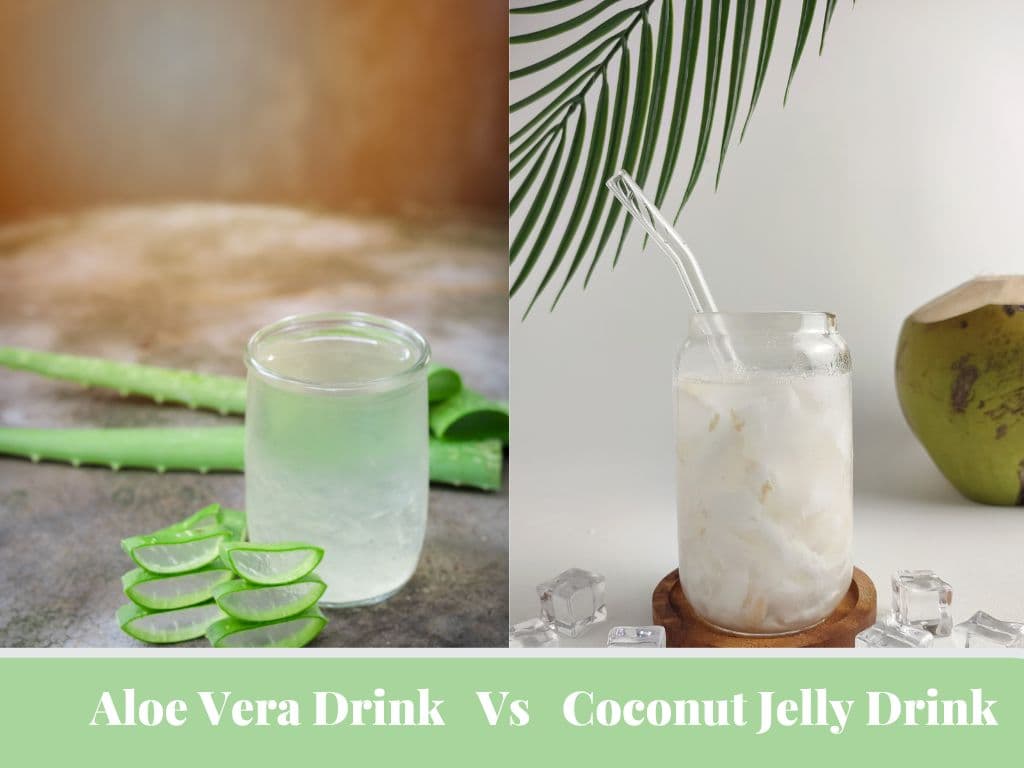
Aloe vera drink is made from the inner gel of the aloe vera plant. The gel is cut into small cubes and mixed with lightly sweetened juice or flavored beverages.
Coconut jelly drinks, on the other hand, typically contain nata de coco, a chewy jelly made from fermented coconut water. This ingredient is widely used in desserts and tropical beverages.
III. Texture and Mouthfeel
Texture is one of the most noticeable differences between the two beverages.
- Aloe vera drink contains soft, tender aloe pulp that feels smooth and slightly crunchy when consumed.
- Coconut jelly drinks have firmer, more elastic jelly cubes that provide a chewy texture.
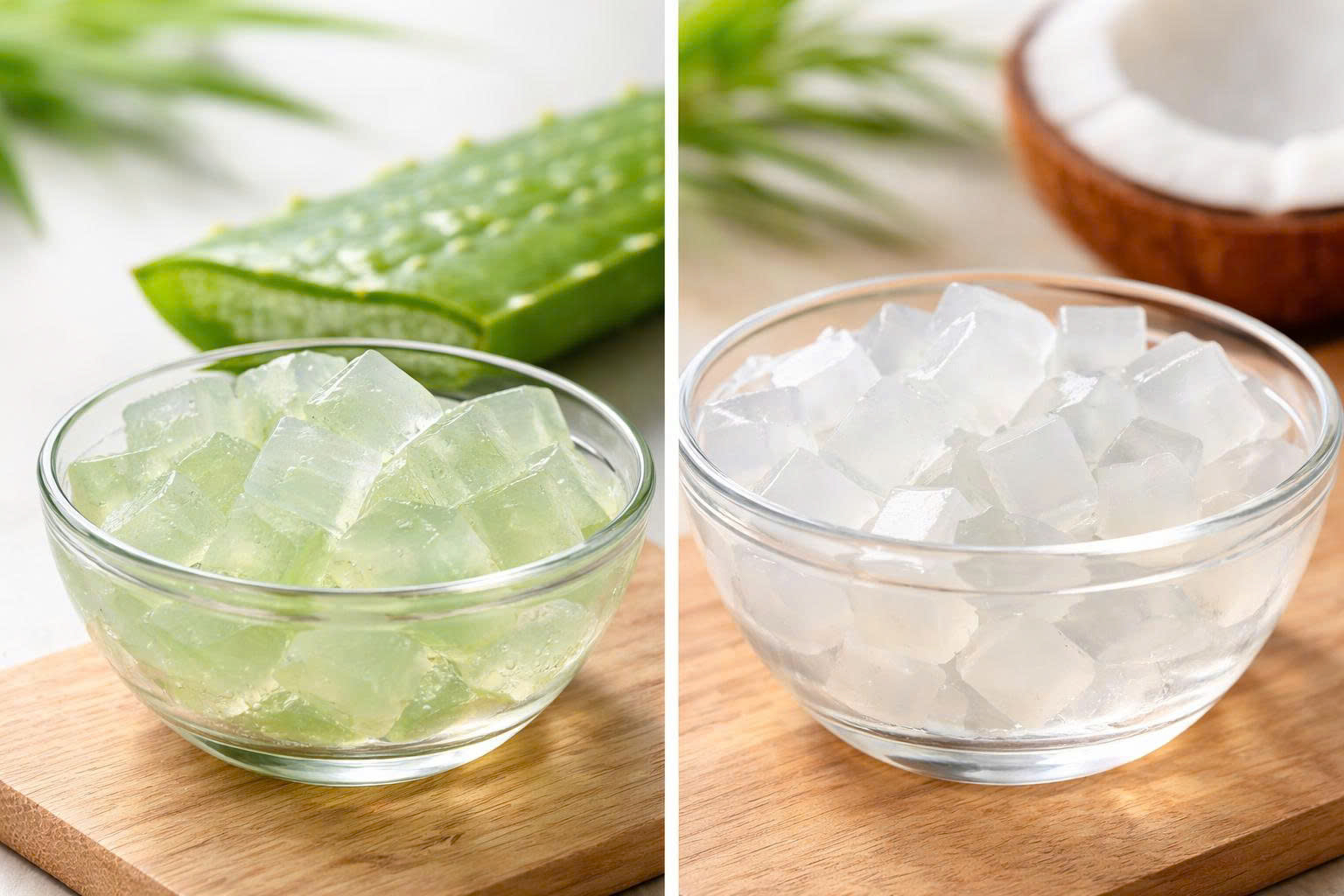
Because of this, aloe vera drinks often feel lighter and more refreshing, while coconut jelly drinks offer a more dessert-like experience.

IV. Flavor Profile
The flavor of these drinks also varies significantly.
Aloe vera drink usually has a mild, clean, and slightly herbal taste, which pairs well with fruit flavors like mango, pineapple, or grape.
Coconut jelly drinks typically have a sweeter and more neutral flavor, allowing the nata de coco cubes to absorb the surrounding fruit syrup or juice.
V. Aloe Vera Drink vs Coconut Jelly Drink: Key Differences
Feature | Aloe Vera Drink | Coconut Jelly Drink |
Main Ingredient | Aloe vera gel from the aloe plant | Nata de coco made from fermented coconut water |
Natural Source | Aloe vera plant | Coconut water fermentation |
Texture | Soft, tender, slightly crunchy pulp | Firm, chewy jelly cubes |
Mouthfeel | Light, smooth, refreshing | Chewy and dessert-like |
Flavor Profile | Mild, clean, slightly herbal | Sweet and neutral |
Popular Flavors | Mango, pineapple, grape | Lychee, strawberry, mixed fruit |
Consumer Perception | Associated with wellness and natural ingredients | Often seen as a fun dessert-style drink |
Market Trend | Growing quickly in health-focused markets | Popular in tropical beverages and desserts |
VI. Market Appeal and Beverage Trends
Both beverages have strong global demand, particularly in Asia, the Middle East, and international export markets. However, aloe vera drinks are increasingly associated with healthy lifestyle trends, natural ingredients, and refreshing hydration.
For beverage brands and private label manufacturers, offering both aloe vera drinks and coconut jelly beverages can help diversify product portfolios and meet different consumer preferences.
Each drink delivers its own unique drinking experience—making them both valuable additions to the modern beverage market.
Frequently Asked Questions
Quick answers about this topic
VINUT Team
Beverage Industry Analyst
The VINUT editorial team brings 15+ years of expertise in Vietnamese beverage manufacturing, global export markets, and B2B industry trends across APAC, EU, and Middle East regions.