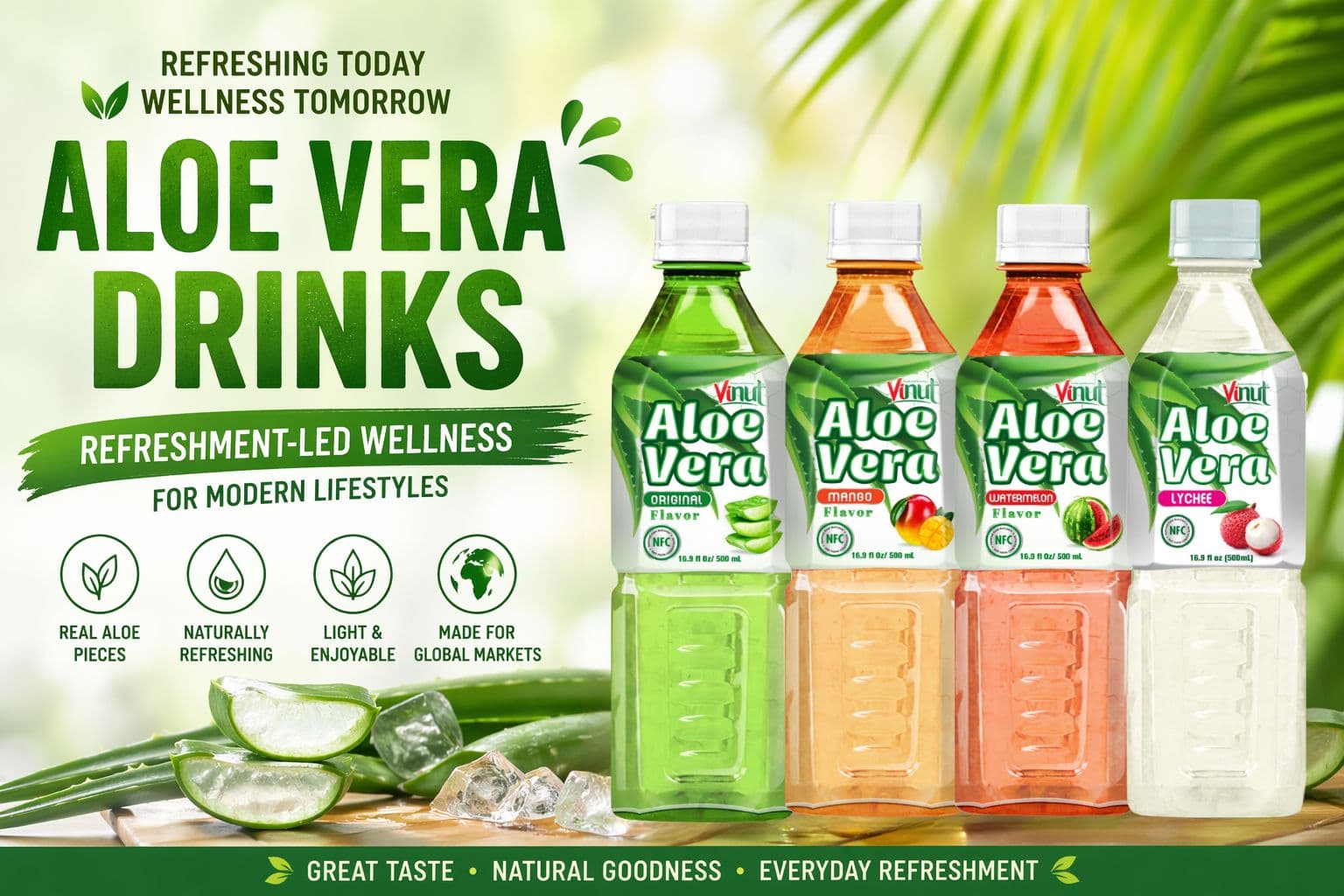
In today’s competitive beverage landscape, aloe vera drinks wellness positioning continues to gain traction as a practical and commercially viable strategy. Aloe vera beverages remain one of the most recognizable products within tropical refreshment categories, especially in export markets where buyers prioritize items that are visually distinctive, easy to merchandise, and simple to communicate on shelf.
1. Global Market Relevance of Aloe Vera Drinks
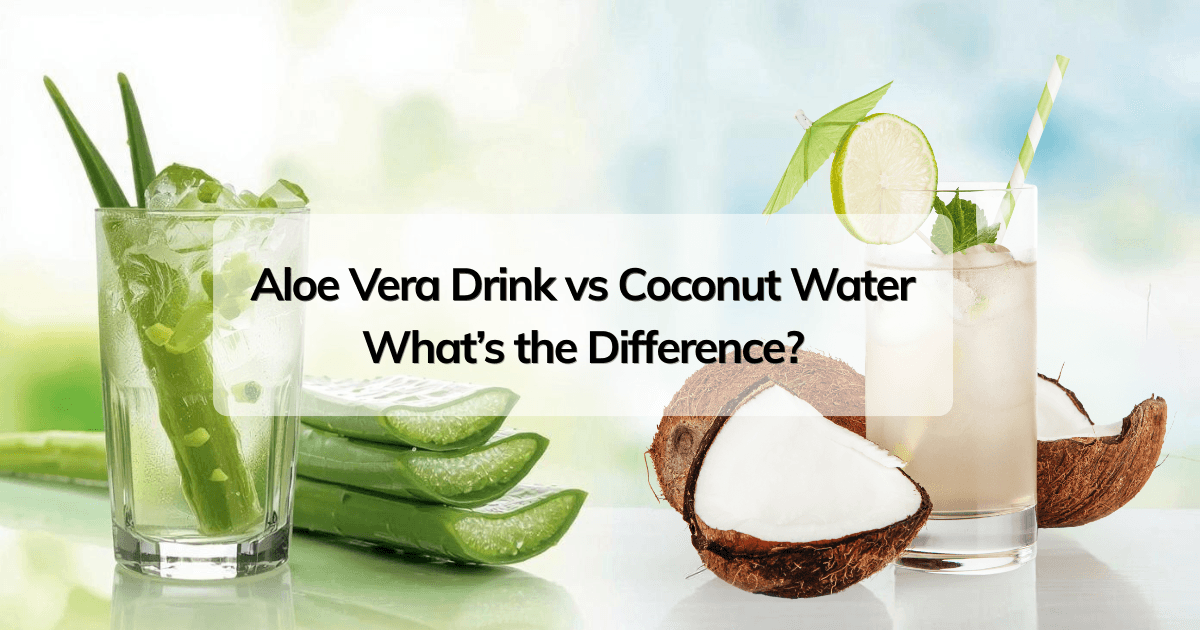
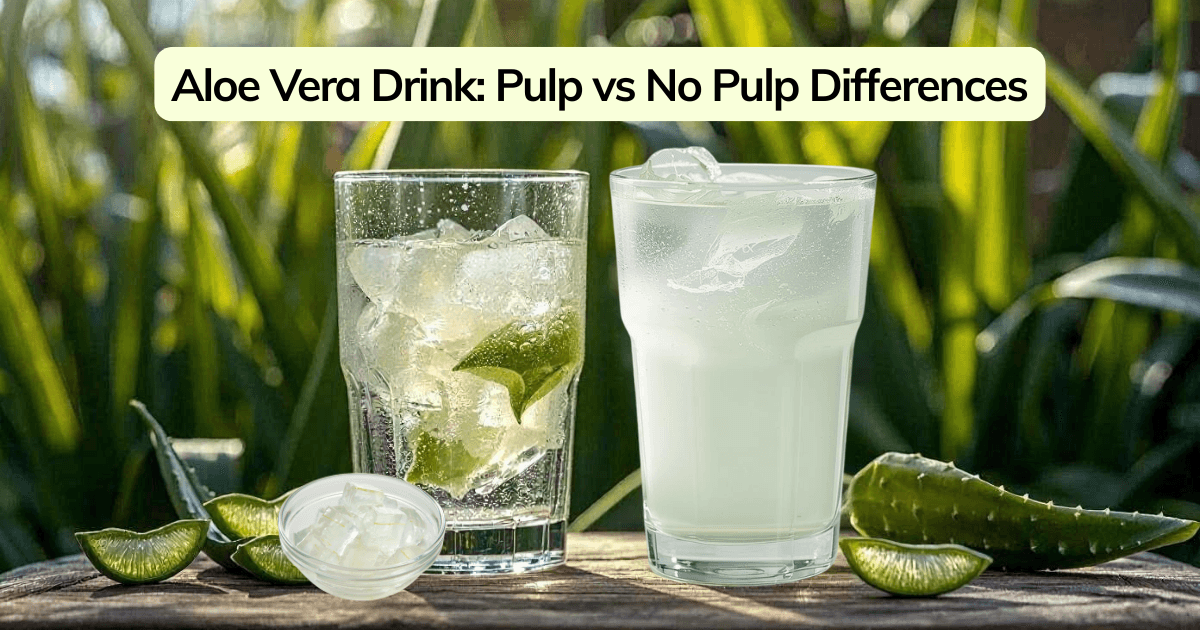
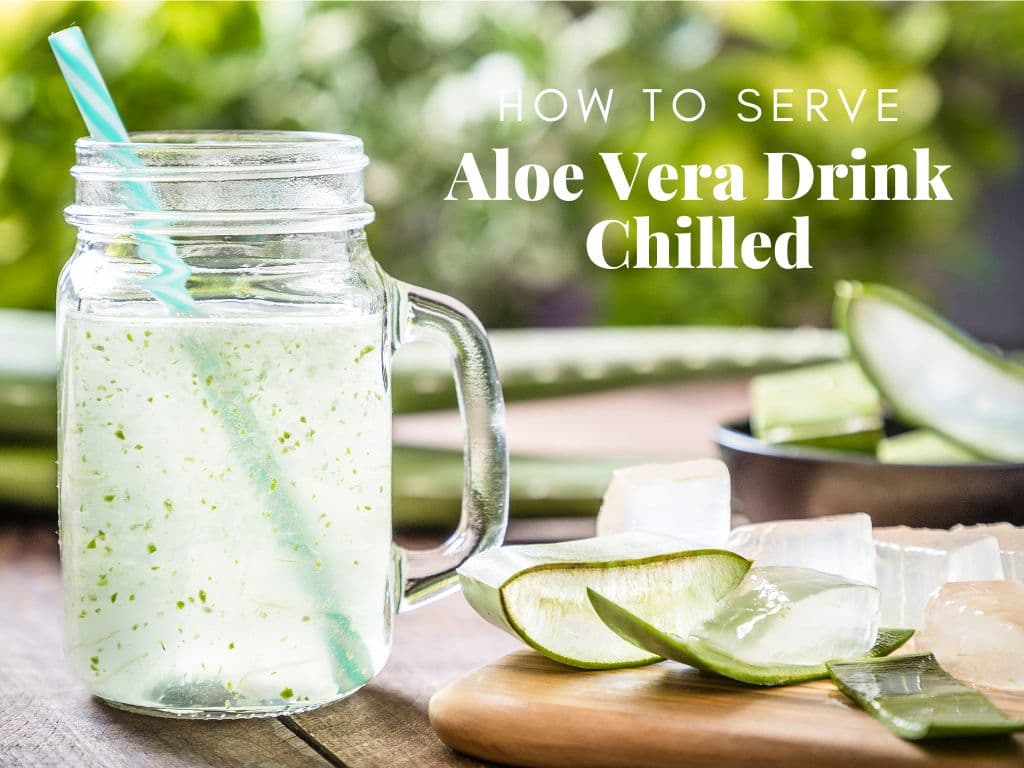
Among evolving aloe vera drink market trends, this category maintains relevance by offering a clear point of difference. The visible aloe pulp and unique texture distinguish it from standard juice or carbonated drinks, helping buyers quickly identify its role within a broader product portfolio. This balance between familiarity and novelty supports consistent demand across multiple regions.
For buyers evaluating new categories, this type of differentiation also plays a key role in building a Balanced Tropical Beverage Portfolio, where product variety and shelf contrast directly impact portfolio performance.
2. Understanding refreshment-led wellness positioning
The concept of refreshment-led wellness beverages focuses first on drinkability—clean taste, cooling effect, and everyday usability. Wellness is positioned as a light, supportive association rather than a technical or medical claim. This approach aligns with modern consumer expectations for products that feel simple, accessible, and lifestyle-compatible.
3. Why this positioning works better in practice
For importers and distributors, clarity is critical. Compared to complex functional claims, refreshment-led positioning is easier to translate into retail messaging and more adaptable across markets. Within the context of global aloe vera beverage demand, products that communicate clearly tend to build stronger buyer confidence and face fewer regulatory challenges.

4. Product experience and packaging as value drivers
Beyond ingredients, aloe vera drinks benefit from a distinctive sensory identity—texture, visual inclusions, and a light tropical profile. Packaging formats such as cans, PET bottles, or cartons further influence how the product is perceived across retail channels for aloe vera drinks. Format selection impacts portability, shelf visibility, and overall channel suitability.
5. Buyer considerations and portfolio planning
Understanding how buyers position aloe vera drinks is essential for successful market entry. Key evaluation factors include flavor profile, packaging format, label clarity, shelf life, and channel fit. Products that combine a clear category story with practical commercial attributes are more likely to succeed across retail and distribution networks.
Conclusion
Aloe vera drinks remain commercially relevant not because of exaggerated claims, but because they deliver a distinctive refreshment experience supported by credible, easy-to-communicate positioning. For beverage portfolios, this category offers a balanced combination of differentiation, flexibility, and market compatibility—making it a strategic addition for global buyers.
To explore the full range of aloe vera drinks or request a tailored catalog, contact Nam Viet Group today for market-specific consultation and partnership opportunities.