Discover the nutrition, hydration benefits, electrolytes, and everyday uses of coconut water in this practical guide.
As consumers become more interested in natural beverages and better everyday choices, coconut water has become a popular drink around the world.
Known for its refreshing taste and tropical origin, coconut water is often chosen as a beverage option for hydration, active lifestyles, and daily refreshment.
But what exactly is coconut water? What nutrients does it contain? And how does it fit into a balanced lifestyle?
This guide explores the benefits, nutrition, and common uses of coconut water.
What Is Coconut Water?
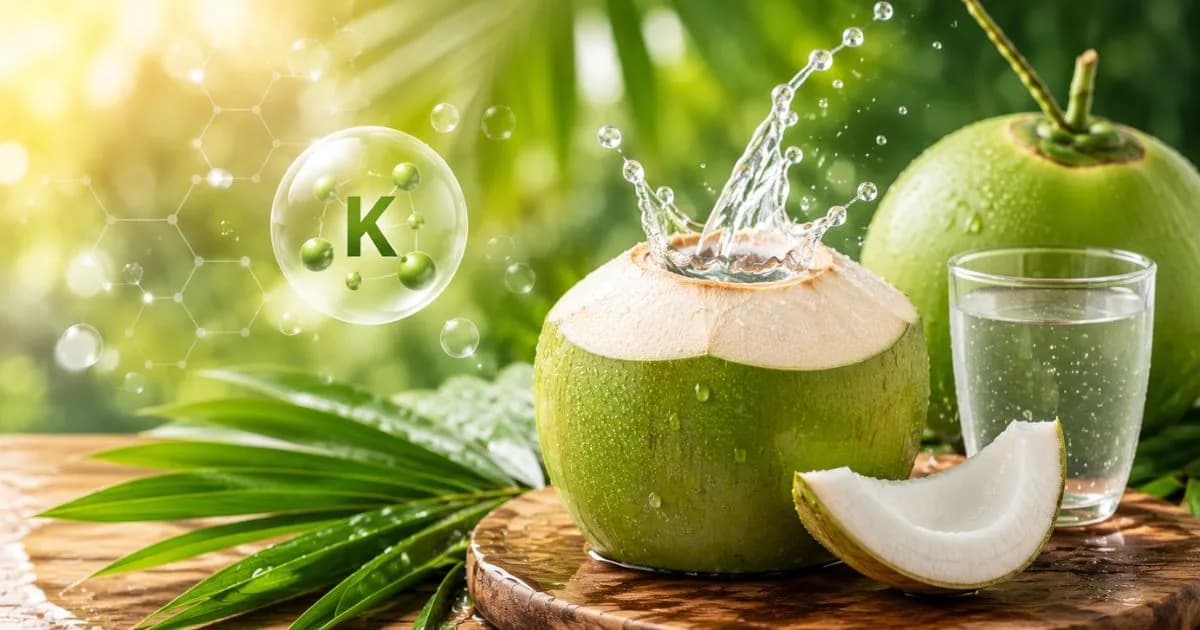
Coconut water is the clear liquid naturally found inside young green coconuts.
Unlike coconut milk, which is made by blending coconut flesh with water, coconut water is naturally present inside the coconut and has a lighter texture and refreshing taste.
Coconut water is commonly enjoyed as a ready-to-drink beverage because of its:
- Light tropical flavor
- Refreshing drinking experience
- Natural electrolyte content
- Convenient format
Because coconuts grow in tropical regions, coconut water has long been part of traditional diets in many countries before becoming a globally recognized beverage.
Coconut Water vs Coconut Milk: What Is the Difference?
Although both come from coconuts, coconut water and coconut milk are different products.
| Coconut Water | Coconut Milk |
|---|---|
| Liquid naturally inside young coconuts | Made from coconut flesh |
| Light and refreshing | Creamier texture |
| Lower fat content | Higher fat content |
| Commonly consumed as a beverage | Often used in cooking |
Understanding the difference helps consumers choose the right coconut-based product for their needs.
Why Is Coconut Water Popular?
The popularity of coconut water is connected to several modern beverage trends:
Natural Beverage Preference
Many consumers are looking for drinks with simple ingredients and recognizable sources.
Coconut water fits this trend because it is naturally derived from coconuts.
Hydration-Focused Lifestyle
People who maintain active lifestyles often look for beverages that complement their daily routines.
Coconut water is commonly enjoyed:
- After physical activities
- During outdoor activities
- As a refreshing daily drink
Alternative to Sugary Drinks
As interest grows in reducing consumption of heavily sweetened beverages, many consumers explore alternatives with simpler ingredient profiles.
Coconut water provides a naturally sweet taste without being positioned as a traditional soft drink.
Coconut Water Nutrition: What Does It Contain?
The nutritional profile of coconut water can vary depending on factors such as coconut variety, maturity, and processing.
However, coconut water generally contains:
- Water
- Natural sugars
- Minerals
- Electrolytes
It is also naturally low in fat.
Electrolytes in Coconut Water
One reason coconut water receives attention is its electrolyte content.
Electrolytes are minerals that help maintain normal body functions, including fluid balance.
Coconut water naturally contains minerals such as:
Potassium
Potassium is one of the main minerals found in coconut water.
It plays a role in:
- Normal muscle function
- Maintaining fluid balance
Sodium
Coconut water also contains sodium, although levels can vary depending on the product.
Magnesium
Magnesium is another naturally occurring mineral found in coconut water.
Together, these electrolytes contribute to the appeal of coconut water as a hydration-focused beverage.
Coconut Water Benefits
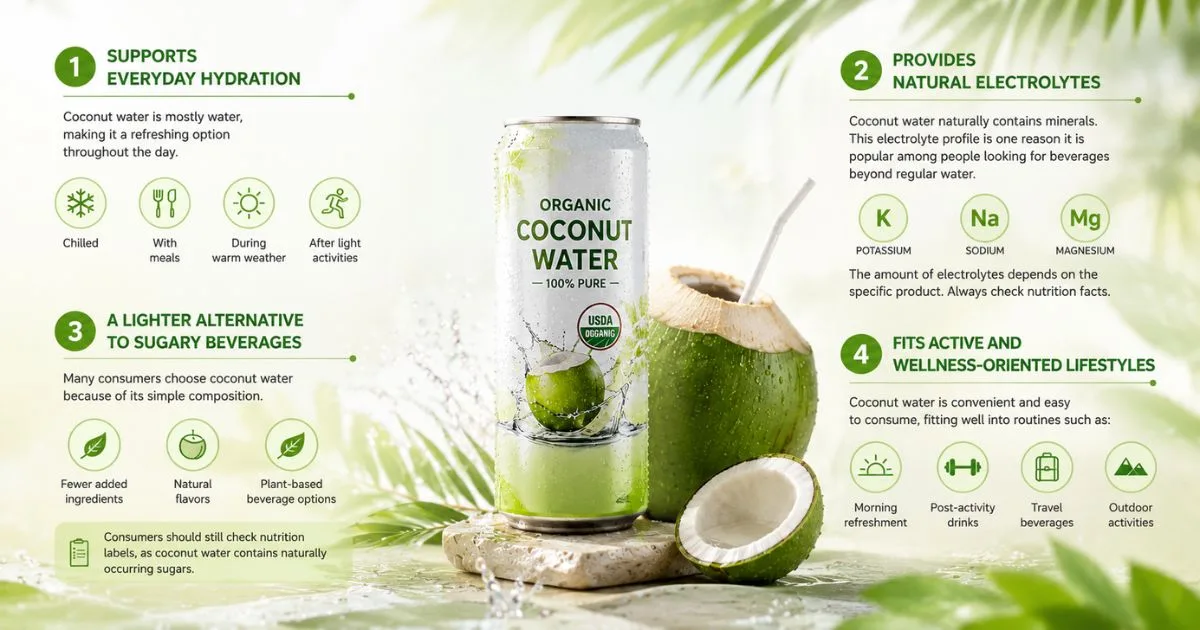
1. Supports Everyday Hydration
One of the main reasons people drink coconut water is hydration.
Since coconut water is mostly water, it can be a refreshing option throughout the day.
It is often enjoyed:
- Chilled
- With meals
- During warm weather
- After light activities
However, individual hydration needs vary depending on activity level, environment, and diet.
2. Provides Natural Electrolytes
Unlike plain water, coconut water naturally contains minerals.
This electrolyte profile is one reason it is popular among people looking for beverages beyond regular water.
The amount of electrolytes depends on the specific coconut water product and should always be checked through nutrition information.
3. A Lighter Alternative to Sugary Beverages
Many consumers choose coconut water because of its simple composition.
Compared with many sweetened drinks, coconut water is often selected by people who prefer:
- Fewer added ingredients
- Natural flavors
- Plant-based beverage options
Consumers should still check nutrition labels, as coconut water contains naturally occurring sugars.
4. Fits Active and Wellness-Oriented Lifestyles
Coconut water is commonly associated with active lifestyles because it is convenient and easy to consume.
It can be part of routines such as:
- Morning refreshment
- Post-activity drinks
- Travel beverages
Outdoor activities

When Coconut Water May Not Be Enough
While coconut water can be a refreshing beverage choice, it may not replace every hydration solution.
Heavy Exercise and Sodium Needs
During intense exercise, the body may lose significant amounts of sodium through sweat.
Some sports drinks are specifically formulated to provide different electrolyte balances.
Individual Dietary Considerations
People monitoring specific nutrients, such as potassium intake, should consider their individual dietary needs and consult appropriate professionals when necessary.
Everyday Uses of Coconut Water
Beyond drinking it directly, coconut water can be used in many ways.
Drink Chilled
The simplest way to enjoy coconut water is cold.
Many people prefer it straight from the refrigerator for a refreshing taste.
Add to Smoothies
Coconut water can be used as a smoothie base instead of regular water.
It pairs well with:
- Tropical fruits
- Berries
- Leafy greens
Create Mocktails
Coconut water is also used in non-alcoholic beverages.
It can be combined with:
- Fresh fruit
- Herbs
- Citrus flavors
to create refreshing mocktails.
Pair With Tropical Flavors
Coconut water naturally complements tropical ingredients such as:
- Mango
- Pineapple
- Passion fruit
This makes it a popular ingredient in modern beverage recipes.

Choosing Coconut Water: What Should Consumers Check?
When selecting coconut water, consumers can review:
Ingredient List
Look for clear ingredient information.
Products with simple formulations allow consumers to better understand what they are drinking.
Nutrition Facts
Check:
- Calories
- Total sugars
- Added sugars
- Mineral content
Processing Information
Some consumers prefer products labeled:
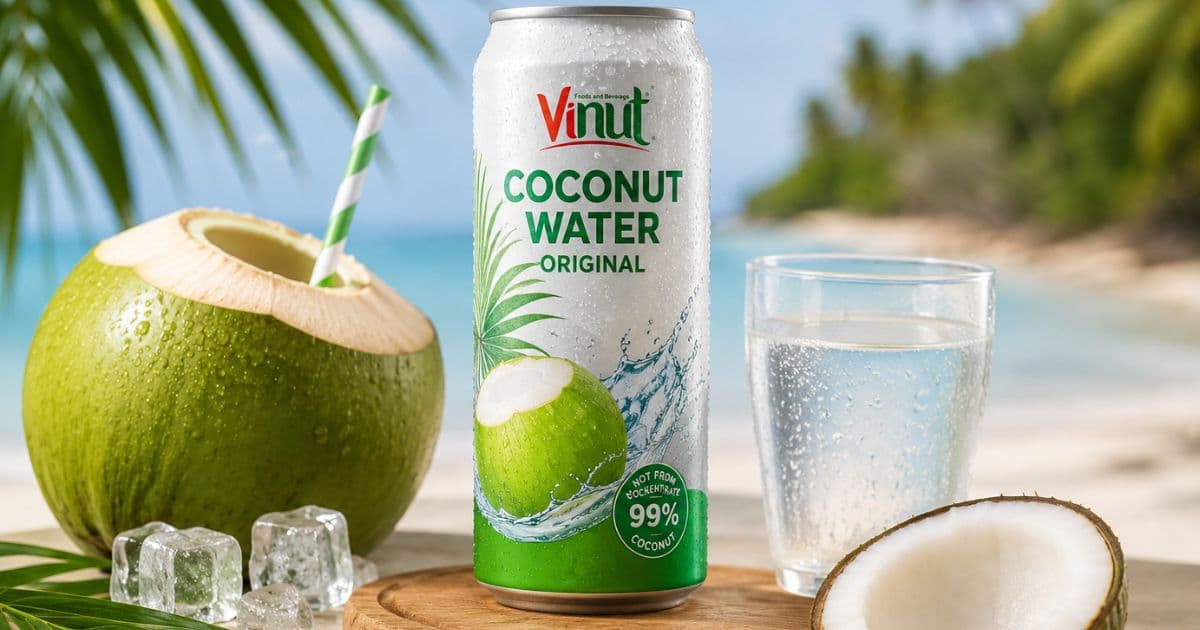
Not From Concentrate
because it provides information about the processing method.
Coconut Water as a Growing Beverage Category
The popularity of coconut water reflects broader trends in the beverage industry:
- Natural ingredients
- Plant-based beverages
- Convenient formats
- Clean-label preferences
For retailers and beverage brands, coconut water has become a category with diverse product options, from original flavors to enhanced variations.
Exploring Different Coconut Water Options
Today, coconut water is available in many formats and variations, including:
- Original coconut water
- Organic coconut water
- Coconut water with pulp
- Flavored coconut water
Different options allow consumers to choose based on taste preferences and lifestyle needs.
For example, some coconut water products focus on a simple ingredient approach, while others include fruit flavors or coconut pulp for a different drinking experience.
Coconut water has become a popular beverage choice because of its refreshing taste, natural origin, and electrolyte content. From everyday hydration to smoothies and creative drinks, coconut water offers many ways to enjoy a tropical beverage experience. Understanding its nutrition, ingredients, and uses helps consumers make informed choices and select products that match their preferences. |