Why EU Beverage Labeling Matters for Export Brands
EU beverage labeling regulations help protect consumers by ensuring product transparency, food safety, and accurate product information.
For importers and distributors, compliant beverage labels also reduce:
- Customs risks
- Product recalls
- Retail rejection
- Regulatory penalties
- Distribution delays
Clear and professional labeling improves buyer confidence and supports retail readiness in competitive European markets.
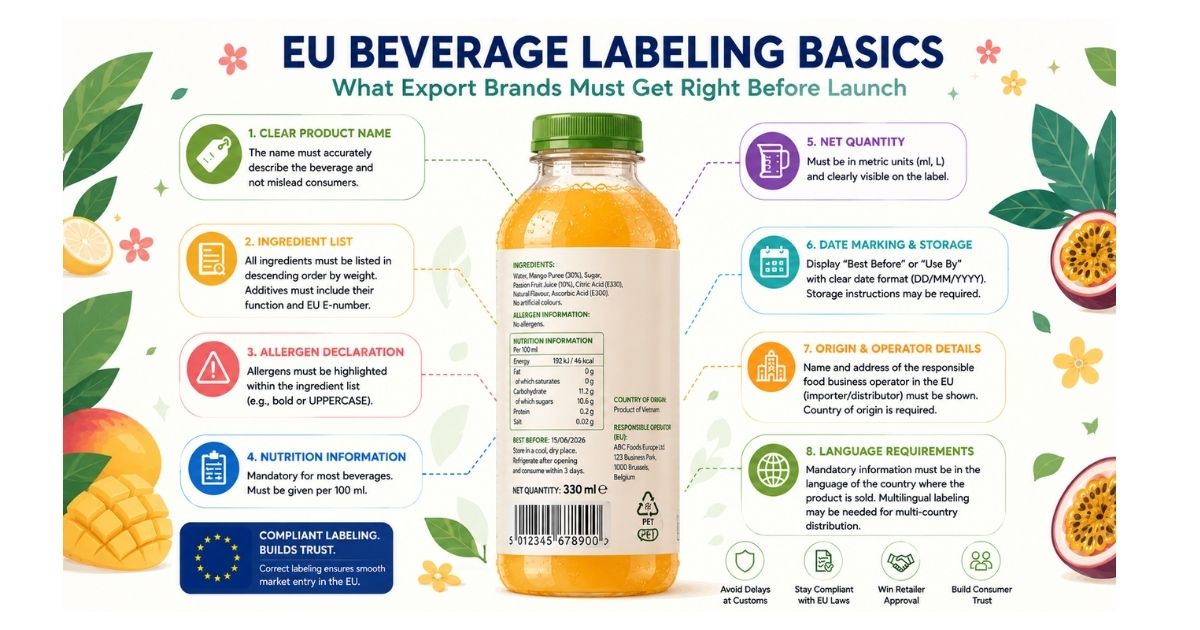
What Information Must Appear on EU Beverage Labels?
European beverage labels must provide essential product information in a clear and easy-to-read format.
Product Name and Beverage Description
The label should clearly identify:
- Product type
- Beverage category
- Flavor description
- Juice content when applicable
Consumers and retailers should immediately understand what the product is.
Ingredient List Requirements
EU food labeling regulations require ingredients to be listed in descending order by weight.
Export beverage brands should clearly declare:
- Fruit ingredients
- Sweeteners
- Additives
- Preservatives
- Flavorings
- Allergens when applicable
Ingredient transparency is especially important for health-conscious European consumers.
Nutrition Information Panel
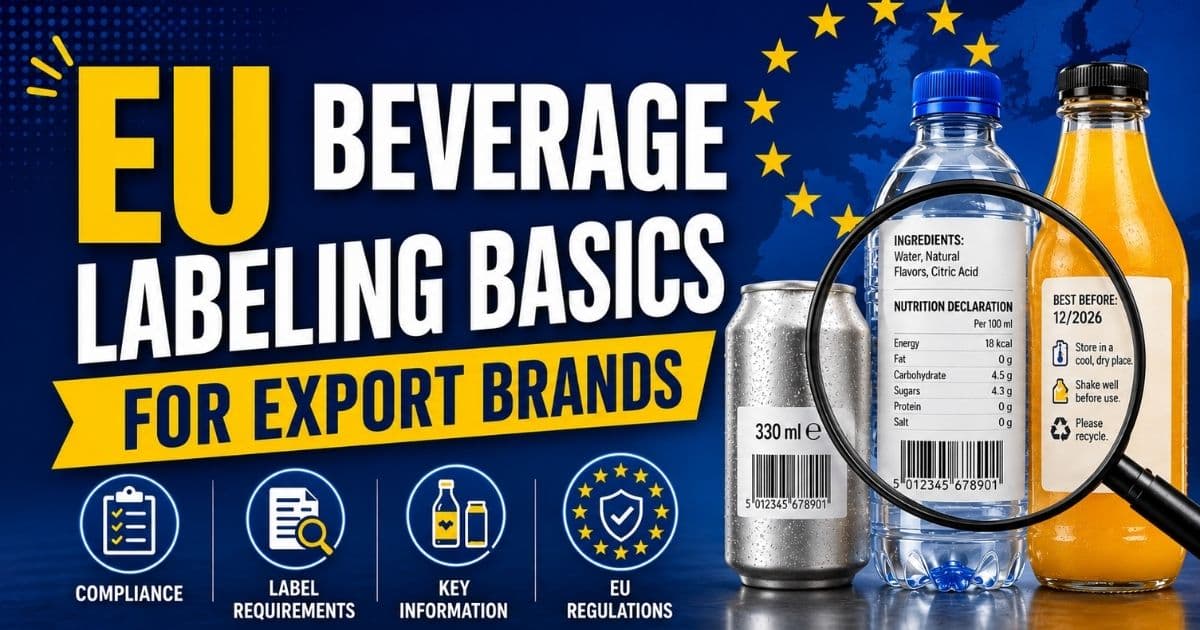
Most beverages sold in the EU must include nutrition information such as:
- Energy value
- Sugar content
- Fat
- Carbohydrates
- Protein
- Salt
The nutrition panel must follow approved EU formatting standards.
Accurate nutritional labeling helps improve retail acceptance and consumer trust.
Net Volume and Measurement Standards
EU beverage labels must clearly display product volume using approved metric units such as:
- mL
- L
The declared net volume should remain visible and easy to read on the packaging.
Shelf Life and Storage Instructions
Export beverage labels should clearly communicate:
- Best before date
- Expiration information
- Storage conditions
- Refrigeration guidance after opening
Shelf life labeling helps retailers and consumers handle products safely throughout the distribution process.
Language Requirements for EU Beverage Labels
Many European countries require beverage labels to appear in local languages.
Depending on the destination market, exporters may need:
- Multilingual labels
- Country-specific translations
- Local regulatory adjustments
Importers often prefer export-ready beverage packaging that already supports multilingual compliance.
Why Packaging Clarity Supports Retail Success
In European retail environments, clean and professional beverage packaging strongly influences buyer decisions.
Retailers typically prefer labels that are:
- Easy to understand
- Visually organized
- Legally compliant
- Consumer-friendly
- Consistent across product lines
Well-structured beverage labeling also improves shelf presentation and brand credibility.
Common EU Beverage Labeling Mistakes Exporters Should Avoid
Many beverage export brands face delays because of avoidable labeling errors.
Common problems include:
- Missing nutrition panels
- Incorrect ingredient declarations
- Unclear allergen information
- Wrong font sizing
- Non-compliant translations
- Misleading product descriptions
- Incomplete shelf life details
Even small labeling mistakes can create import complications in EU markets.
How Proper Labeling Supports Beverage Distribution
Compliant EU beverage labeling supports:
- Faster customs clearance
- Retail acceptance
- Distributor confidence
- Consumer transparency
- Long-term market expansion
For beverage importers, professionally labeled products reduce operational risks and simplify distribution management.
How VINUT Supports Export-Ready Beverage Labeling
At VINUT, we support international beverage brands with export-ready tropical juice packaging and labeling solutions designed for global distribution markets.
Our beverage packaging solutions focus on:
- International compliance readiness
- Shelf-stable beverage distribution
- Retail-friendly packaging
- OEM and ODM beverage production
- Clear product presentation
We help export partners prepare beverage products for smoother international market entry.
Conclusion
EU beverage labeling is a critical part of successful beverage export strategy.
Clear ingredient declarations, compliant nutrition panels, proper shelf life information, and multilingual labeling all contribute to smoother distribution and stronger retail acceptance across European markets.
Before launching products into the EU, beverage exporters should ensure that packaging and labeling fully support regulatory compliance and international retail expectations.