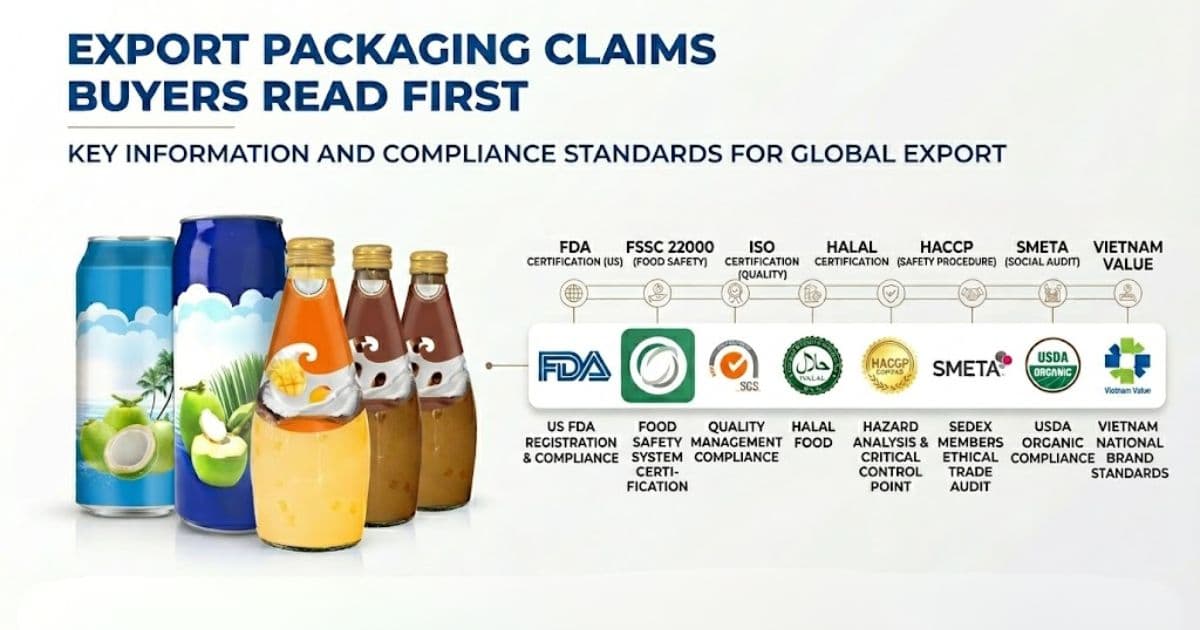
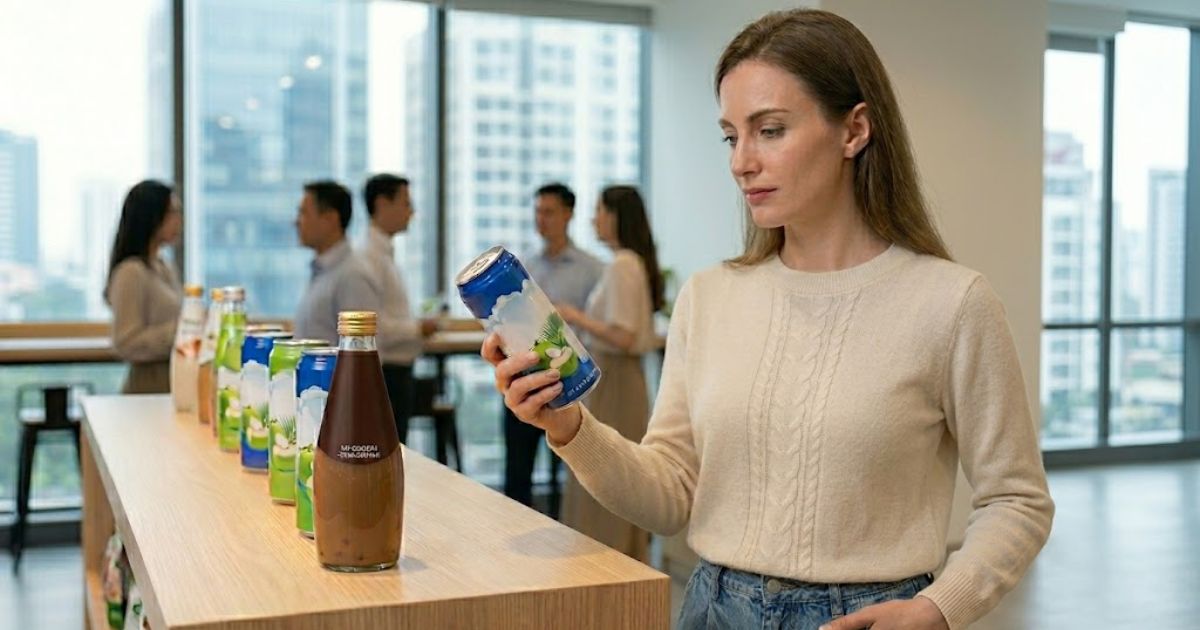
In export beverage trade, packaging claims are often the first filter buyers use to evaluate a product. Before reviewing specifications or requesting samples, importers scan labels to confirm product type, trust signals, and market fit.
I/ Why packaging claims matter early in buyer evaluation
Buyers rarely begin with technical documents. Instead, they look at packaging to quickly assess whether a product is viable for their market.
Packaging claims influence:
- Shelf positioning in retail environments
- Distributor confidence in product consistency
- Consumer relevance in target markets
There is also a clear difference between:
- Informative claims → help buyers understand the product
- Promotional claims → often ignored if exaggerated
II/ The first packaging claims buyers usually look for
1. Product identity claims
The most critical element is clarity. Buyers want to immediately understand what the product is.
Examples include:
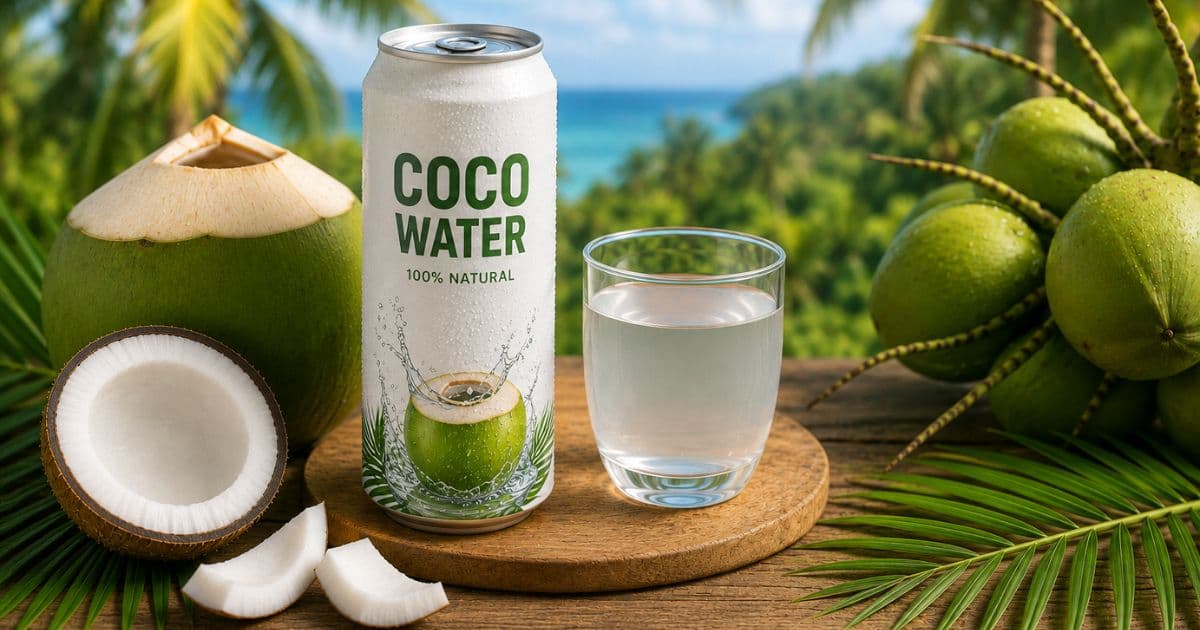
- Coconut water
- Aloe vera drink
- Juice drink
- NFC juice
- Sparkling beverage
Without clear product identity, the evaluation often stops immediately.
2. Core quality and trust claims
Buyers then look for signals that reduce risk:
- No added sugar (when applicable)
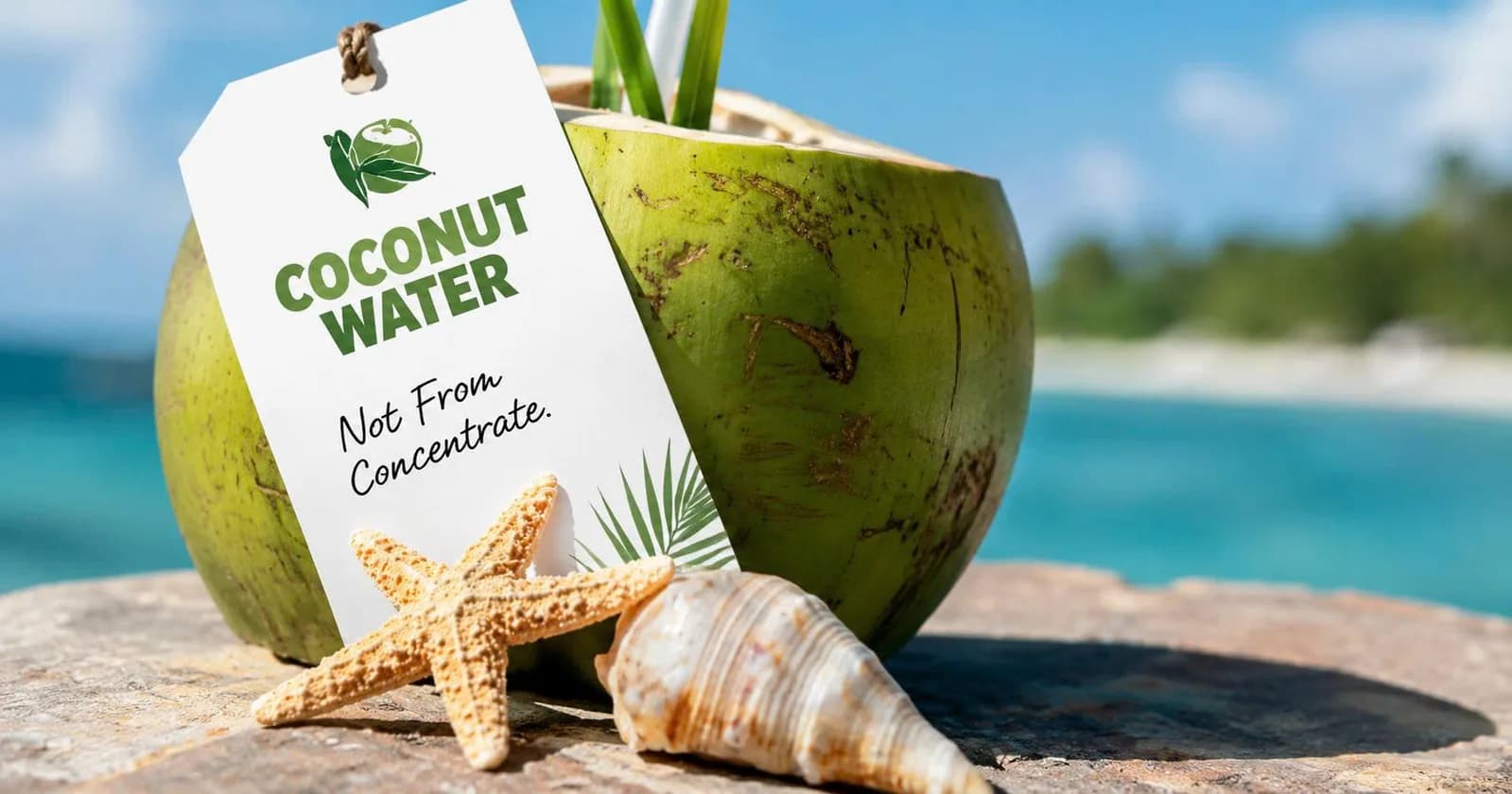
- Not from concentrate (NFC)
- Halal certification
- Gluten-free
- Vegan
These claims must be accurate and verifiable.
3. Compliance and market-readiness signals
Even without detailed documents, packaging can signal export readiness:
- Proper labeling structure
- Clear ingredient listing
- Market-appropriate language
III/ How exporters should adapt claims across markets
The same packaging strategy does not work globally.
Differences exist across:
- The United States
- Europe
- GCC countries
- Asia
Exporters must consider:
- Local regulations
- Consumer language
- Retail expectations
- Competitive positioning
Alignment is critical between:
- Packaging claims
- Product specifications
- Sales materials
IV/ A practical packaging-claim checklist for buyers and suppliers
Before moving forward, buyers often evaluate:
- Is the beverage type clearly identified?
- Are the claims easy to verify?
- Do the claims support the target retail channel?
- Is the packaging aligned with compliance expectations?
V/ FAQ Section
1. What packaging claims do beverage buyers read first?
Buyers prioritize claims that clearly identify the product, reduce compliance risk, and indicate retail readiness.
2. Do buyers care more about health claims or product clarity?
In most cases, product clarity and trust signals come first, while health-related claims are secondary.
3. Can the same packaging claims work in every market?
No. Claims must be adapted to local regulations, consumer expectations, and language.
4. Why do certifications influence buyer perception?
Certifications can increase trust, but only when they are accurate and consistent with product documentation.