100% Juice Coconut Water: What Does It Mean?
As coconut water continues to grow in popularity worldwide, product labels have become an important part of purchasing decisions. Among the claims consumers and buyers often notice is "100% Juice."
At first glance, the phrase may seem straightforward. However, many people wonder what it actually means, how it differs from other coconut water products, and whether it indicates better quality.
For retailers, distributors, and importers, understanding this label is equally important when comparing suppliers and evaluating products for different markets.
This guide explains what 100% juice coconut water means, how it appears on product labels, and the key factors buyers should review before making purchasing decisions.
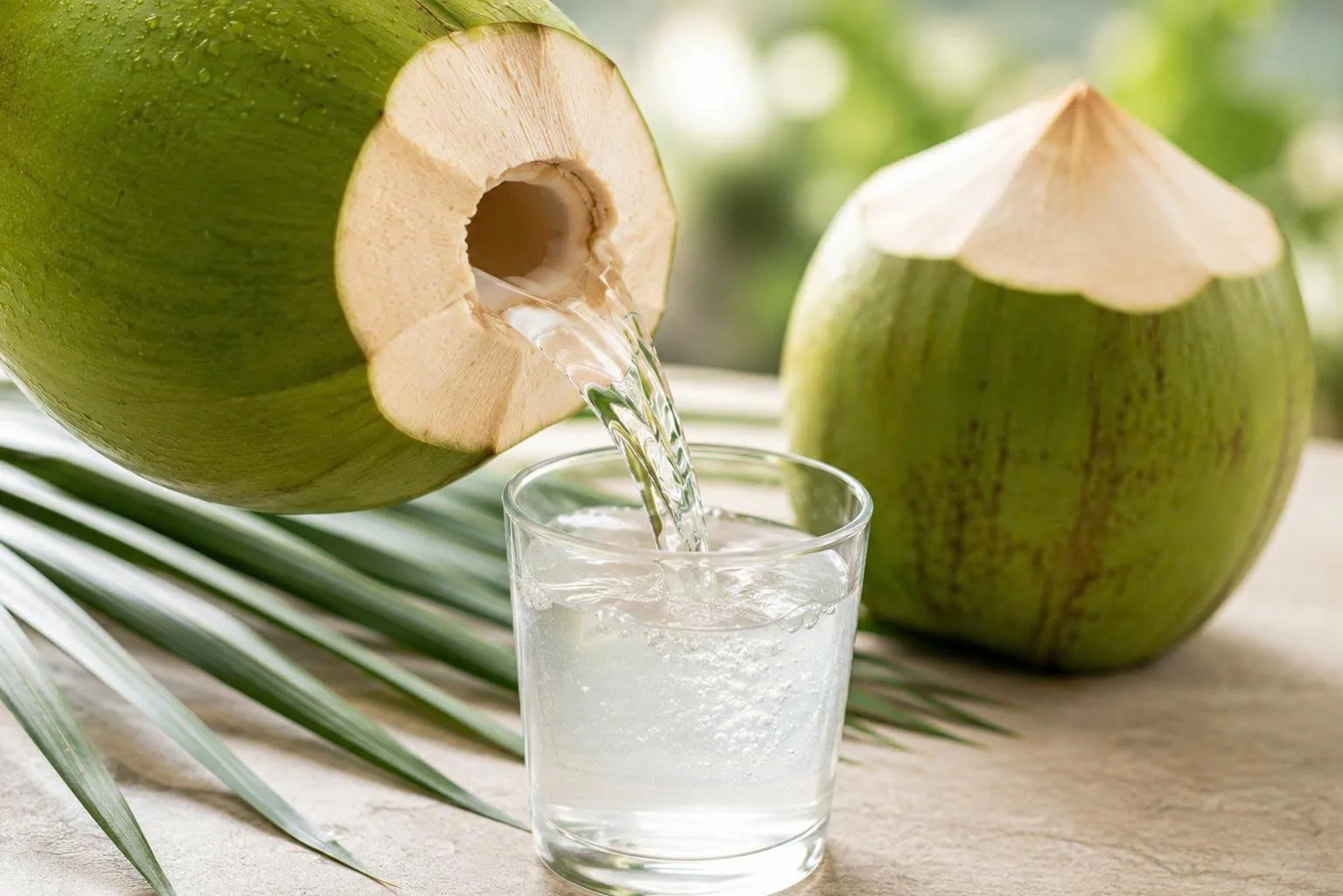
What Does "100% Juice" Mean?
For coconut water, 100% juice generally means the beverage consists entirely of coconut water as the juice ingredient, rather than being diluted with other fruit juices or water.
The claim refers to the product's composition rather than suggesting any special nutritional advantage.
Depending on the product, ingredient lists may simply state:
Some products may also include small amounts of ingredients permitted for quality or stability, depending on local regulations and product formulation. These should always be clearly declared on the ingredient list.
Because labeling regulations differ between countries, buyers should always verify that any 100% juice claim complies with the requirements of the destination market.
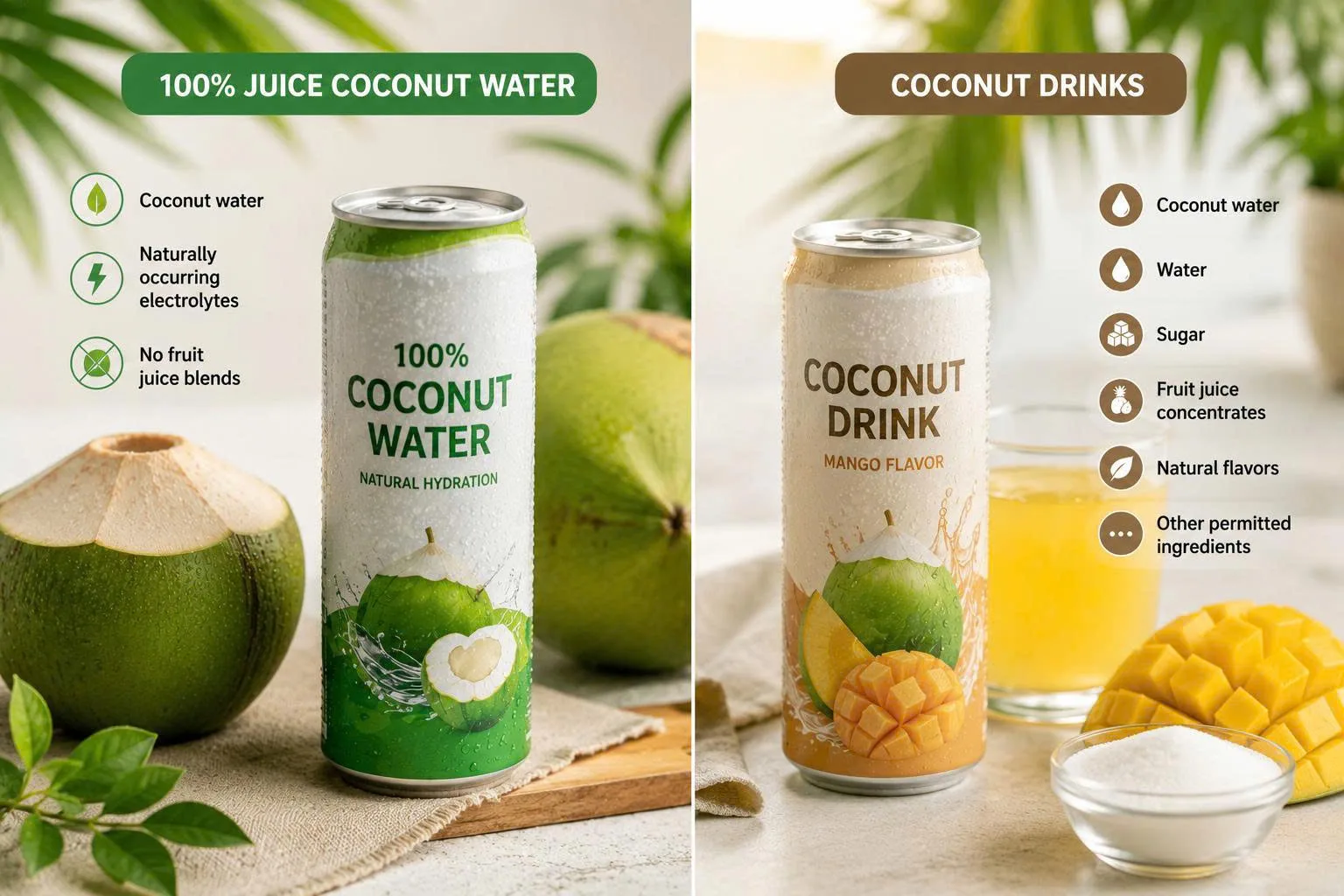
How Is 100% Juice Coconut Water Different from Coconut Drinks?
One of the most common sources of confusion is the difference between 100% juice coconut water and coconut-flavored beverages.
Although both are sold in the beverage category, they are formulated differently.
100% Juice Coconut Water
Typically contains:
- Coconut water
- Naturally occurring electrolytes
- No fruit juice blends
Coconut Drinks
May contain:
- Coconut water
- Water
- Sugar
- Fruit juice concentrates
- Natural flavors
- Other permitted ingredients
Neither category is inherently better. They simply serve different consumer preferences and retail positioning.
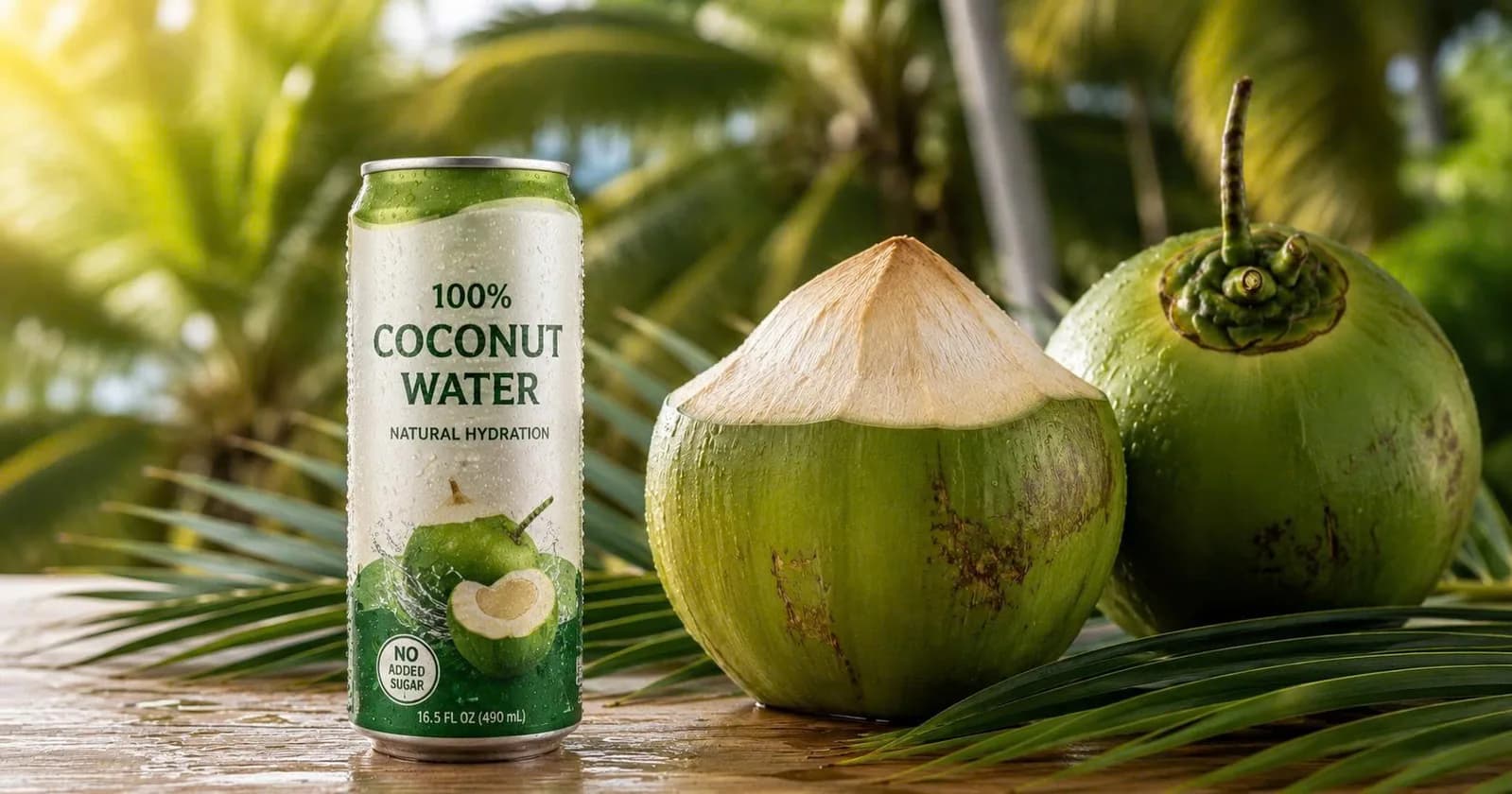
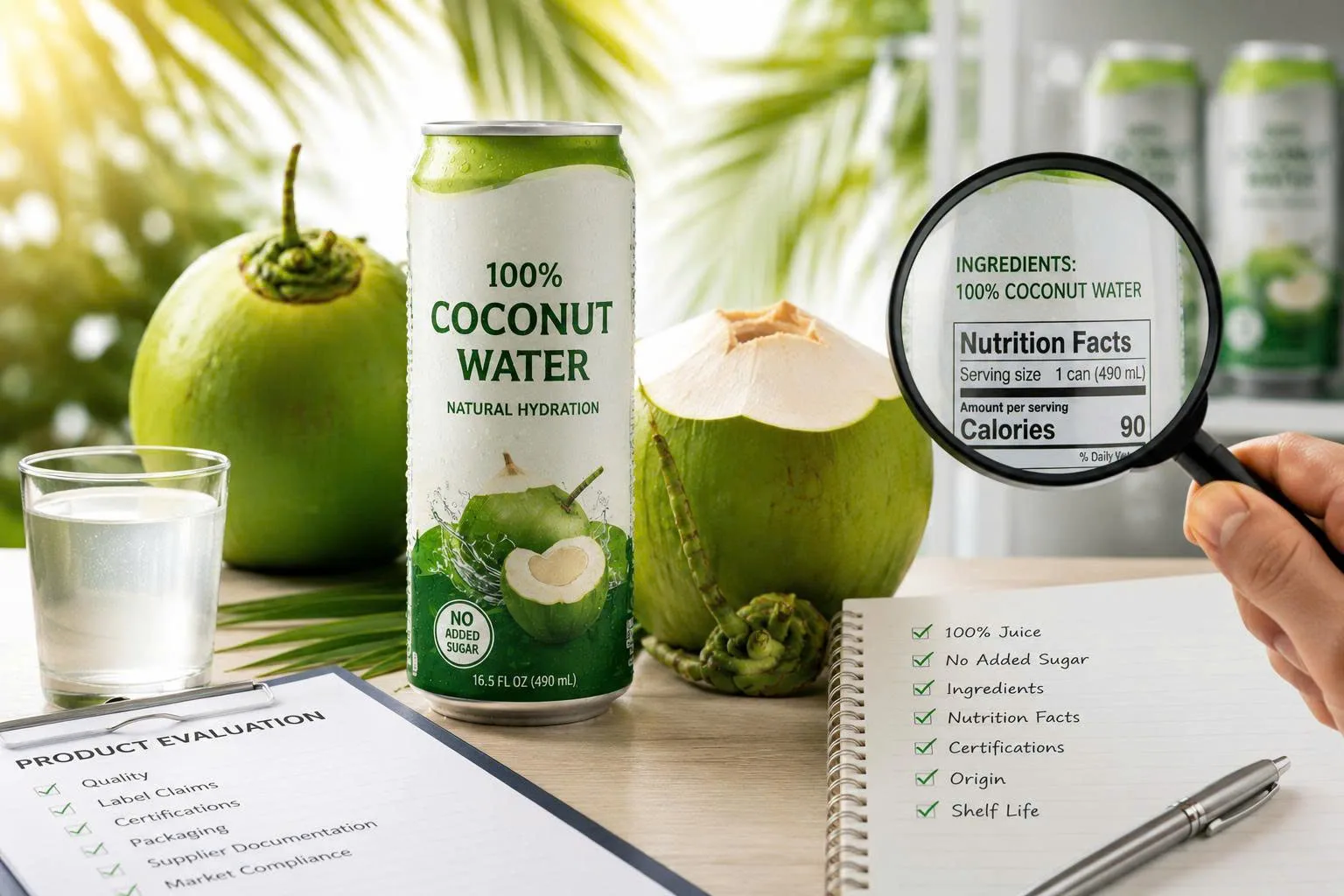
Does 100% Juice Mean No Added Sugar?
Not necessarily. Many coconut water products labeled 100% juice do not contain added sugar, but the claim itself does not automatically guarantee this.
The best way to verify is by checking:
- Ingredient list
- Nutrition Facts panel
- Added Sugars declaration (where required)
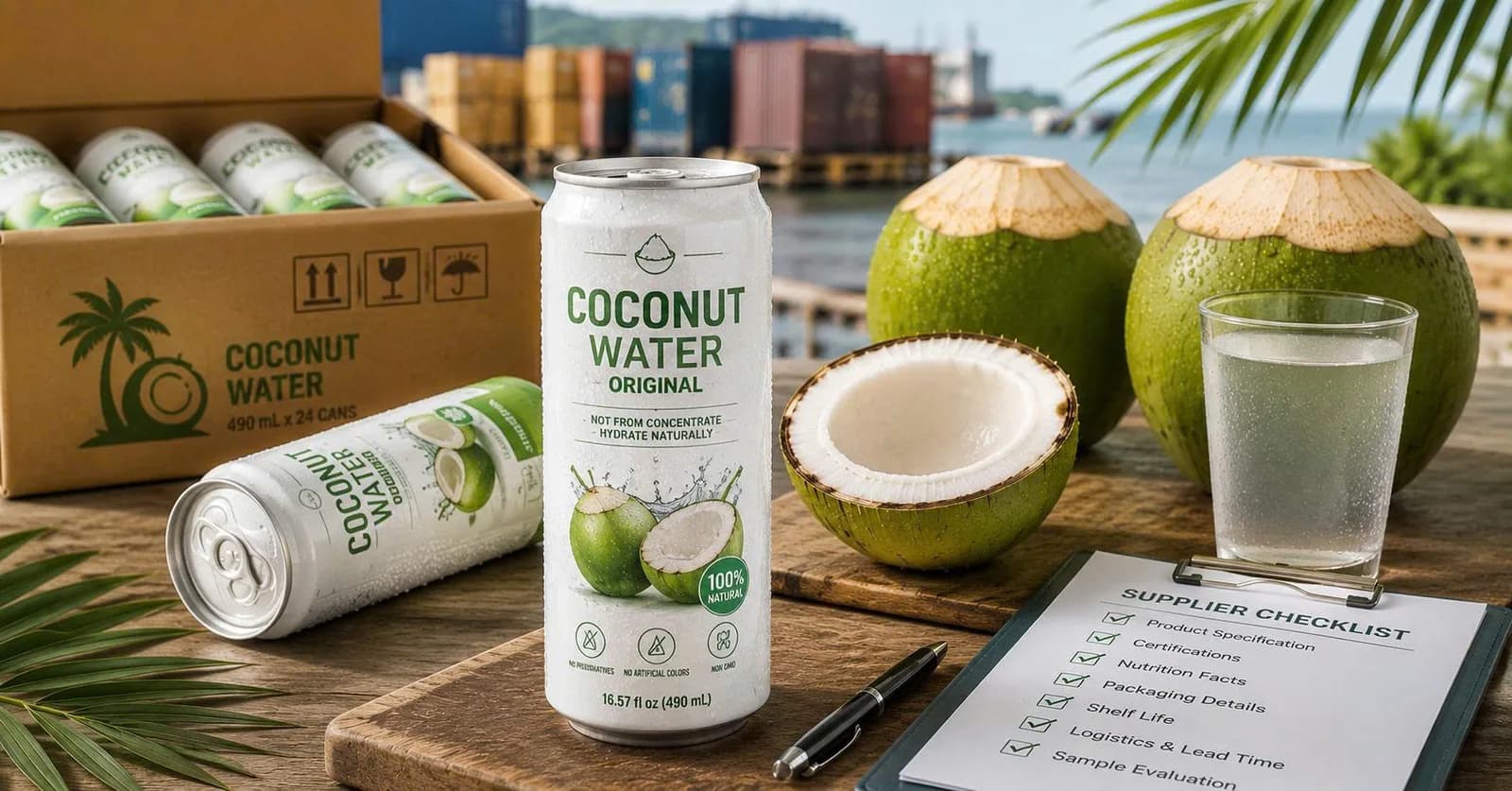
Rather than relying solely on front-of-pack marketing claims, consumers and buyers should review the complete product label.
How to Read a 100% Juice Coconut Water Label
When evaluating coconut water, look beyond a single statement on the front of the package.
A complete label review should include:
- Ingredient list
- Nutrition Facts
- Serving size
- Added sugars
- Country of origin
- Processing claims
- Certifications (if applicable)
- Shelf life
Commercial buyers should also request:
- Product specifications
- Certificate of Analysis (COA)
- Microbiological reports
- Quality documentation
- Export certifications when required
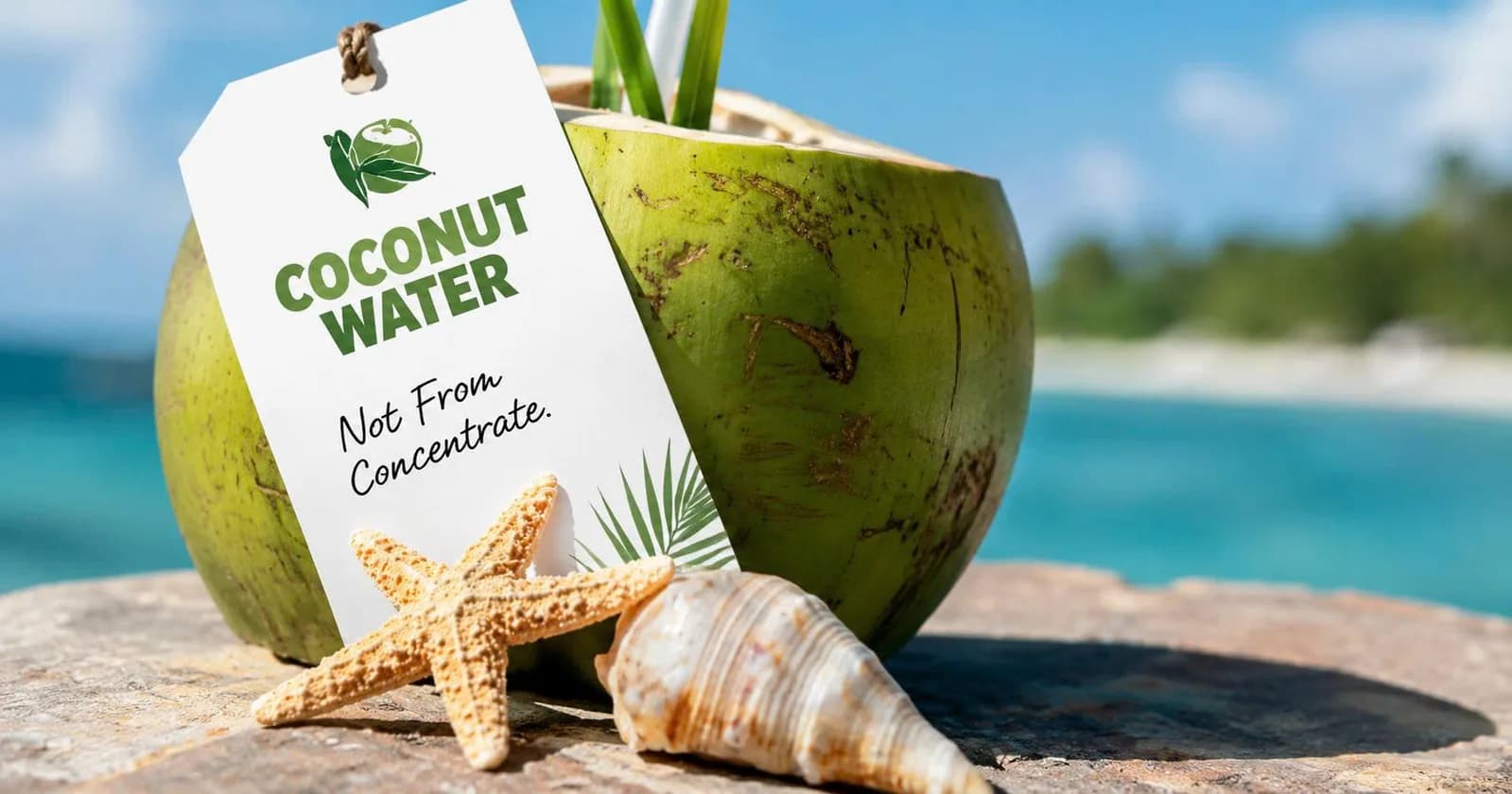
Is 100% Juice the Same as Not From Concentrate?
No. These two claims describe different aspects of a beverage.
| Claim | Refers To |
|---|---|
| 100% Juice | Product composition |
| Not From Concentrate | Processing method |
A coconut water product may be:
- 100% juice and not from concentrate
- 100% juice made from concentrate (where permitted)
- Neither claim
The two statements should not be used interchangeably.
Nutrition Profile of 100% Juice Coconut Water
Although nutrition varies slightly between brands, most products share similar characteristics.
Typical nutrients include:
- Naturally occurring potassium
- Small amounts of sodium
- Naturally occurring sugars
- Low fat
- No cholesterol
Exact nutrition values depend on the product formulation and should always be confirmed using the Nutrition Facts panel.
Consumers should avoid assuming identical nutrition across different brands.
Why Beverage Buyers Should Verify Product Claims
For importers and distributors, front-label claims are only one part of product evaluation.
Before selecting a supplier, buyers should confirm that the product documentation supports label statements.
Important areas to review include:
- Ingredient declaration
- Nutrition Facts
- Country of origin
- Shelf-life validation
- Packaging specifications
- Food safety certifications
- Laboratory testing
- Export documentation
Well-prepared documentation helps streamline regulatory review and supports smoother international trade.
Choosing the Right Coconut Water for Your Market
Not every market prioritizes the same product attributes.
Different customer groups may look for:
- Simple ingredient lists
- Low-sugar beverages
- Organic certification
- Not From Concentrate processing
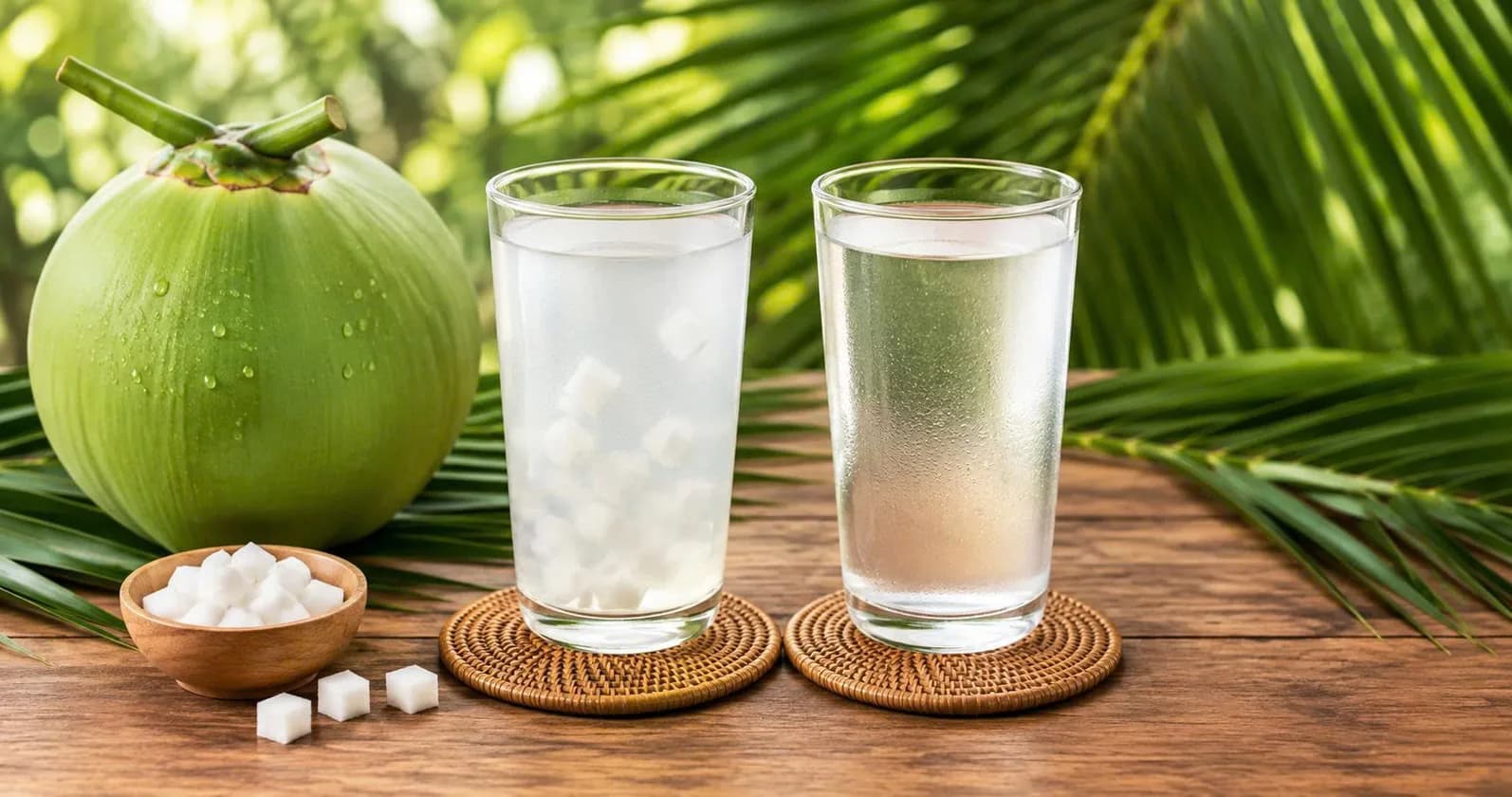
- Coconut water with pulp
- Flavored coconut water
- Sustainable packaging
Rather than focusing on a single claim, many distributors build a product portfolio that addresses a variety of consumer preferences and retail channels.
Frequently Asked Questions
Conclusion
The 100% juice claim helps consumers understand that coconut water is the primary juice ingredient in the beverage, but it should not be interpreted as a guarantee of superior quality or nutrition on its own.
For both consumers and commercial buyers, the best approach is to evaluate the complete product label—including ingredients, nutrition information, processing claims, certifications, and supporting documentation.
By understanding what the label represents, retailers, distributors, and importers can make more informed sourcing decisions while selecting products that best fit their target markets.