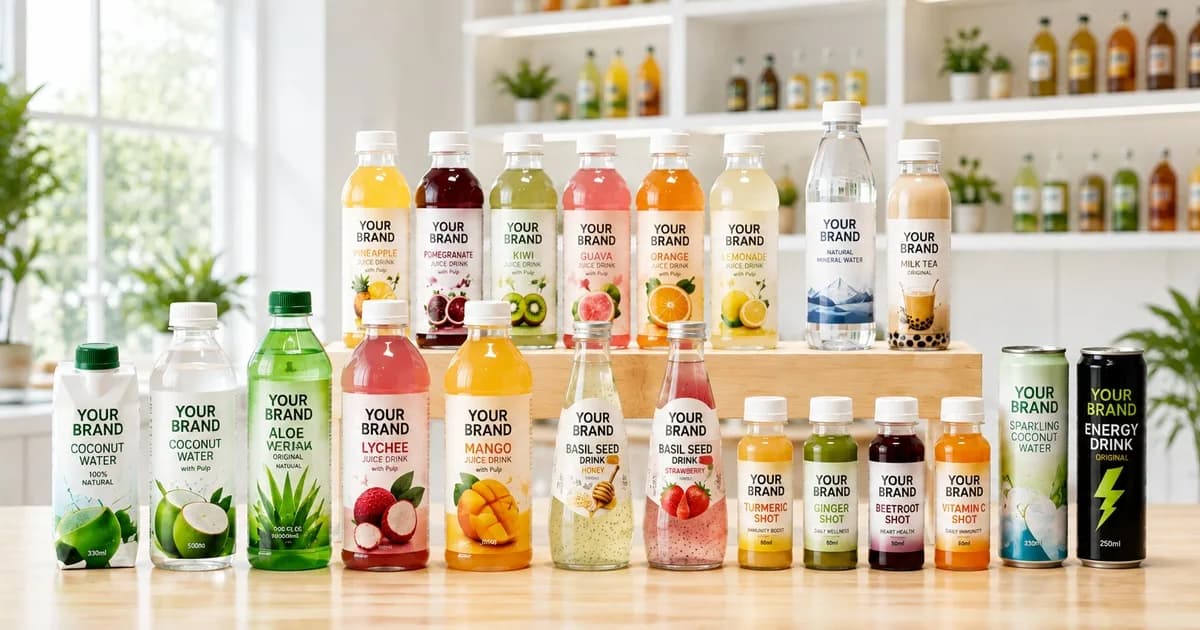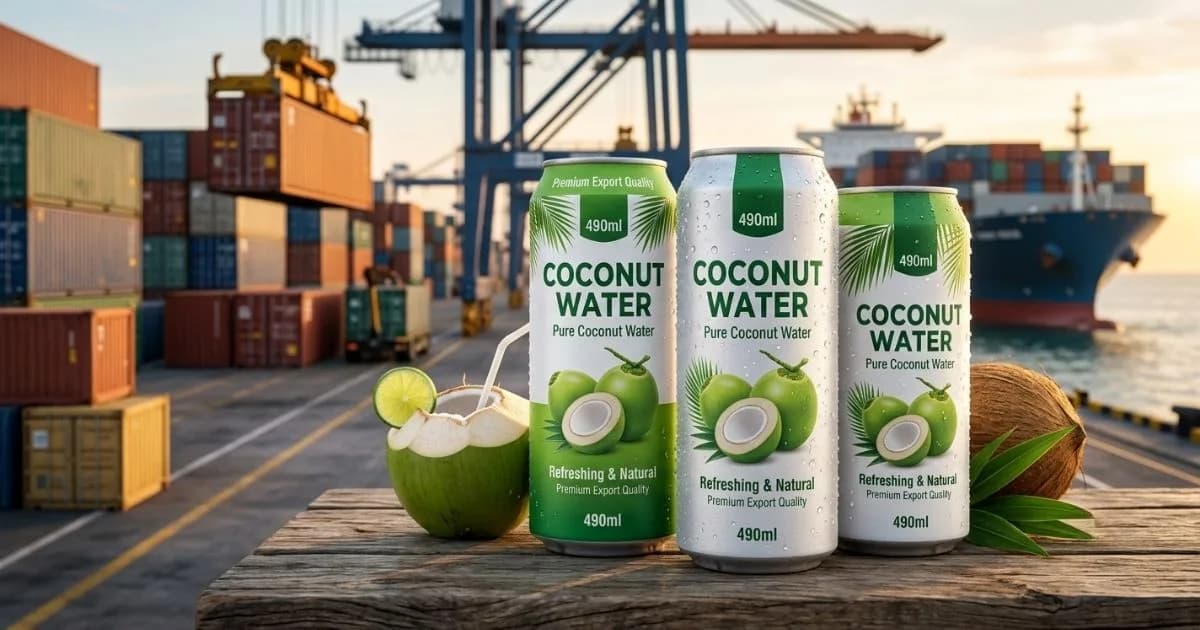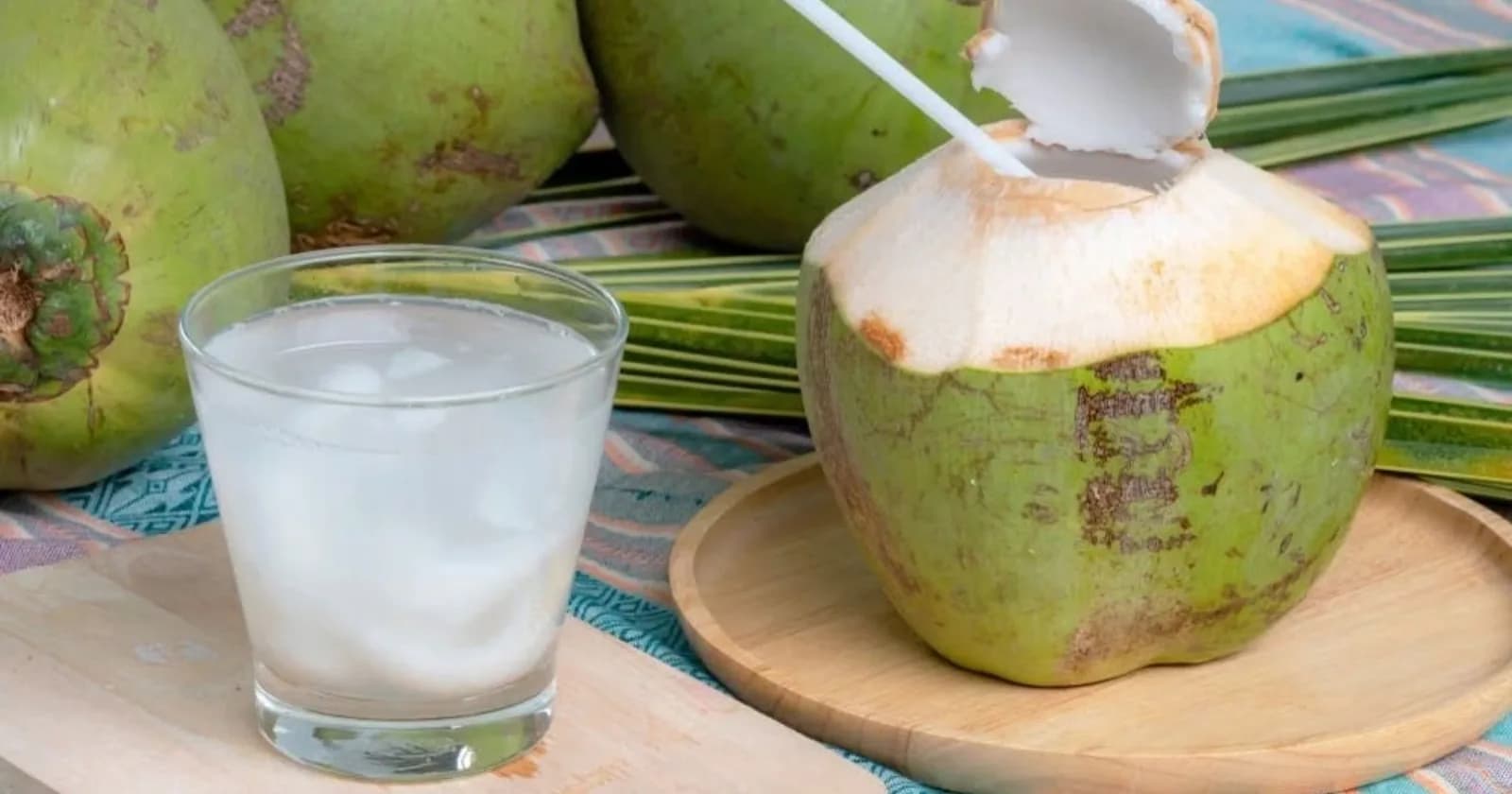
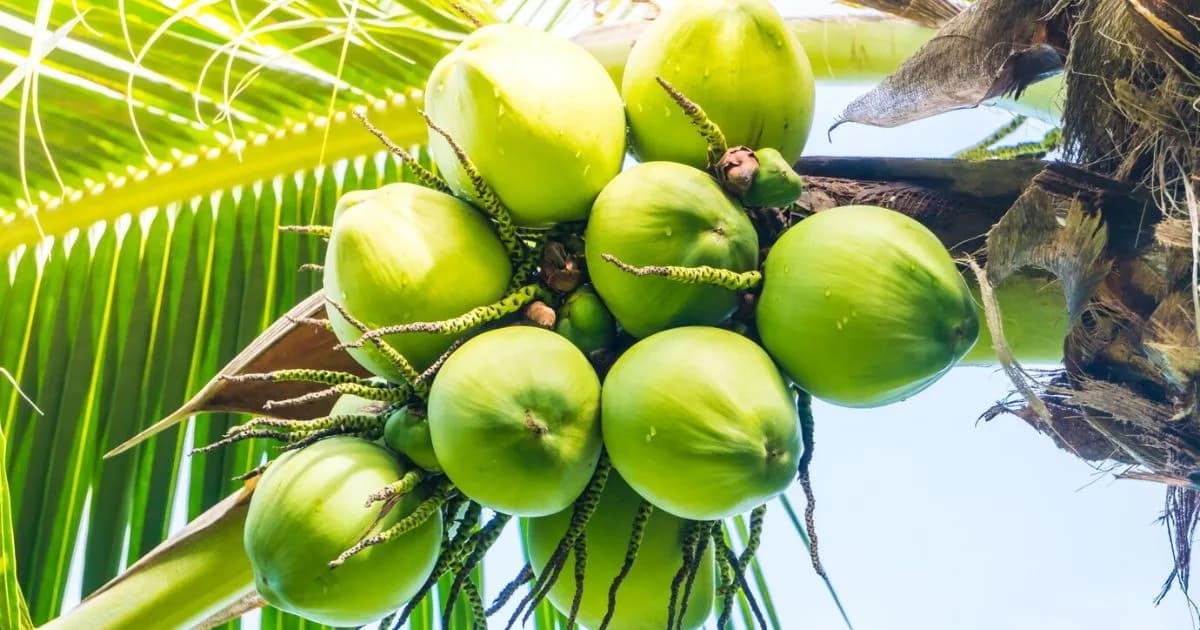
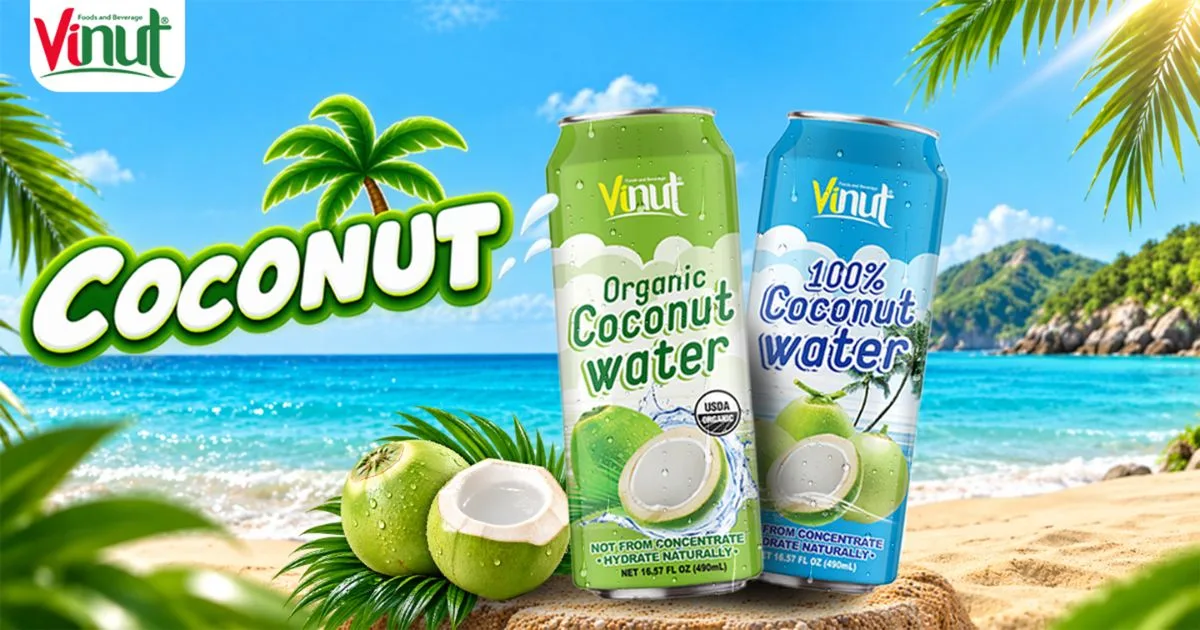
“100% coconut water” and “coconut juice drink” may appear beside each other in a beverage catalog, but they describe different product structures.
In the United States, coconut water is treated as juice for Juice HACCP purposes. A product made entirely from coconut water may qualify as 100% juice. A beverage containing less than 100% juice must disclose its juice percentage and, when “juice” appears in the product name, generally use a qualifying term such as “drink,” “beverage,” or “cocktail.”
The distinction does not mean that one format is automatically superior. The correct choice depends on the target consumer, price tier, sales channel, taste profile, claims, and commercial strategy.
1. What Is 100% Coconut Water?
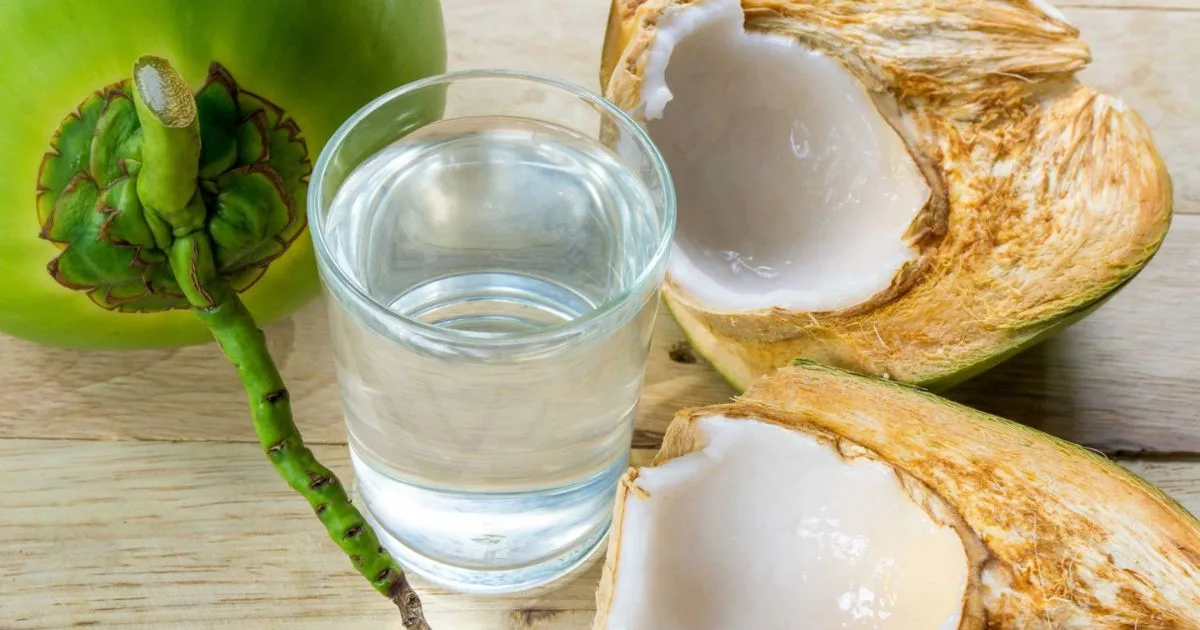
For labeling purposes, juice directly expressed from a fruit or vegetable is considered 100% juice. FDA guidance also identifies liquid extracted from coconut, including coconut water, as juice for Juice HACCP purposes.
A 100% coconut water product can generally fall into one of two processing categories.
1.1 Directly Extracted Coconut Water
The liquid is extracted from coconuts and processed without first being concentrated and reconstituted.
The label may describe the product as:
- 100% Coconut Water
- 100% Coconut Juice
- Not From Concentrate Coconut Water, when appropriately supported
The exact statement of identity and related claims must match the actual production process.
1.2 Coconut Water From Concentrate
Coconut water may also be concentrated and later reconstituted with water to the appropriate single-strength condition.
A properly reconstituted product may still be 100% juice. However, when juice is made from concentrate, the product name generally needs wording such as “from concentrate” or “reconstituted.” FDA regulations provide limited exceptions, including certain cases where concentrate from the same fruit is used only to raise the Brix of directly expressed juice without adding water.
Therefore, 100% juice does not automatically mean not from concentrate. A buyer should treat the following as separate questions:
- Is the beverage 100% juice?
- Is it entirely coconut water?
- Is it directly extracted or from concentrate?
- Does it contain any added non-juice ingredients?
2. Can a 100% Juice Product Contain Other Ingredients?
Potentially, yes. FDA regulations allow a 100% juice declaration in certain cases where non-juice ingredients do not reduce the juice soluble solids or, for directly expressed juice, change its volume. The declaration may then need qualifying wording such as “100% juice with added preservative” or “100% juice with added sweetener.”
This means buyers should not automatically interpret “100% juice” as:
- Single ingredient
- No preservatives
- No added nutrients
- No added flavors
- No added sugar
- Organic
- Not from concentrate
- Minimally processed
These are separate attributes that require separate evidence.
Buyer Verification
For a product presented as 100% coconut water, request:
- Complete ingredient list
- Product formula
- Juice-percentage calculation
- Concentrate status
- Brix specification
- Added ingredient functions
- Nutrition Facts data
- Label artwork
- Process description
- Finished-product specification
3. What Is a Coconut Juice Drink?
A coconut juice drink is generally a beverage that contains coconut juice but contains less than 100% juice.
Under 21 CFR 102.33, when a beverage contains more than 0% but less than 100% fruit or vegetable juice and uses “juice” in its common or usual name, the name should include a qualifying term such as:
- Drink
- Beverage
- Cocktail
This tells consumers that the beverage is not entirely juice.
Possible formulations include:
- Coconut water and water
- Coconut water, water, and sugar
- Coconut water and fruit juice
- Coconut water, fruit flavor, and sweetener
- Coconut water with coconut pulp
- Coconut water with nata de coco
- Coconut water with electrolytes
- Coconut water with acidity regulators
- Coconut water in a multi-juice beverage
“Coconut juice drink” is not a single standardized recipe or quality level. Two products using the same general name may have significantly different juice percentages, sugar levels, ingredients, and sensory profiles.
4. Three Percentage Claims Buyers Must Separate
A common source of confusion is treating all percentage statements as equivalent.
They are not.
4.1 Total Juice Percentage
This is the proportion of the finished beverage represented by juice.
Examples:
- 100% juice
- Contains 50% juice
- Contains 25% juice
4.2 Coconut Water Percentage
This identifies how much of the finished beverage is specifically coconut water.
A product may contain 100% total juice without containing 100% coconut water.
For example:
- 95% coconut water
- 5% mango juice
- 100% total juice
This may be a 100% juice blend, but it is not 100% coconut water.
4.3 Characterizing Fruit Percentage
A flavored coconut beverage may feature mango, pineapple, lychee, or passion fruit on the front panel. The buyer must determine whether the fruit is present as:
- Fruit juice
- Juice concentrate
- Puree
- Natural flavor
- Artificial flavor
- A combination of ingredients
In multi-juice beverages, product naming and the order in which juices are presented may need to reflect predominance or clearly identify the role of the characterizing juice.
Practical Interpretation
Label statement | What it indicates | What it does not prove |
| 100% Coconut Water | The product is presented as entirely coconut water | NFC, organic, preservative-free, or sugar-free |
| 100% Juice | The total beverage is juice | That all juice is coconut water |
| Contains 30% Juice | 30% of the beverage is juice | That all 30% is coconut juice |
| Coconut Flavored Drink | Coconut character is represented | That coconut juice is present |
| No Added Sugar | No qualifying added sugar under the applicable rule | That the beverage contains zero total sugar |
5. U.S. Percentage Juice Declaration
A beverage that represents or suggests the presence of fruit or vegetable juice generally needs a percentage juice declaration.
This requirement can be triggered by:
- Product name
- Juice terminology
- Fruit or vegetable images
- Ingredient statements
- Advertising
- Color and flavor suggesting juice
- Pulp or other recognizable juice characteristics
The declaration may use wording such as:
- 100% Juice
- Contains 30% Coconut Juice
- 25% Juice
- Less Than 1% Juice
FDA requires the declared percentage to be a whole number no greater than the actual juice percentage. The declaration normally appears prominently on the information panel and may also appear consistently on the principal display panel.
Important Limitation
A beverage containing less than 100% juice should not use percentage expressions such as:
- 100% Natural
- 100% Pure
when those expressions could describe or imply juice content. FDA specifically restricts such percentage declarations on beverages required to declare less than 100% juice.
For a coconut juice drink, wording such as “100% tropical taste” or “100% natural refreshment” should therefore receive careful regulatory review.
6. Statement of Identity
The Statement of Identity is the product’s legally and commercially meaningful name. It should accurately tell consumers what the product is.
6.1 Possible 100% Product Names
- 100% Coconut Water
- Coconut Water From Concentrate
- 100% Coconut Juice
- Organic Coconut Water
- Coconut Water With Added Electrolytes
Each descriptor must be supported by the formula, process, certification, and label presentation.
6.2 Possible Less-Than-100% Product Names
- Coconut Juice Drink
- Coconut Juice Beverage
- Coconut Water Beverage
- Coconut Water Drink With Pulp
- Coconut Juice Drink With Mango Flavor
- Coconut Water and Mango Juice Drink
When the beverage contains multiple juices, names should not create the impression that a characterizing juice is predominant when it is present only in a small quantity. FDA rules address the order, prominence, and description of juices named on multi-juice beverages.
6.3 Buyer Test
A buyer should be able to answer the following within a few seconds of viewing the front panel:
- Is this 100% juice or a diluted beverage?
- Is it pure coconut water or a juice blend?
- Is it from concentrate?
- Does it contain added flavor?
- Is the fruit shown on the front actually present as juice?
- Is pulp part of the formulation?
- What is the package size?
If these questions cannot be answered clearly, the packaging may create retail and compliance risk.
7. Ingredient List Differences
Ingredients generally must be listed by their common or usual names in descending order of predominance by weight.
Illustrative 100% Coconut Water Formula, A simple directly extracted product may have:
Ingredients: Coconut Water
A from-concentrate product may require an ingredient statement reflecting the concentrate and reconstitution method. The exact declaration should be reviewed against the actual formula.
Illustrative Coconut Juice Drink Formula A coconut juice drink might contain:
- Water
- Coconut water
- Sugar
- Coconut pulp
- Natural flavor
- Citric acid
- Vitamin C
The order depends on the actual weight of each ingredient in the finished product.
Why Ingredient Order Matters
Consider two beverages:
| Product A | Product B |
| Coconut water | Water |
| Water | Sugar |
| Sugar | Coconut water |
Both may be called coconut juice drinks, but their product structures and consumer value propositions are materially different.
Buyers should not assess a beverage only from coconut imagery or the product name. The ingredient list and juice percentage provide more useful evidence.
8. Total Sugars Versus Added Sugars
Coconut water naturally contains sugars. Therefore:
No added sugar does not mean sugar-free. The Nutrition Facts panel separates:
- Total Sugars
- Added Sugars
Added sugars must be declared under Total Sugars using wording such as “Includes X g Added Sugars.”
100% Coconut Water
A simple coconut water product may contain naturally occurring total sugars while declaring 0 g added sugars.
However, the buyer must verify:
- Whether sugar was added
- Whether juice concentrate was used only for legitimate reconstitution
- Whether concentrate was used beyond the amount required for the declared juice content
- Whether other sweetening ingredients were added
- Whether the formula supports any “no added sugar” claim
Coconut Juice Drink
A juice drink may contain:
- Added cane sugar
- Glucose syrup
- Fructose
- Honey
- Sweetened juice concentrate
- No added sugar
- Non-nutritive sweeteners
The term “juice drink” does not by itself indicate whether sugar was added.
Concentrate Requires Special Review
Under U.S. nutrition-labeling rules, juice concentrate used toward the declared juice percentage or to restore juice to the appropriate condition may be treated differently from concentrate used in excess as a sweetening ingredient.
The purpose and amount of the concentrate should therefore be documented.
9. “No Added Sugar” Claims
The terms “no added sugar,” “without added sugar,” and “no sugar added” are subject to specific conditions.
Among other requirements:
- Sugar must not be added during processing or packaging
- Ingredients that functionally substitute for added sugar must not be added
- The product must not contain certain ingredients containing added sugars
- Processing must not materially increase sugar content
- The label may require a statement directing consumers to nutrition information and clarifying that the product is not low-calorie or calorie-reduced, unless it qualifies for those claims
This makes “no added sugar” a regulatory claim, not only a marketing phrase.
Buyer Checklist for the Claim
Request:
- Signed formula
- Ingredient specifications
- Sweetener declaration
- Juice-concentrate usage calculation
- Nutrition laboratory data
- Total and added-sugar calculation
- Proposed qualifying statement
- Regulatory review record
A product should not use “no added sugar” only because the manufacturer did not add granulated white sugar.
10. Nutritional Comparison
There is no universal nutritional profile for either category.
A 100% coconut water product may contain more naturally occurring sugar than a heavily diluted juice drink. A coconut juice drink may contain added sugar but still report lower total sugar per serving because it contains less coconut water.
The correct comparison should use the same serving size.
Avoid Oversimplified Conclusions
The following statements are not reliable without product-specific data:
- 100% coconut water always has less sugar
- Coconut juice drinks are always high in sugar
- 100% coconut water is automatically healthier
- Coconut juice drinks have no nutritional value
- All coconut waters contain the same potassium level
- From-concentrate products are always lower quality
Buyer decisions should be based on the final formula, specification, sensory quality, labeling, and intended use.
11. Sensory Differences
Juice percentage influences taste, but it is not the only factor.
Other influences include:
- Coconut variety
- Coconut maturity
- Geographic origin
- Season
- Raw-material handling
- Concentration and reconstitution
- Heat treatment
- Oxygen exposure
- Storage
- Package type
- Added sugar
- Acidity
- Flavoring
- Pulp content
Typical Sensory Considerations
These are directional observations, not quality rules.
A poorly controlled 100% product may perform worse than a well-formulated juice drink. A heavily sweetened juice drink may generate trial but fail to create repeat purchase.
12. Sample Evaluation Protocol
Buyers should compare products under consistent conditions.
Recommended Process
- Serve all samples at the same temperature
- Use blind product codes
- Compare the same package size where possible
- Record juice percentage before final evaluation
- Review total and added sugars
- Include at least two or three production lots where available
- Compare fresh factory samples with landed samples after transport
- Review the specification and COA for each lot
- Record consumer and buyer feedback separately
- Retain approved reference samples
Suggested Sensory Scorecard
The scorecard should be adjusted to the intended product position. A value-oriented juice drink should not be scored against the exact same sensory objective as a premium not-from-concentrate coconut water.
13. Juice HACCP Differences
FDA considers coconut water to be juice for Juice HACCP purposes. Processors producing products that can be labeled as 100% juice generally need to apply the Juice HACCP requirements.
For beverages containing less than 100% juice, FDA guidance states that the finished diluted beverage may not itself fall under the Juice HACCP regulation in the same way. However, the juice ingredient used in that beverage must have been produced under the applicable Juice HACCP system. Other food-safety requirements still apply to the final beverage and facility.
Buyer Implications
For 100% coconut water, request:
- Product-specific hazard analysis
- Juice HACCP plan
- Evidence supporting the required pathogen-reduction process
- Process-flow diagram
- Critical control point records
- Verification records
- Corrective-action procedures
For a coconut juice drink, request:
- Evidence that the coconut juice ingredient was produced under Juice HACCP
- Hazard analysis for the complete beverage
- Controls for water, sugar, flavor, pulp, and other ingredients
- Finished-product microbiological limits
- Process validation
- Traceability records
- Product-specific food-safety documentation
A generic HACCP certificate does not prove that the exact SKU, formula, line, and process are adequately covered.
14. Shelf Life and Processing
Juice percentage alone does not determine shelf life.
Both product types can be:
- Shelf-stable
- Refrigerated
- Frozen
- Aseptically processed
- Hot-filled
- Retort processed
- Packaged in cans, PET, cartons, or glass
Shelf life depends on the combination of:
- Formula
- pH
- Processing method
- Oxygen control
- Package barrier
- Seal integrity
- Storage temperature
- Distribution conditions
- Microbiological control
- Sensory stability
Buyer Documentation
Request:
- Shelf-life study
- Test protocol
- Storage conditions
- Product checkpoints
- Microbiological results
- Sensory results
- Color and flavor stability
- Package integrity data
- Basis for the best-by date
- Remaining shelf life at U.S. receipt
A longer printed shelf life is not automatically evidence of a better or more stable product.
15. Commercial Positioning
15.1 100% Coconut Water
Often suited to positioning based on:
- Ingredient simplicity
- Coconut authenticity
- Everyday hydration
- Natural beverage occasions
- Organic or premium retail
- Familiar coconut-water consumers
- Smoothies and foodservice use
Commercial challenges may include:
- Higher raw-material exposure
- Greater sensitivity to coconut taste variation
- Strong competition from established brands
- Difficulty differentiating a basic original SKU
- Consumer price resistance
- Limited room for aggressive promotional pricing
15.2 Coconut Juice Drink
Often suited to positioning based on:
- Accessible price
- Sweeter or more approachable taste
- Tropical refreshment
- Flavor variety
- Coconut pulp or nata de coco
- Ethnic and multicultural retail
- Convenience-store consumption
- Entry-level coconut products
Commercial challenges may include:
- Consumer perception of lower authenticity
- Added-sugar concerns
- Confusion over juice percentage
- Risk of excessive sweetness
- Difficulty entering clean-label or premium assortments
- Labeling risk when coconut imagery is stronger than the actual coconut content
16. Channel Fit
The same product should not be assigned to every channel without adjusting format, price, pack size, and sales message.
17. Cost Structure
A 100% coconut water product normally uses more coconut-derived liquid per finished liter than a diluted juice drink. This may increase exposure to raw-material price, seasonality, yield, and supply availability.
However, the final cost difference also depends on:
- Direct extraction versus concentrate
- Coconut origin
- Organic certification
- Packaging
- Processing method
- Order volume
- Formula complexity
- Sweeteners and functional ingredients
- Freight
- Container utilization
- Duties and tariffs
- Quality-control requirements
- Promotional support
Cost Per Saleable Unit
Buyers should calculate:
Buyers should calculate the landed cost based on the actual number of saleable units received:
Landed Cost per Saleable Unit =
(Product Cost + International Logistics + Import Costs + Domestic Logistics + Expected Losses) ÷ Saleable Units Received
This calculation provides a more accurate estimate of the actual cost per unit available for sale.
Commercial Comparison
A lower raw-material cost does not guarantee better margins. Retail price, velocity, distributor deductions, promotions, damage, and inventory turnover also matter.
18. Which Product Should a Buyer Select?
18.1 Choose 100% Coconut Water When
- Ingredient simplicity is central to the brand proposition
- The target consumer already understands coconut water
- Natural, specialty, wellness, or premium channels are priorities
- The price architecture supports the higher ingredient exposure
- The supplier can maintain sensory consistency
- Claims and concentrate status are transparent
- The launch strategy differentiates the product from established brands
18.2 Choose a Coconut Juice Drink When
- The target price requires a more flexible formulation
- Consumers prefer sweeter or flavored tropical beverages
- Coconut pulp or nata de coco is part of the experience
- Ethnic, convenience, or value-oriented channels are priorities
- The juice percentage is clearly disclosed
- The formula creates a meaningful taste or format difference
- Added-sugar and ingredient communication is appropriate
18.3 Consider a Two-Tier Portfolio When
A distributor may use:
- 100% Coconut Water as the core or premium product
- Coconut Juice Drink as the accessible, flavored, or texture-led range
The two tiers should be visually and verbally separated to prevent consumer confusion and internal cannibalization.
19. Illustrative Label Scenarios
These examples explain the evaluation logic. They are not pre-approved label templates.
The final wording depends on the complete formula, label design, and regulatory analysis.
20. Buyer Due-Diligence Checklist
21. Common Red Flags
22. Recommended Product Evaluation Scorecard
The following framework is a commercial recommendation, not an official regulatory standard.
Suggested Thresholds
Any critical food-safety or labeling failure should override the numerical score.
Where VINUT Fits
VINUT can use both categories within a clearly structured international beverage portfolio.
Recommended Portfolio Architecture
VINUT should communicate the consumer-facing proposition, flavor, format, usage occasion, and distribution opportunity.
Nam Viet should provide the manufacturing and technical evidence, including:
- Formula
- Legal manufacturer
- Production facility
- Juice-percentage calculation
- Product specification
- HACCP documentation
- Nutrition data
- Certificates
- Shelf-life support
- Traceability
- Container-loading information
| The distinction between 100% coconut water and a coconut juice drink extends far beyond a simple labeling preference. It directly shapes ingredient composition, regulatory disclosures, sugar calculations, Food Safety / Juice HACCP documentation, cost structures, and target channel positioning. While 100% coconut water serves consumers seeking authentic, simple-ingredient hydration, a well-formulated coconut juice drink offers commercial flexibility in price, sweetness, and custom flavor variations. For U.S. buyers navigating international supply chains, the key to success lies in complete product transparency, regulatory compliance, and consistent supply quality. Aligning your product selection with the right retail channel and price architecture ensures both compliance and strong commercial margins. Ready to Develop or Source Your Coconut Beverage Line?Whether you are launching a premium 100% Coconut Water line or an accessible, flavor-rich Coconut Juice Drink, VINUT offers fully customizable export support solutions tailored to U.S. market standards. |