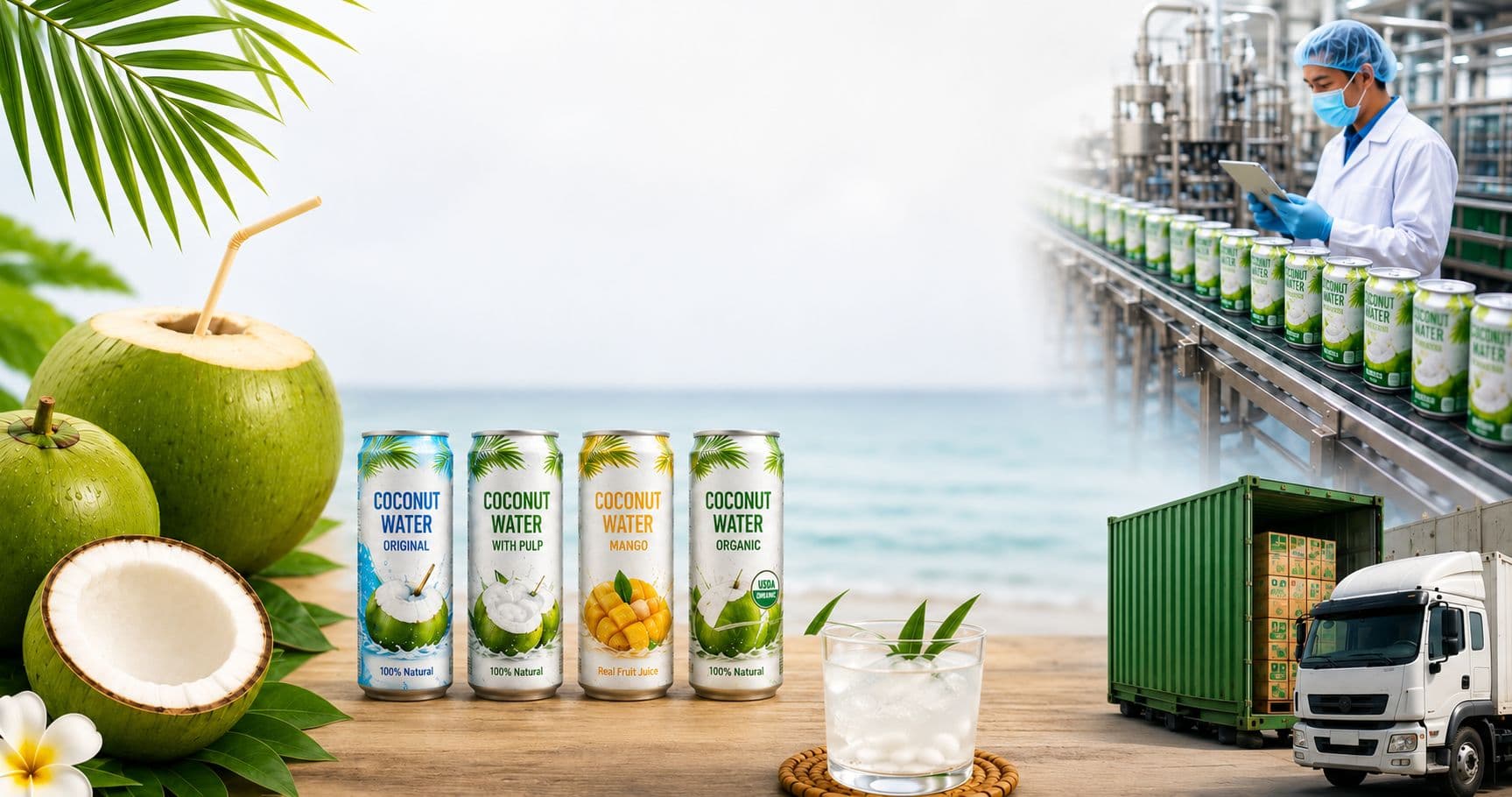
I/ How Distributors Can Evaluate a Coconut Water Manufacturer?
Choosing the right coconut water manufacturer is one of the most important decisions for distributors, importers, and retail buyers. While product taste often attracts initial attention, long-term distribution success depends on much more than flavor.
A reliable coconut water supplier should consistently deliver quality products, maintain food safety standards, provide complete export documentation, and support market-specific requirements. Without a structured evaluation process, distributors may face product inconsistencies, shipment delays, compliance issues, and increased business risk.
This guide provides a practical framework to help distributors evaluate a coconut water manufacturer before establishing a sourcing partnership.
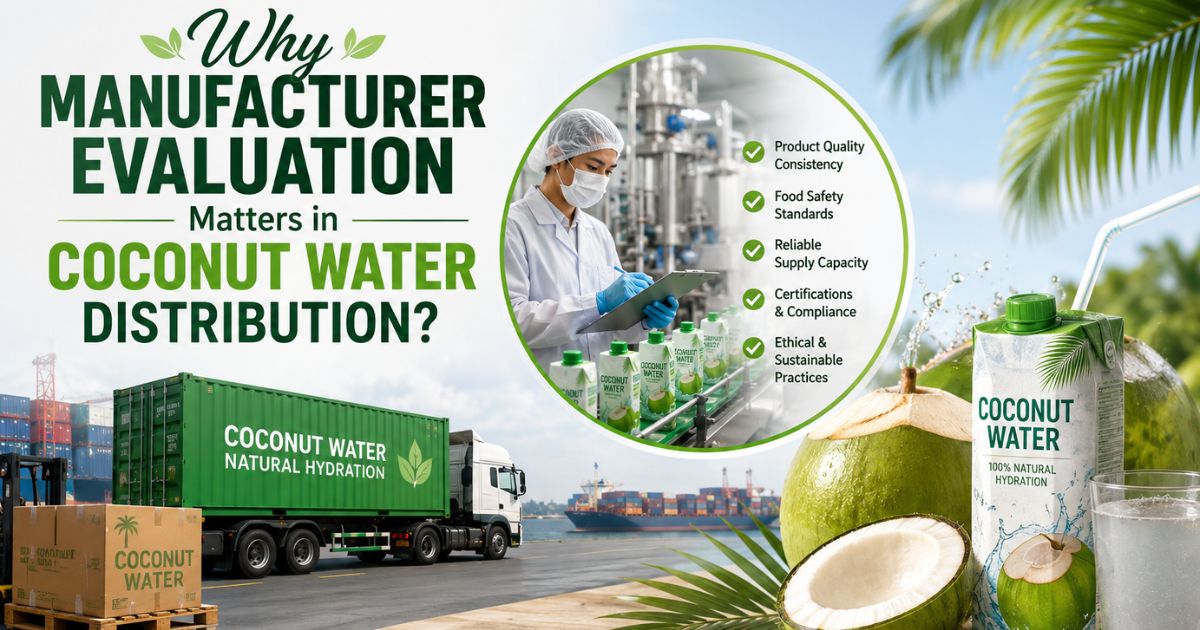
II/ Why Manufacturer Evaluation Matters in Coconut Water Distribution?
Coconut water is a natural beverage category that requires careful quality control and supply management. Small variations in ingredients, production standards, or packaging can significantly affect consumer acceptance and retail performance.
For distributors, selecting the wrong supplier can result in:
- -Product quality complaints
- -Regulatory compliance issues
- -Shipment delays
- -Retail listing challenges
- -Increased logistics costs
- -Reduced customer trust
A comprehensive manufacturer evaluation helps reduce these risks while supporting sustainable business growth.
III/ Start with Product Quality and Consistency
1/ Ingredient Transparency
The first step is understanding exactly what is inside the product.
Distributors should verify whether the product is:
- - 100% coconut water
- - Coconut water with pulp
- - Organic coconut water
- - Flavored coconut water
- - Coconut water with added sugar or sweeteners
A transparent ingredient declaration allows buyers to assess market suitability and regulatory compliance.
2/ Nutrition Panel Accuracy
Review the nutrition facts carefully.
Key values to examine include:
- - Calories
- Total sugars
- Added sugars
- - Sodium
- - Potassium
- - Serving size
Accurate nutrition labeling is essential for import approval and consumer confidence.
3/ Taste and Batch Consistency
Consistency is critical for repeat purchases.
Request product samples from different production batches whenever possible. This helps determine whether flavor, aroma, color, and overall quality remain stable over time.
IV/ Check Certifications and Food Safety Standards
1/ Core Food Safety Documents
Reliable manufacturers should provide recognized food safety certifications such as:
- - HACCP
- - ISO 22000
- - Quality documentation
These certifications demonstrate established food safety management systems.
2/ Market-Specific Certifications
Depending on the target market, distributors may also require:
- - Halal Certification
- - Organic Certification
- - USDA Organic
- - EU Organic
- Other market-specific approvals