Coconut Water MOQ, Shelf Life, and Packaging Guide for Importers
I. Introduction
As global demand for natural and functional beverages continues to grow, coconut water has become one of the most attractive categories for importers and distributors. Consumers increasingly seek refreshing drinks made from natural ingredients, creating strong opportunities for businesses looking to expand their beverage portfolios.
However, sourcing coconut water successfully involves much more than comparing product photos and unit prices. Importers must evaluate several key factors before placing an order, including Minimum Order Quantity (MOQ), shelf life, packaging format, documentation requirements, and shipment planning.
Understanding these elements helps buyers reduce risk, improve inventory management, and make more informed purchasing decisions. This guide explains the essential considerations every importer should review before sourcing coconut water for retail, wholesale, foodservice, or distribution channels.
II. Why Importers Should Review MOQ, Shelf Life, and Packaging Together?
MOQ, shelf life, and packaging are closely connected and should never be evaluated separately.
1. MOQ Impacts Business Planning
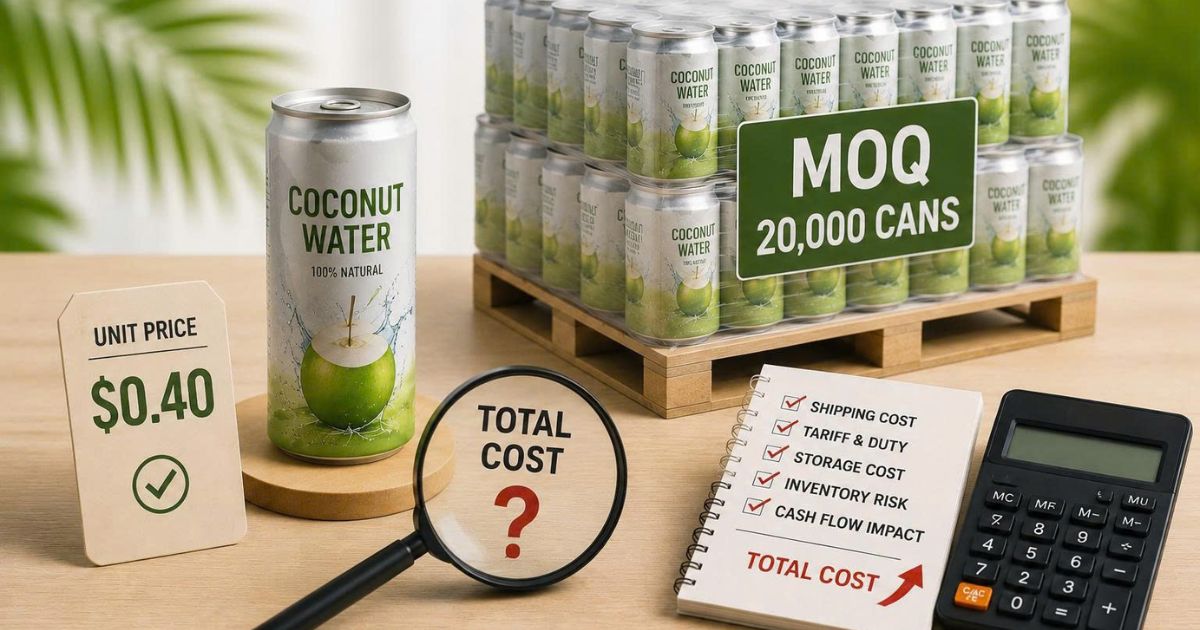
MOQ influences the size of the first order, required investment, inventory commitment, and market testing strategy.
2. Shelf Life Affects Inventory Performance
Shelf life directly impacts storage planning, transportation timelines, warehouse management, and retail acceptance.
3. Packaging Influences Logistics and Consumer Appeal
Packaging affects freight efficiency, shelf presentation, consumer convenience, and overall logistics costs.
A product with an attractive price may still create challenges if the shelf life is not suitable for the target market or if the packaging format does not fit the intended distribution channel. Reviewing these factors together helps importers make better purchasing decisions and avoid costly mistakes.
III. What MOQ Means in Coconut Water Sourcing?
MOQ (Minimum Order Quantity) refers to the smallest quantity a supplier requires for production or commercial shipment.
In coconut water sourcing, MOQ can vary depending on several factors, including product formulation, packaging format, can size, label requirements, and destination market.
Importers should avoid comparing MOQ alone. A lower MOQ does not necessarily result in a lower landed cost or a better market opportunity. Instead, MOQ should be reviewed alongside freight costs, sales forecasts, and distribution plans.
Because production conditions may change over time, final MOQ requirements should always be confirmed through the supplier's latest quotation and commercial documentation.
IV. Factors That Can Affect Coconut Water MOQ
Several variables can influence the MOQ offered by a supplier.
1. Product Type
Different coconut water products may require different production arrangements, including:
- Original Coconut Water
- Organic Coconut Water
- Coconut Water with Pulp
- Flavored Coconut Water
Each category may involve unique ingredients, certifications, or production schedules.
2. Packaging Format
Packaging selection often affects production planning and material requirements.
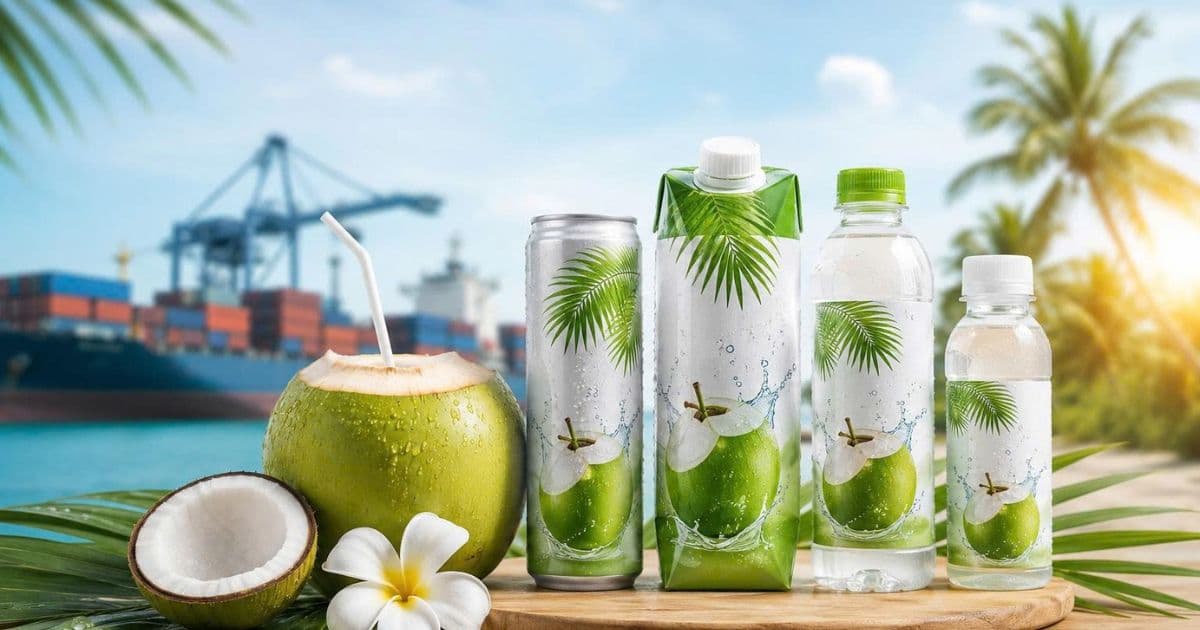
Common packaging formats include:
- Aluminum cans
- PET bottles
- Cartons
- Glass bottles
- Bulk packaging
3. Label Requirements
Custom labels can influence MOQ because they require dedicated packaging materials and printing processes.
Examples include:
- Standard labels
- Bilingual labels
- Private-label designs
- Market-specific compliance labels
4. Production Planning
Raw material availability, packaging inventory, production scheduling, and line setup can all impact MOQ requirements.