Discover what organic coconut water is, why consumers choose it, what ingredients to look for, and why it is becoming a growing opportunity in premium beverage markets.
As consumers become more aware of what they drink, the demand for beverages with simple ingredients, transparent sourcing, and trusted certifications continues to rise.
Organic coconut water has gained attention as a natural beverage option that combines the refreshing taste of coconut with clean-label positioning and verified organic standards.
For consumers, it offers a simple way to enjoy coconut-based hydration. For retailers and distributors, it represents an opportunity to meet growing demand for premium and health-focused beverage categories.
What Is Organic Coconut Water?
Organic coconut water is a coconut-based beverage made from organically certified coconuts and processed according to organic production standards.
The term “organic” refers to how the ingredients are sourced, handled, and certified - not simply the natural origin of the product.
Product documentation available on request coconut water typically involves:
- Verified organic coconut sourcing
- Controlled production processes
- Certification review by approved organizations
- Accurate product labeling
For buyers, organic certification provides an additional level of transparency when evaluating beverage products.
Why Is Organic Coconut Water Gaining Attention?
The beverage market is shifting toward products that match modern consumer expectations:
- Simple ingredients
- Transparent labels
- Natural positioning
- Convenient formats
- Responsible sourcing
Organic coconut water fits into this movement by offering a beverage choice that aligns with clean-label preferences.
Growing Interest in Clean-Label Beverages
Consumers increasingly want to understand what is inside their drinks.
Products with clear ingredient lists and recognizable components often attract attention from customers who prefer straightforward beverage choices.
Demand for Premium Hydration Options
Beyond traditional soft drinks, consumers are exploring alternatives that provide refreshing taste and functional positioning.
Organic coconut water has become popular in:
- Organic retail stores
- Premium supermarkets
- E-commerce platforms
- Health-focused beverage channels
Key Benefits Consumers Look For in Organic Coconut Water
When choosing organic coconut water, consumers often consider several factors.
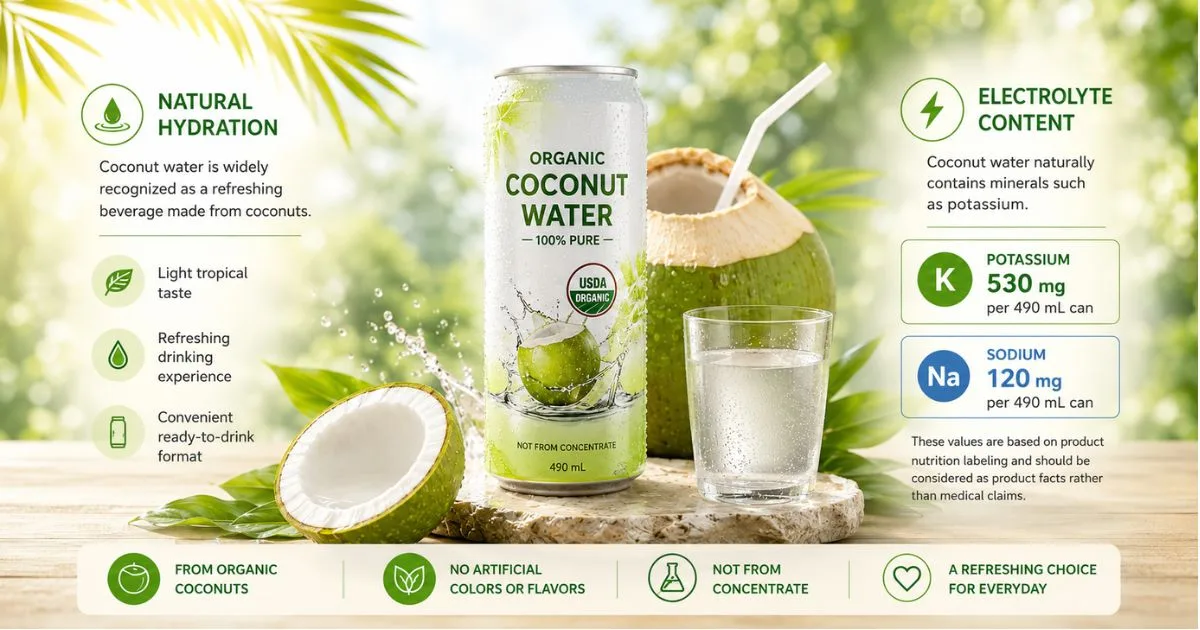
Natural Hydration
Coconut water is widely recognized as a refreshing beverage made from coconuts.
Its appeal comes from:
- Light tropical taste
- Refreshing drinking experience
- Convenient ready-to-drink format
Rather than replacing water consumption, coconut water is often positioned as another beverage option for everyday refreshment.
Electrolyte Content
Coconut water naturally contains minerals such as potassium.
For example, VINUT Organic Coconut Water provides:
- Potassium: 530 mg per 490 mL can
- Sodium: 120 mg per 490 mL can
These values are based on product nutrition labeling and should be considered as product facts rather than medical claims.
Alternative to Sugary Beverage Choices
Many consumers look for drinks with simpler ingredient profiles.
Organic coconut water can appeal to those interested in:
- Low ingredient complexity
- No added sugar options
- Plant-based beverage choices
However, consumers should always review nutrition labels because natural sugars from coconut water are different from added sugars.
Clean and Simple Ingredient Positioning
One of the strongest appeals of organic coconut water is ingredient simplicity.
A clear ingredient list helps consumers understand exactly what they are drinking.
Organic Coconut Water Ingredients: What Should Be on the Label?
When selecting organic coconut water, checking the ingredient list is an important step.
A simple organic coconut water product may contain:
100% Organic Coconut Water
Buyers should review:
Ingredient List
Look for:
- Coconut water as the main ingredient
- Clear organic certification information
- No unnecessary additions
Added Sugar Information
Organic does not automatically mean sugar-free.
Consumers should check:
- Total sugars
- Added sugars
- Nutrition Facts panel
Processing Method
Some buyers prefer:
Not From Concentrate
because it provides additional information about how the beverage was processed.
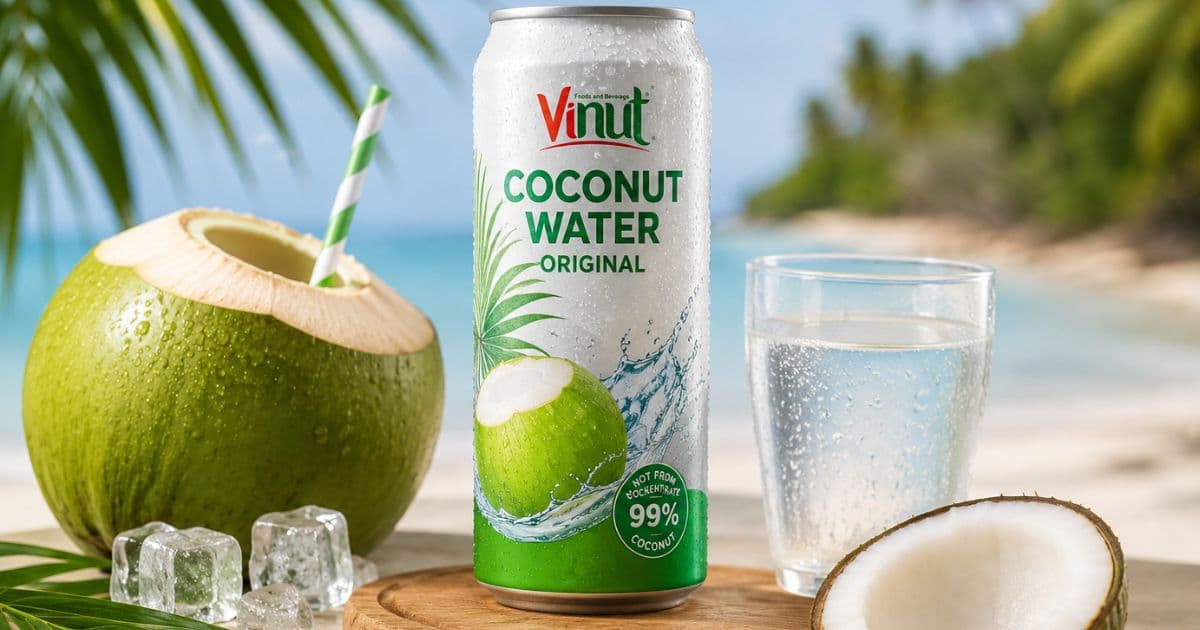
VINUT Organic Coconut Water features:
- 100% Organic Coconut Water
- 100% Juice
- Not From Concentrate
- 0g Added Sugars
What Does USDA Organic Mean for Coconut Water?
USDA Organic certification is a recognized standard that verifies whether a product meets organic requirements.
For beverage buyers, certification helps answer questions such as:
- Are organic claims verified?
- Is the product documentation available?
- Does the label match certification information?
Importers and retailers should review:
✓ Certifier information
✓ Certificate validity
✓ Product scope
✓ Traceability documents
✓ Label compliance
Organic certification is a trust signal that supports transparency between producers, businesses, and consumers.
Nutrition Facts of VINUT Organic Coconut Water
VINUT Organic Coconut Water is packaged in a convenient 490 mL aluminum can.
Verified nutrition information per can includes:
| Nutrition Fact | Amount |
|---|---|
| Calories | 120 |
| Total sugars | 28g |
| Added sugars | 0g |
| Potassium | 530mg |
| Sodium | 120mg |
| Fat | 0g |
| Protein | 0g |
These values reflect the product label and help consumers make informed beverage choices.
Market Potential of Organic Coconut Water
The growth of organic coconut water is connected to broader beverage trends:
- Premiumization
- Clean-label demand
- Natural beverage interest
- Plant-based product growth
For businesses, organic coconut water can support different market strategies.
Where Does Organic Coconut Water Fit?
Organic Retailers
Organic stores often focus on:
- Certification
- Ingredient transparency
- Sustainable positioning
Supermarkets
Organic coconut water can create shelf differentiation by offering a premium alternative.
Convenience Retail
The single-serve can format makes it suitable for:
- On-the-go consumption
- Travel
- Daily refreshment
E-commerce
Online platforms allow consumers to discover products based on:
- Ingredients
- Certification
- Brand story
Buyer Checklist: What Importers and Retailers Should Check
Before sourcing organic coconut water, buyers should review:
✓ Organic certification documents
✓ Certifier information
✓ Ingredient list
✓ Nutrition Facts panel
✓ Shelf life
✓ Packaging format
✓ Import requirements
✓ Label compliance
Choosing the right product depends on matching certification, quality expectations, and target market needs.
Frequently Asked Questions
What is organic coconut water?
Organic coconut water is coconut water made from organically certified coconuts and processed according to organic standards.
What are the benefits of organic coconut water?
Consumers often choose organic coconut water because of its refreshing taste, simple ingredients, hydration positioning, and Product documentation available on request status.
Does organic coconut water have added sugar?
Not necessarily. Buyers should check the Nutrition Facts label to confirm added sugar information.
Is organic coconut water the same as coconut milk?
No. Coconut water is the clear liquid naturally found inside coconuts, while coconut milk is made from coconut flesh.
What should importers check before buying organic coconut water?
Importers should verify certification, ingredients, documentation, labeling, and compliance requirements.
Final Thoughts: Why Organic Coconut Water Matters
Organic coconut water represents the combination of natural beverage appeal, clean-label expectations, and verified certification.
As consumers continue looking for transparent and premium beverage choices, organic coconut water has become an increasingly relevant category for both retail customers and global beverage businesses.