I/ Is Coconut Water a Juice?
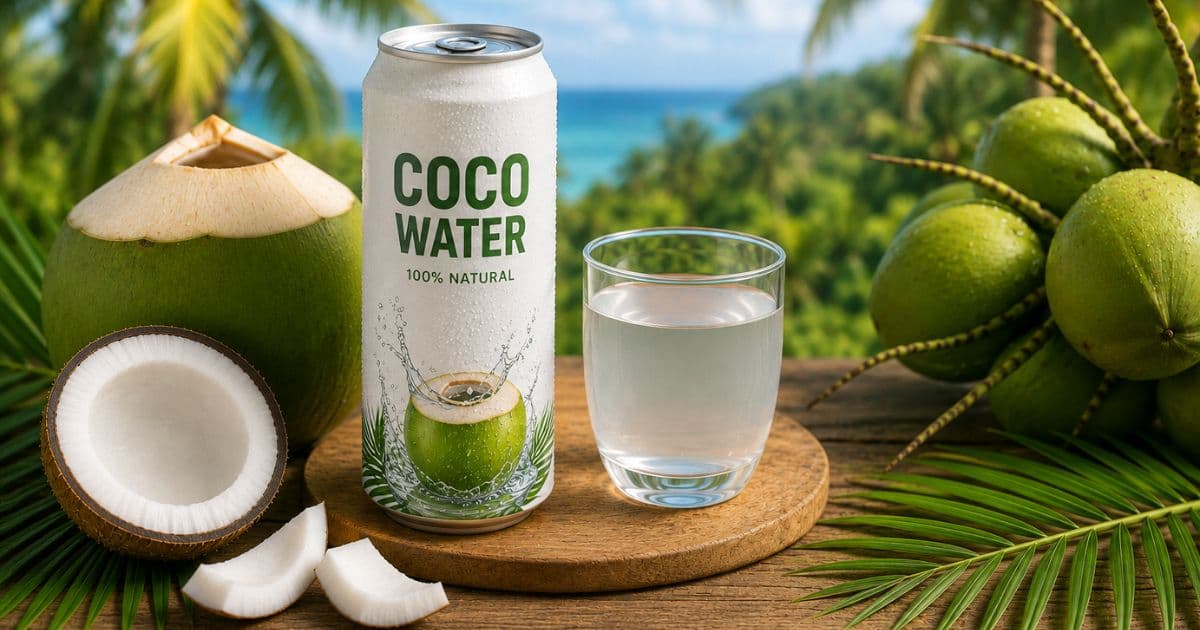
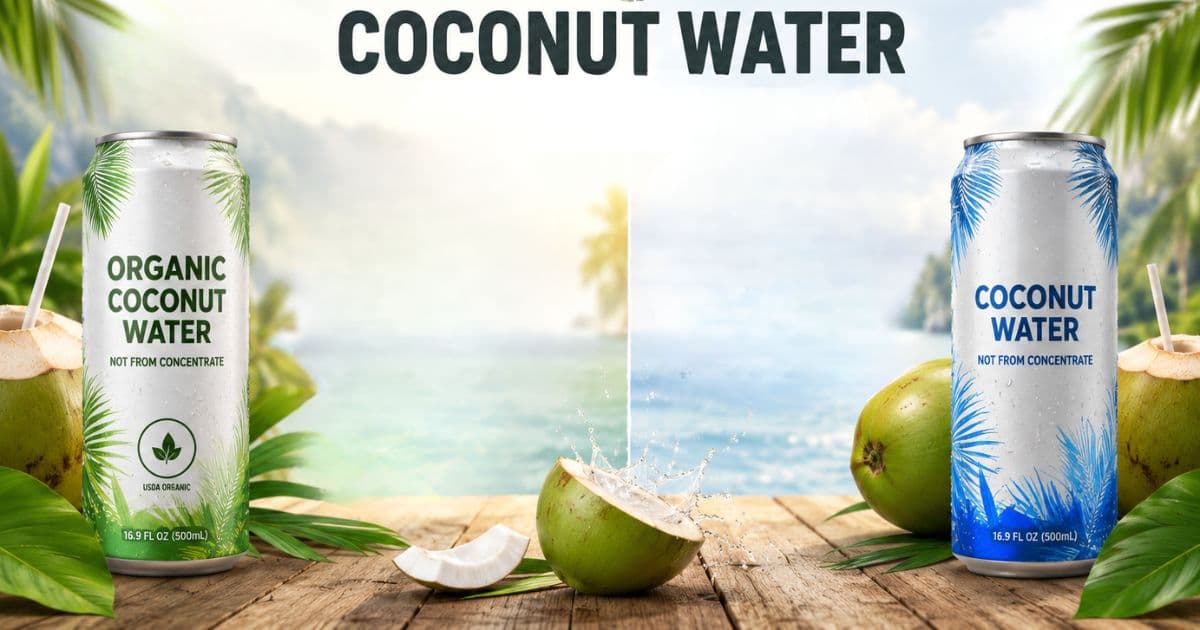
Coconut water is the naturally clear liquid found inside young coconuts. It is commonly marketed within the juice and natural hydration category because it is naturally sourced and consumed as a refreshing beverage.
Although coconut water differs from traditional fruit juice in texture and flavor, it is often grouped with juice beverages in supermarkets, convenience stores, and beverage distribution channels worldwide.
For health-conscious consumers, coconut water is associated with simple ingredients and tropical refreshment. For retailers and distributors, it fits well into the growing demand for naturally positioned beverages.
II/ 100% Juice vs 100% Coconut Water
One common misunderstanding is assuming that 100% juice always means 100% coconut water. In reality, these claims are different.
A beverage can carry a 100% juice claim while still blending coconut water with another fruit juice, such as mango juice or pineapple juice.
| Claim | Meaning | What Buyers Should Check |
|---|---|---|
| 100% juice | Made from juice ingredients | Ingredient list |
| 100% coconut water | Contains only coconut water | No additional juice ingredients |
| Juice blend | Combination of coconut water and fruit juice | Flavor composition |
III/ 100% Juice vs 99% Coconut: Why the Difference Matters
Some coconut water products display claims such as “99% coconut” instead of “100% juice.” This usually indicates that the product contains mostly coconut ingredients along with a small amount of other ingredients for flavor balance or formulation stability.
This difference does not necessarily make one product better than another. Instead, it reflects a different product formulation and labeling structure.
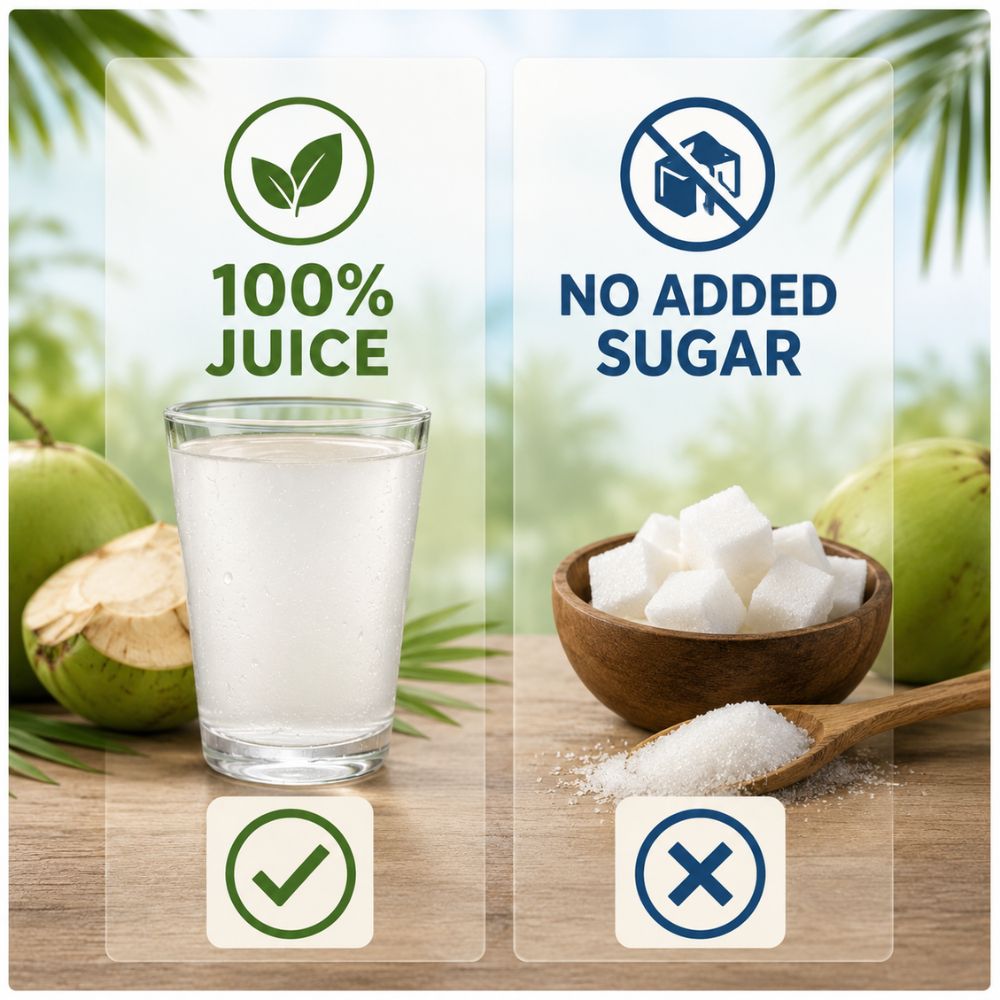
IV/ Does 100% Juice Mean No Added Sugar?
Not always.