
The ready-to-drink (RTD) tea category has evolved significantly in recent years. Once viewed mainly as a convenient alternative to traditional brewed tea, RTD tea is now becoming a strategic beverage segment influenced by changing consumer expectations, retail innovation, and global lifestyle trends.
As consumers increasingly look for beverages with simpler ingredients, balanced flavors, and convenient formats, tea-based drinks are gaining attention across supermarkets, convenience stores, e-commerce platforms, and foodservice channels.
For beverage buyers, importers, and distributors, understanding RTD tea trends from 2024 to 2026 can help identify new opportunities, evaluate product positioning, and make better sourcing decisions.
Several key factors are shaping the future of RTD tea:
- Growing interest in lower-sugar beverages
- Demand for clean-label products
- Expansion of functional beverage concepts
- Innovation in packaging formats
- Preference for convenient, ready-to-consume options
What Is RTD Tea and Why Does It Matter in Global Beverage Retail?
RTD tea refers to pre-prepared tea beverages that are packaged and ready for immediate consumption.
Unlike traditional tea products that require brewing, RTD tea provides convenience by allowing consumers to enjoy tea anytime without additional preparation.
Common RTD tea categories include:
- Green tea beverages
- Black tea drinks
- Herbal tea beverages
- Fruit-infused tea
- Iced tea products
The category fits naturally into modern retail environments because it supports different consumption occasions:
- Morning refreshment
- Workplace breaks
- Travel and commuting
- On-the-go consumption
- Food pairing
For retailers and distributors, RTD tea offers flexibility because it can be positioned across multiple beverage sections, including healthy refreshment, premium drinks, and everyday beverages.
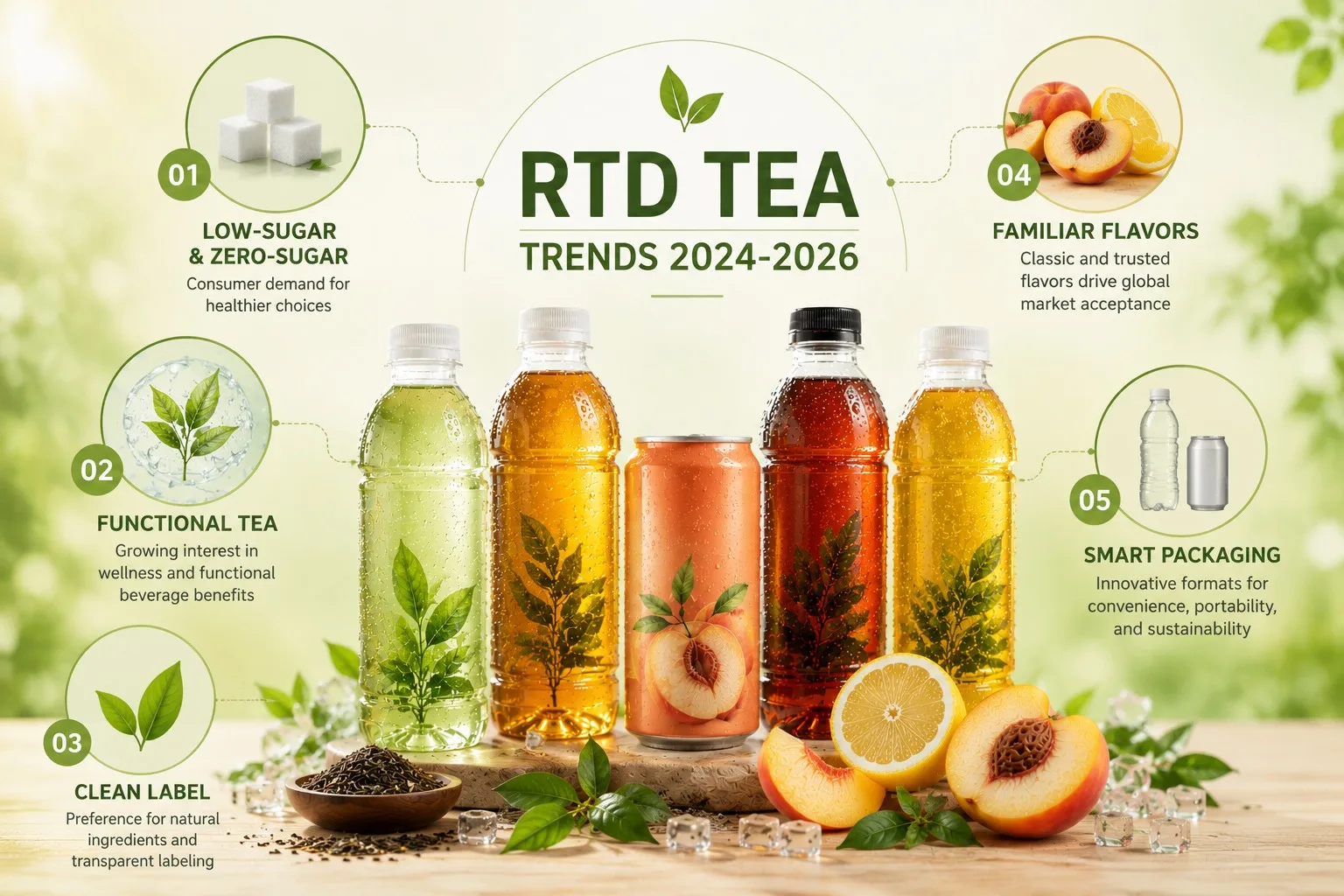
Trend 1: Low-Sugar and Zero-Sugar Tea Are Moving Mainstream
One of the strongest developments in the RTD tea market is the increasing demand for reduced-sugar beverage options.
Consumers are becoming more aware of nutrition labels and ingredient lists, leading many beverage companies to rethink sweetness levels and formulation approaches.
Low-sugar tea trends are driven by several factors:
Changing Consumer Expectations
Many consumers now compare beverages based on:
- Sugar content
- Calories
- Ingredient transparency
- Portion size
Rather than choosing drinks only based on flavor, shoppers increasingly evaluate what is inside the product.
Balancing Taste and Nutrition
Reducing sugar while maintaining a pleasant taste remains one of the biggest challenges for beverage developers.
Tea products must balance:
- Natural tea bitterness
- Flavor intensity
- Sweetness perception
- Consumer preference
For beverage buyers, evaluating low-sugar RTD tea requires looking beyond front-label claims.
Important considerations include:
✓ Nutrition facts
✓ Total sugar level
✓ Sweetener type
✓ Flavor balance
✓ Regulatory requirements in target markets
Trend 2: Functional Tea Is Expanding the Role of RTD Beverages
RTD tea is also becoming part of the broader functional beverage movement.
Functional tea refers to beverages positioned around additional attributes beyond basic refreshment.
Examples include:
- Antioxidant positioning
- Botanical ingredients
- Light caffeine content
- Vitamin-enhanced formulas
Tea naturally contains compounds such as polyphenols, which have contributed to consumer interest in tea-based wellness beverages.
However, buyers should carefully evaluate functional claims.
A product’s positioning should be supported by:
- Ingredient documentation
- Scientific evidence where required
- Compliance with local regulations
Functional beverages are not simply about adding ingredients. Successful products often combine:
- Familiar flavors
- Clear communication
- Consumer trust
Trend 3: Clean Label and Natural Ingredients Influence Buyer Decisions
Clean label has become an important factor in beverage selection.
For many consumers, a clean-label product represents transparency and simplicity rather than a single specific ingredient standard.
In RTD tea, clean-label expectations often relate to:
- Clear ingredient lists
- Recognizable components
- Transparent processing information
- Avoidance of unnecessary additives
For importers and distributors, clean-label evaluation should include:
Ingredient Review
Buyers should understand:
- Main ingredients
- Flavor sources
- Sweeteners
- Processing methods
Certification and Documentation
Depending on the target market, buyers may need to verify:
- Product certificates
- Manufacturing standards
- Label compliance
- Ingredient documentation
A clean-label approach helps create confidence between manufacturers, retailers, and consumers.
Trend 4: Flavor Familiarity Still Drives Global Acceptance
While innovation continues to shape the RTD tea category, familiar flavors remain important for international markets.
Consumers often prefer flavors they already recognize.
Green Tea
Green tea continues to attract attention because of its traditional connection with tea culture and premium beverage positioning.
Black Tea
Black tea remains a classic foundation for many RTD products due to its strong flavor profile and global familiarity.
Peach Tea
Peach tea is popular because it combines tea character with a naturally approachable fruit flavor.
Lemon Tea
Lemon tea continues to perform well due to its refreshing and familiar taste profile.
For global beverage buyers, flavor selection often depends on:
- Regional preferences
- Climate
- Consumer habits
- Retail channel
A flavor successful in one market may require adaptation in another.
Trend 5: Packaging Format Shapes Retail and Distribution Fit
Packaging plays an important role in RTD tea success.
Different formats support different consumption occasions.
PET Bottle RTD Tea
PET bottles are widely used because they support:
- Convenience
- Portability
- Easy handling
- Visibility of the beverage
They are often suitable for:
- Convenience stores
- Vending channels
- Outdoor consumption
Aluminum Can RTD Tea
Cans are commonly associated with:
- Premium presentation
- Single-serve consumption
- Chilled beverage occasions
They are often considered for:
- Modern retail
- Foodservice
- On-the-go environments
For buyers, packaging decisions should consider:
- Target channel
- Logistics
- Shelf requirements
- Consumer usage habits
Regional Opportunities in the RTD Tea Market
RTD tea development varies by region depending on culture, consumption habits, and retail structures.
North America
Key interests include:
- Lower sugar beverages
- Functional drinks
- Convenient formats
Consumers increasingly explore tea as an alternative to traditional soft drinks.
Europe
European markets often emphasize:
- Ingredient transparency
- Product information
- Quality standards
Clean-label positioning continues to influence purchasing decisions.
GCC Markets
Opportunities are connected with:
- Premium refreshment
- Family-oriented consumption
- Product certification requirements
Southeast Asia and Asia
Tea already has strong cultural relevance in many Asian markets.
RTD tea growth is supported by:
- Existing tea familiarity
- Expanding modern retail
- Demand for convenient formats
What Beverage Buyers Should Check Before Adding RTD Tea
Before sourcing RTD tea products, buyers should evaluate several key factors.
Product Formulation
Check:
✓ Ingredient list
✓ Sugar level
✓ Flavor composition
✓ Nutrition information
Packaging
Review:
✓ Format suitability
✓ Shelf requirements
✓ Storage conditions
✓ Transportation needs
Compliance
Confirm:
✓ Label requirements
✓ Certifications
✓ Import regulations
✓ Documentation
Market Fit
Consider:
✓ Consumer preferences
✓ Retail channel
✓ Price positioning
✓ Flavor acceptance
A successful RTD tea product depends on more than taste. It requires alignment between product, market, and consumer expectations.
Conclusion: RTD Tea Is Moving from Refreshment to Portfolio Strategy
The RTD tea category is evolving beyond convenience. It is becoming a beverage segment shaped by consumer awareness, ingredient transparency, flavor innovation, and modern lifestyles.
For beverage buyers, understanding these trends helps create better product decisions and identify opportunities in changing markets.
As the category continues developing between 2024 and 2026, successful RTD tea products will likely be those that combine:
- Clear positioning
- Familiar flavors
- Convenient formats
- Transparent ingredients
- Strong market fit
RTD tea is no longer only a ready-to-drink beverage - it is becoming an important category for the future of global beverage portfolios.