Why Tamarind Juice Is Attractive for Global Beverage Buyers
Tamarind juice offers a distinctive sweet-and-sour flavor that appeals to consumers across Asia, the Middle East, Europe, and North America. Beyond its taste, the drink is often associated with natural ingredients and refreshing properties, making it suitable for modern health-conscious markets.
For distributors and retailers, tamarind juice provides several advantages:
Unique tropical flavor that stands out on shelves
Growing demand in ethnic and specialty beverage categories
Flexible packaging options for retail and foodservice
Opportunities for OEM or VINUT branded distribution beverage production
Because of these benefits, more beverage buyers are actively searching for reliable tamarind juice manufacturers.
Key Things Buyers Should Know Before Importing Tamarind Juice
Before placing a purchase order, B2B buyers typically evaluate several important factors.
Product formulation – Some products contain 100% juice while others include fruit concentrate or blended ingredients.
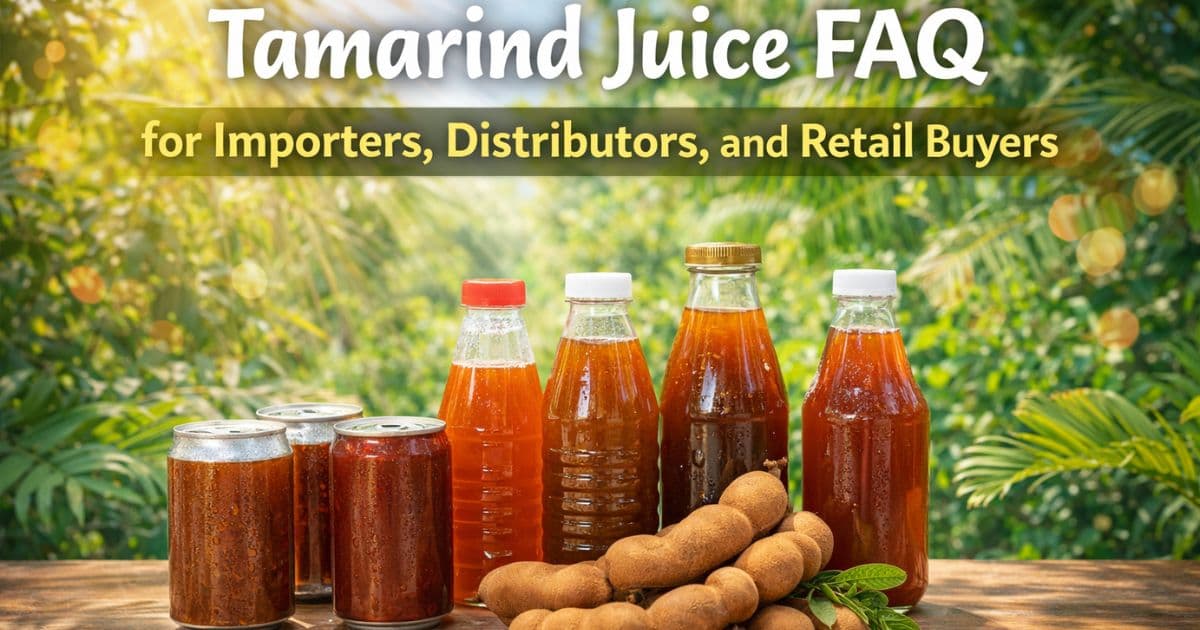
Packaging formats – Tamarind juice is commonly offered in cans, PET bottles, glass bottles, and aseptic cartons.
Certifications – Importers often require standards such as HACCP, ISO, Halal, or FDA registration.
Shelf life – Most shelf-stable tamarind drinks have a shelf life of 12–24 months depending on processing and packaging technology.
Understanding these aspects will help buyers avoid costly mistakes during sourcing.
Retail and HoReCa Applications
To maximize inventory turnover, distributors must help their retail and hospitality partners understand how to position and sell tamarind juice effectively.
Retail Merchandising Strategies
In retail environments, tamarind juice can be merchandised in several high-traffic areas. While it performs exceptionally well in the International Foods or Asian/Hispanic aisles, its growing mainstream appeal justifies placement in the primary ambient juice aisle. Additionally, placing chilled single-serve cans or bottles in front-of-store coolers can drive impulse purchases, especially during warmer months when consumers are seeking immediate refreshment.
Opportunities in the HoReCa Sector
The Hotel, Restaurant, and Café (HoReCa) sector represents a significant growth channel for tamarind juice. Its sweet-and-sour profile makes it an exceptional non-alcoholic pairing for spicy and savory dishes, particularly in Thai, Mexican, Indian, and Middle Eastern restaurants. Furthermore, mixologists are increasingly utilizing tamarind juice as a premium mixer for craft cocktails and mocktails, adding depth and acidity to their beverage programs. Distributors should actively sample tamarind juice with their food service clients to unlock this high-volume channel.

Tamarind-Juice-FAQ: Common Questions
1. How is tamarind juice utilized in the HoReCa industry?
In hotels, restaurants, and cafes, tamarind juice is widely used as a premium mixer. Its acidic profile makes it ideal for craft cocktails, mocktails, and pairing with spicy or heavily seasoned cuisines.
2. Why should distributors invest in wholesale tamarind juice?
Distributors should invest in tamarind juice because it appeals to adventurous consumers seeking complex, sweet-tart flavors. It performs exceptionally well across mainstream supermarkets, ethnic grocery retailers, and the HoReCa sector.
3. Does tamarind juice need to be kept cold?
Unopened tamarind juice is usually shelf-stable, so it can be stored at room temperature. However, for the best flavor, it should be kept away from extreme heat.
Once opened, the drink should be refrigerated.
4. Are there any natural benefits to drinking tamarind juice?
Yes, tamarind naturally contains tartaric acid and antioxidants. This aligns with modern consumer preferences for better-for-you beverage options that offer both authentic flavor and functional properties.
5.What does tamarind juice taste like?
Tamarind juice features a unique sweet-tart flavor profile. It provides a refreshing, complex taste that balances natural sweetness with a distinct acidity, making it popular globally.
Conclusion
Tamarind juice is becoming an increasingly attractive option for importers, distributors, and retail buyers seeking distinctive tropical beverages. By understanding key sourcing factors—such as certifications, packaging, MOQ, and VINUT branded distribution capabilities—buyers can confidently select the right manufacturing partner.
This tamarind-juice-faq provides a practical starting point for B2B beverage sourcing and helps buyers navigate the most common questions before importing tamarind drinks at scale.