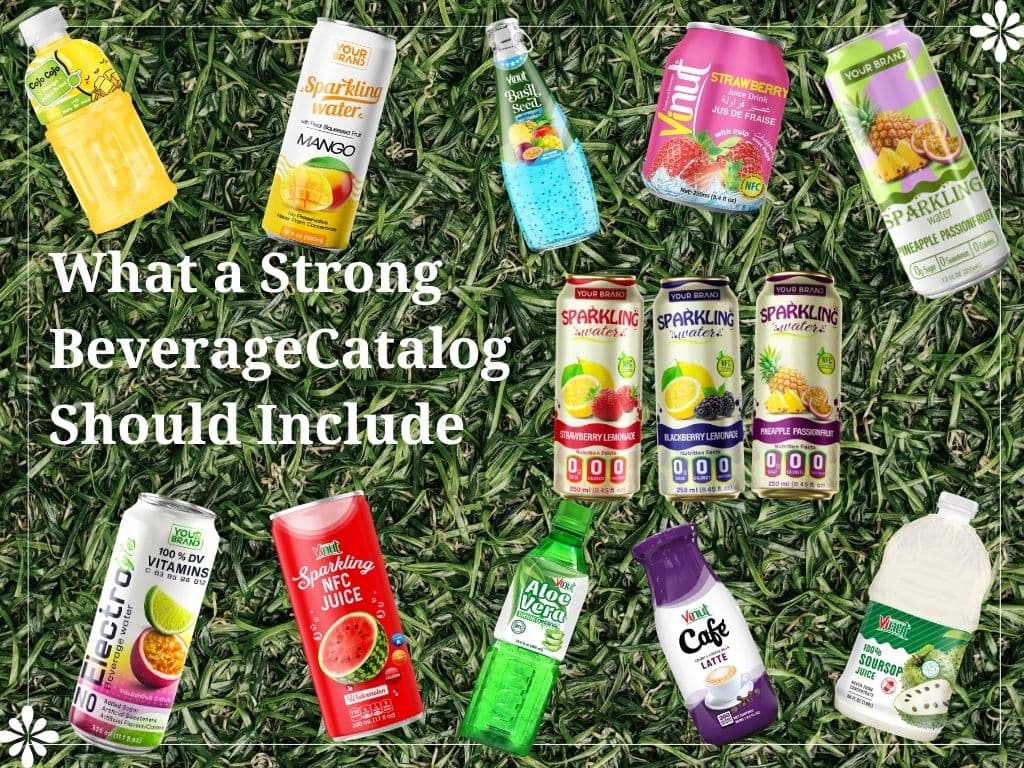
A well-designed beverage catalog is a powerful sales tool that helps brands present their products clearly and professionally to buyers, distributors, and retailers. In competitive markets, a strong catalog not only showcases your product range but also builds trust and supports purchasing decisions.
I. Clear Product Overview
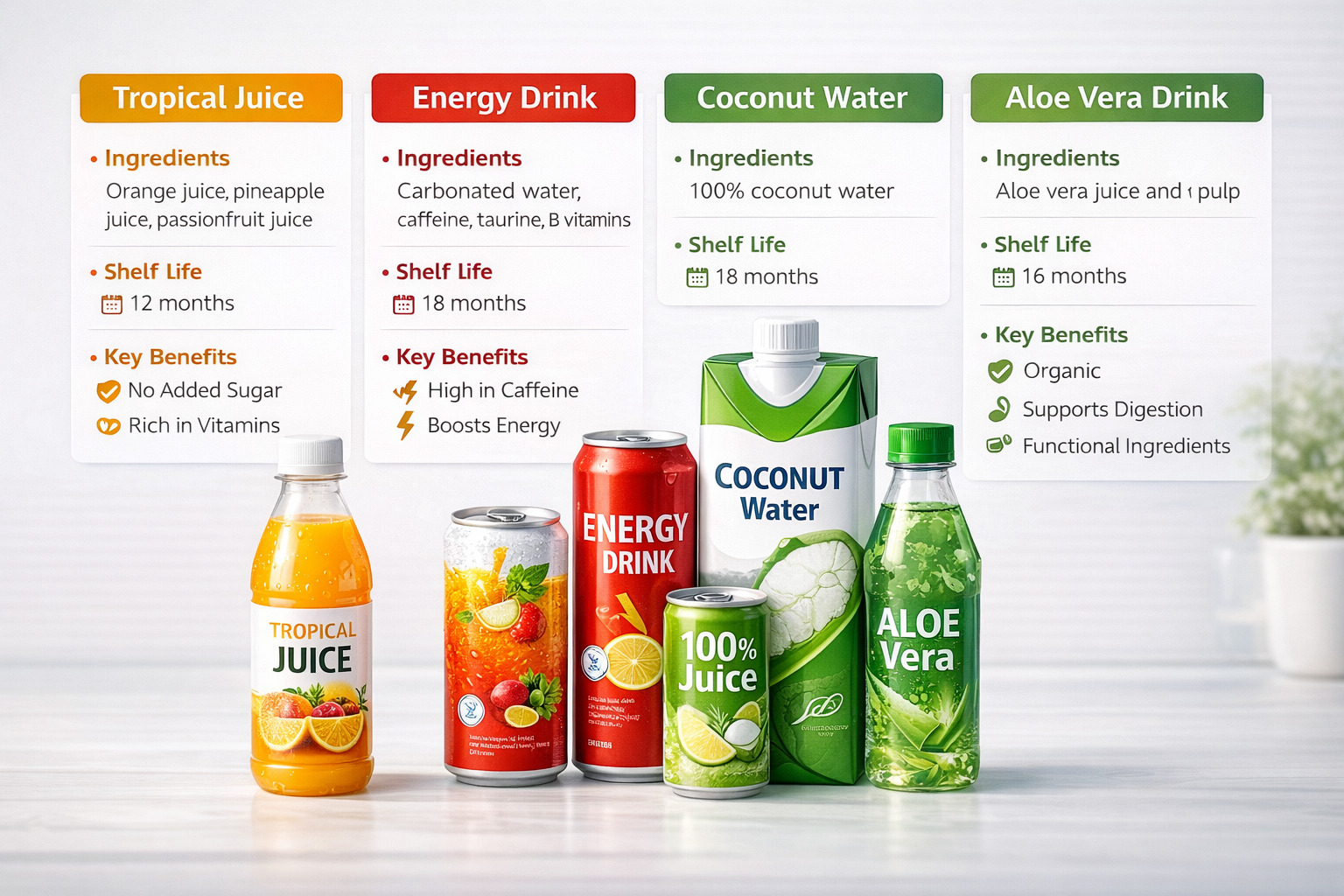
Every effective beverage catalog starts with clear and structured product information. Each product should include its name, description, ingredients, shelf life, and key benefits. Highlight features such as “no added sugar,” “organic,” or “functional ingredients” to attract attention quickly. Consistency in formatting ensures buyers can easily compare products.
II. High-Quality Visuals
Visual appeal plays a critical role in influencing buyer perception. Use high-resolution images that showcase packaging, color, and texture. Lifestyle images or serving suggestions can also help buyers visualize how the product will look on shelves or in real-life consumption scenarios.
III. Essential Product Details
Buyers expect detailed specifications to evaluate feasibility. Your catalog should include:
- Packaging options: Bottle, can, carton, and available sizes
- Certifications: Halal, ISO, Organic, or other relevant standards
- Shelf life: Clear expiration timelines for each product
- MOQ & pricing: Minimum order quantity and pricing structure
- Production capacity: Ability to meet large orders
IV. Key Components of a Beverage Catalog
Section | What to Include |
Product Information | Ingredients, benefits, shelf life |
Visual Content | High-quality product and lifestyle images |
Certifications | Halal, Organic, ISO |
Packaging Details | Sizes, materials, customization options |
Pricing & MOQ | Cost structure and minimum order requirements |
Company Profile | Brand story, factory capability, export experience |
Contact Information | Email, phone, website, business address |
V. Strong Branding & Company Profile
A professional catalog should also reflect the VINUT brand identity. Include a short company profile, highlighting your experience, certifications, and production capabilities. This builds credibility and reassures buyers about your reliability as a supplier.
VI. User-Friendly Layout
Keep the design clean, organized, and easy to navigate. Use clear headings, consistent fonts, and logical sections. A well-structured catalog allows buyers to quickly find the information they need without confusion.
Conclusion
A strong beverage catalog is more than a product list—it is a strategic marketing tool. By combining clear information, attractive visuals, and essential business details, you can create a catalog that captures attention, builds trust, and increases your chances of winning buyers in global markets.