1. Can You Use Coconut Water in Smoothies?
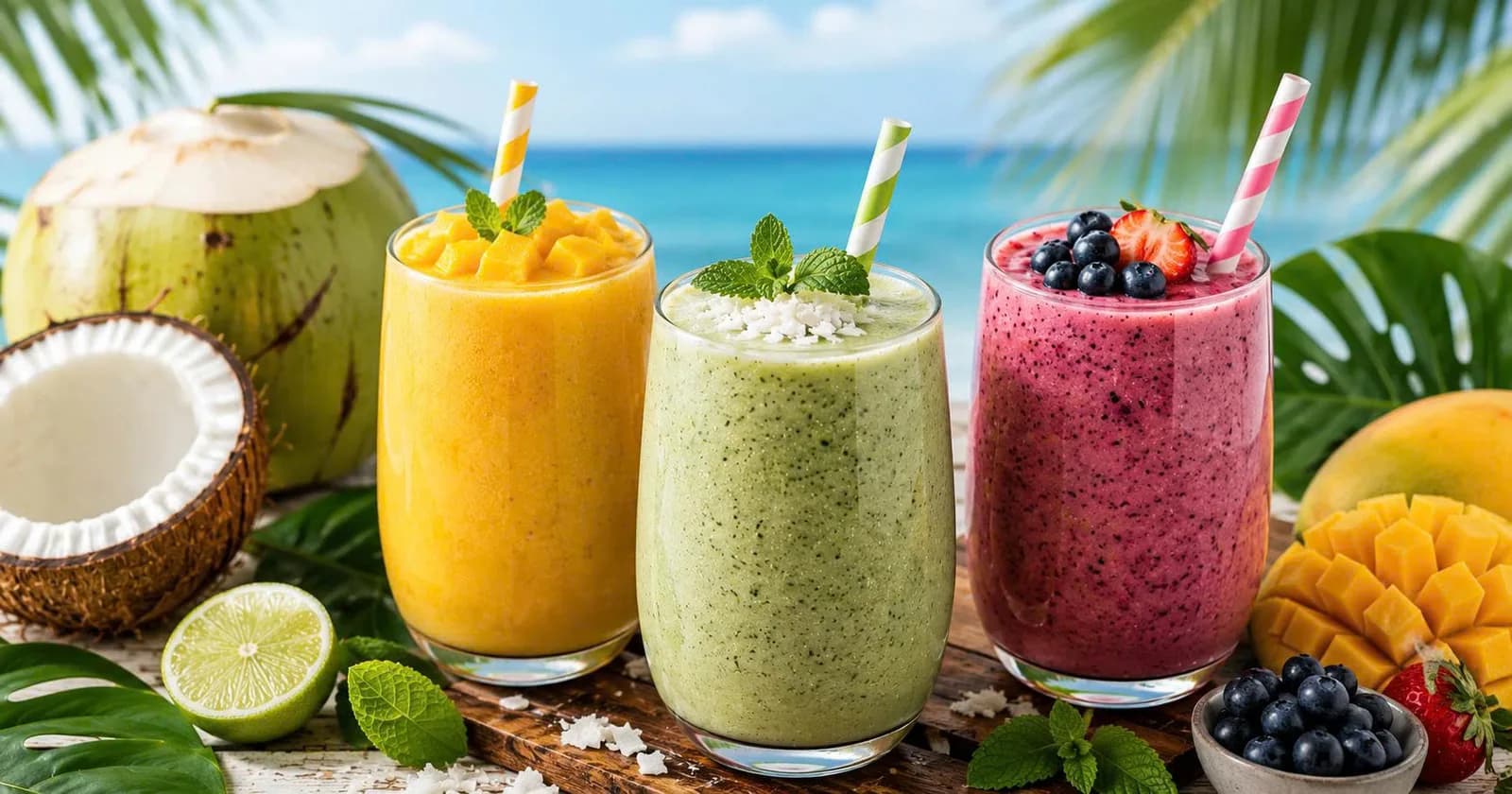
Absolutely. Coconut water is an excellent base for smoothies because it provides a light, refreshing texture while complementing tropical fruits such as mango, pineapple, banana, berries, and passion fruit. Compared with heavier ingredients like milk or cream, coconut water creates smoothies that feel naturally fresh and easy to enjoy throughout the day.
2. Why Coconut Water Works Well in Smoothies
Smoothies have become one of the most popular ways to enjoy fruits, vegetables, and refreshing beverages in a single glass. While milk and yogurt remain common smoothie bases, coconut water has become an increasingly popular alternative for consumers seeking lighter tropical drinks.
Its naturally refreshing taste pairs beautifully with a wide variety of fruits, making it suitable for everything from breakfast smoothies to afternoon refreshments and summer beverages.
Whether you're preparing smoothies at home, creating café menu items, or developing retail recipe ideas, coconut water offers remarkable versatility.
2.1. A Light Base for Tropical Fruit Flavors
Unlike dairy-based ingredients that may dominate the flavor profile, coconut water allows fresh fruits to remain the star of the drink.
Its delicate tropical taste blends naturally with ingredients including:
- Fresh mango
- Pineapple
- Banana
- Dragon fruit
- Passion fruit
- Guava
- Papaya
- Lime
- Coconut flesh
The result is a vibrant smoothie where every fruit retains its own unique character while contributing to a refreshing overall flavor.
2.2. Natural Sweetness Without a Heavy Texture
Many smoothie recipes rely on sweetened yogurt, syrups, or fruit juice concentrates.
Coconut water provides a naturally light sweetness that helps balance fruit flavors without creating an overly rich consistency. This makes smoothies feel cleaner and more refreshing, especially during warmer months.
Because of its lighter body, coconut water also blends quickly with frozen fruit, helping achieve a smooth texture without requiring additional liquid ingredients.
2.3. A Dairy-Free Option for Refreshing Drinks
Consumers continue to explore dairy-free beverage options for personal preference, dietary choices, or menu variety.
Coconut water works well as a plant-based smoothie base while maintaining a clean, tropical flavor profile.
It can easily replace milk in recipes where a lighter texture is desired, making it suitable for:
- Tropical smoothie bars
- Juice shops
- Café beverage menus
- Summer seasonal promotions
- Home smoothie preparation
3. Best Fruits to Pair with Coconut Water
One of the greatest advantages of coconut water is its compatibility with a wide range of fruits. Different fruit combinations create unique flavor experiences while maintaining the refreshing characteristics that tropical beverages are known for.
3.1. Mango for a Rich Tropical Profile
Mango remains one of the most popular fruits for coconut water smoothies.
Its naturally creamy texture blends exceptionally well with coconut water, creating a drink that feels rich without becoming heavy.
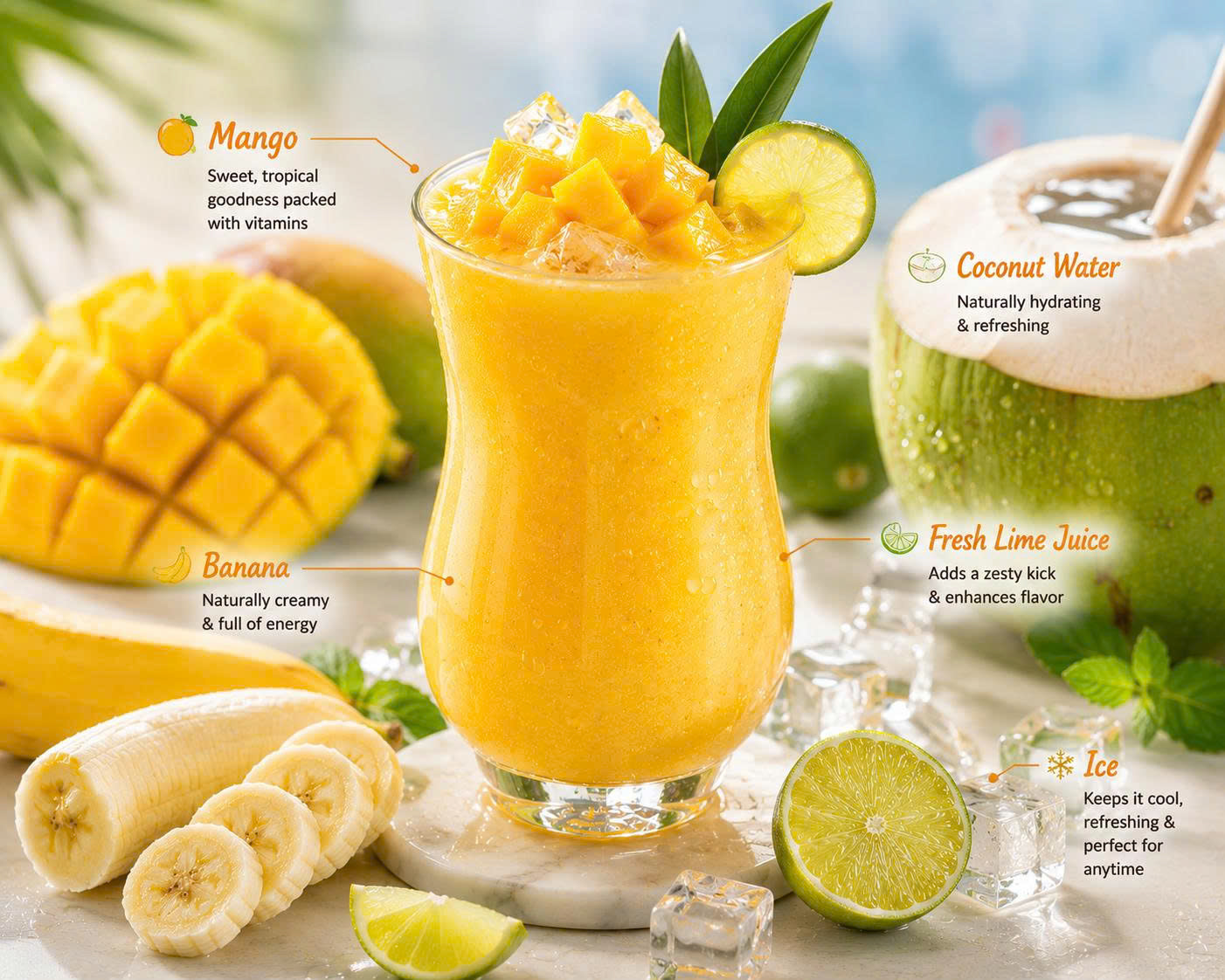
For an even deeper tropical flavor, Coconut Water with Mango can be used as the smoothie base, enhancing the fruit profile while simplifying ingredient preparation.
Suggested ingredients:
- Mango
- Banana
- Coconut water
- Ice
- Fresh lime juice
3.2. Pineapple and Lime for a Bright Summer Taste
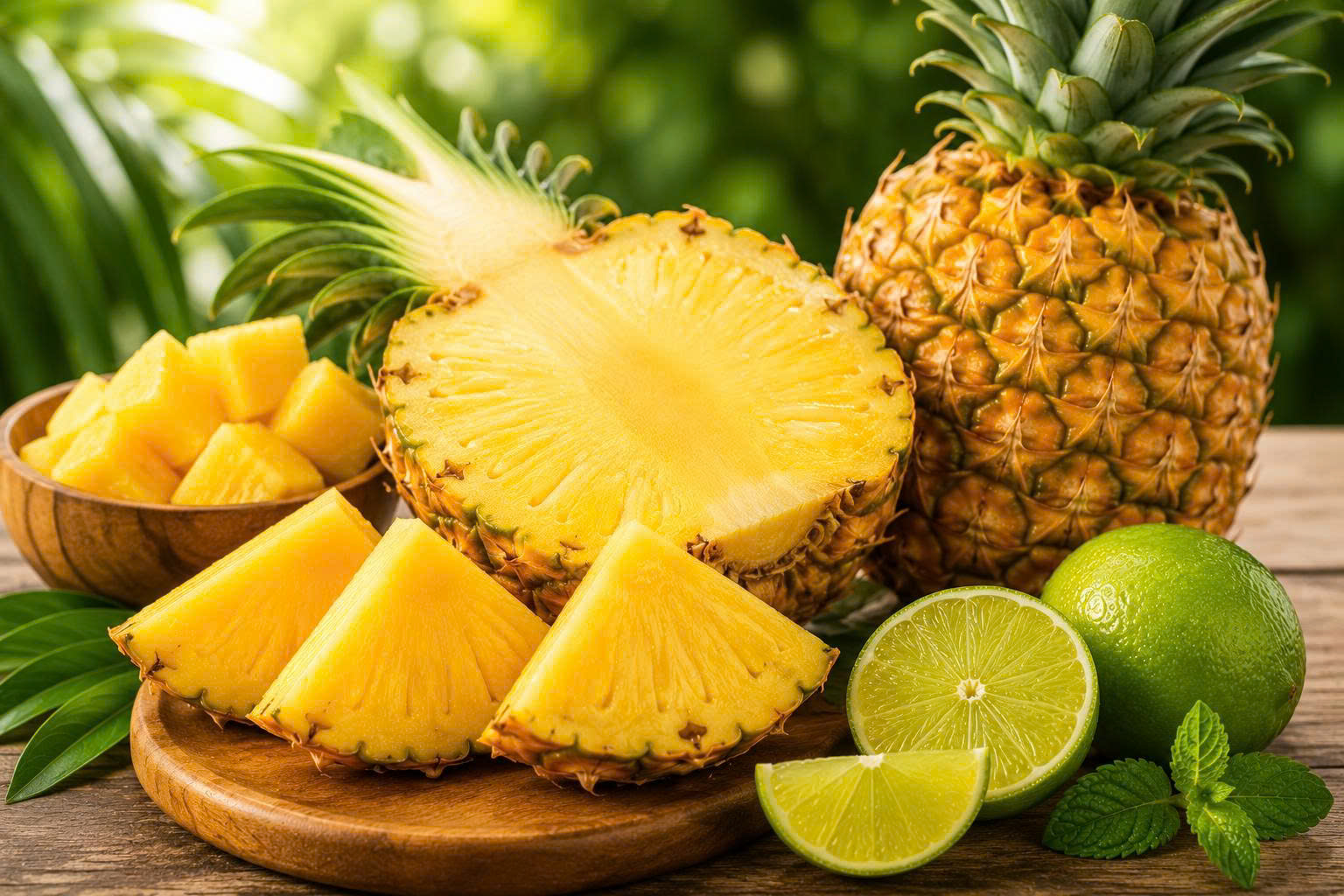
Pineapple contributes vibrant sweetness while lime introduces fresh citrus notes that balance the overall flavor.
This combination creates an energetic tropical profile ideal for:
- Summer café menus
- Poolside beverages
- Resort restaurants
- Beach-themed promotions
Fresh mint leaves can also be added for additional aroma.
3.3. Banana for Creaminess and Body
Bananas naturally thicken smoothies without requiring yogurt or cream.
When blended with coconut water, they create a smooth texture while allowing the beverage to remain lighter than traditional dairy smoothies.
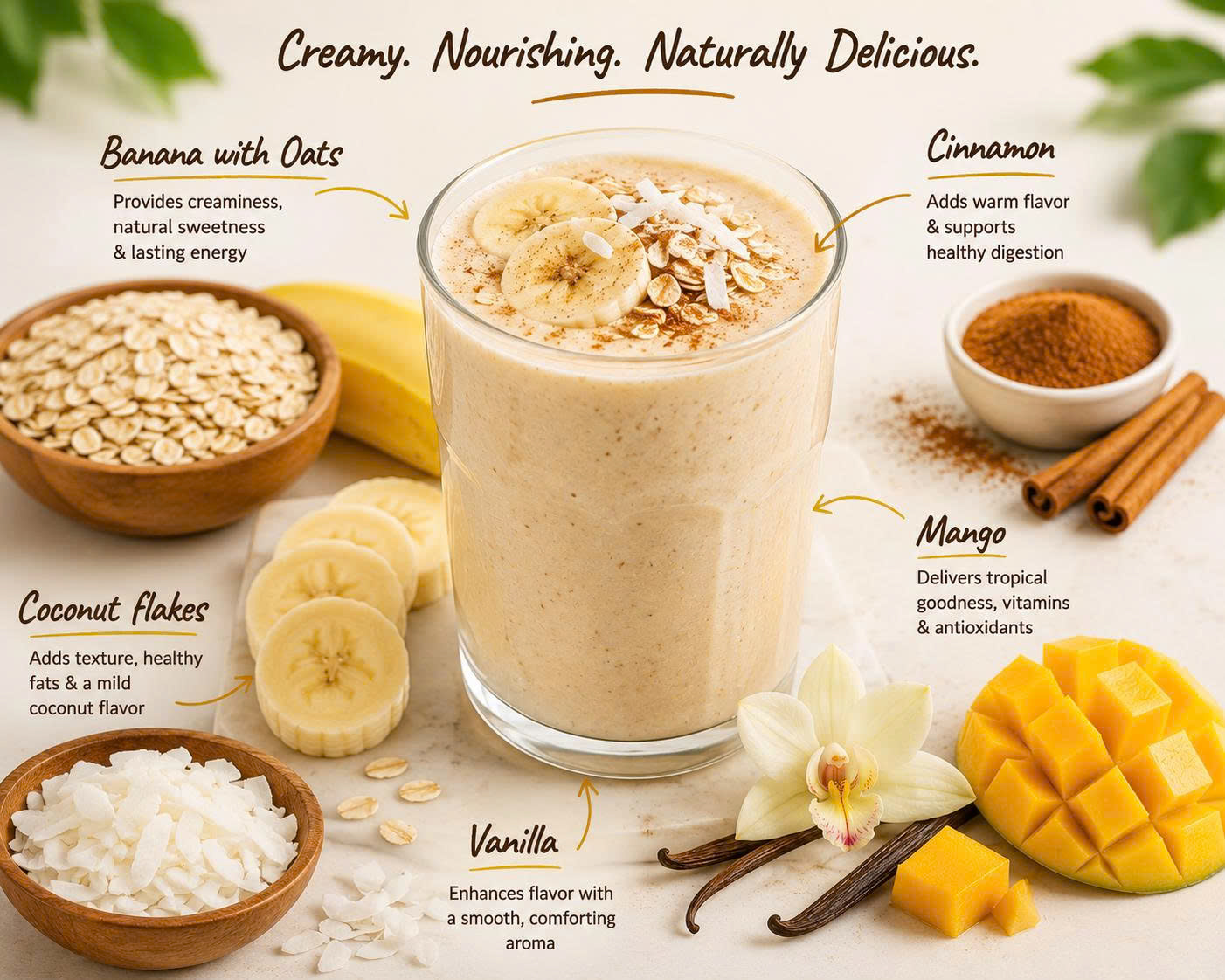
Popular additions include:
- Oats
- Cinnamon
- Mango
- Coconut flakes
- Vanilla
This combination is especially popular for breakfast-style smoothies.
3.4. Berries for Color and Balanced Acidity
Strawberries, blueberries, raspberries, and blackberries provide vibrant colors while introducing gentle acidity that complements coconut water.
Berry smoothies made with coconut water often appear brighter and lighter compared with milk-based alternatives.
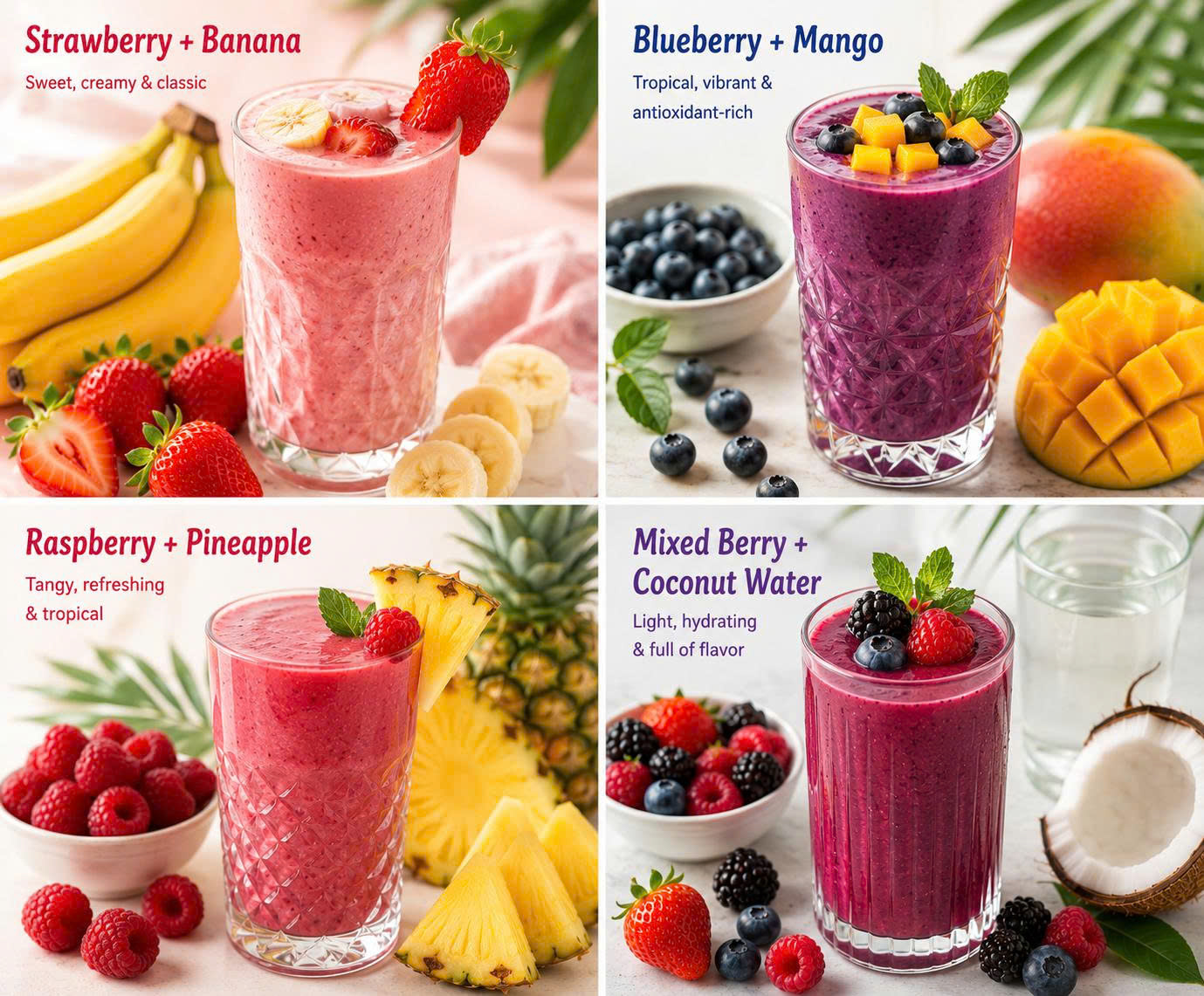
Popular berry combinations include:
- Strawberry + Banana
- Blueberry + Mango
- Raspberry + Pineapple
Mixed Berry + Coconut Water

3.5. Passion Fruit, Guava, and Dragon Fruit for Premium Tropical Blends
For consumers looking for more exotic smoothie combinations, premium tropical fruits offer exciting possibilities.
Excellent combinations include:
Fruit | Flavor Profile |
|---|---|
| Passion Fruit | Bright, aromatic |
| Guava | Sweet tropical |
| Dragon Fruit | Mild, colorful |
| Papaya | Soft and creamy |
| Lychee | Floral sweetness |
These ingredients are commonly featured in premium smoothie bars, tropical cafés, and international beverage menus.
4. 7 Coconut Water Smoothie Ideas
Below are seven smoothie concepts suitable for home preparation, cafés, restaurants, and retail recipe inspiration.
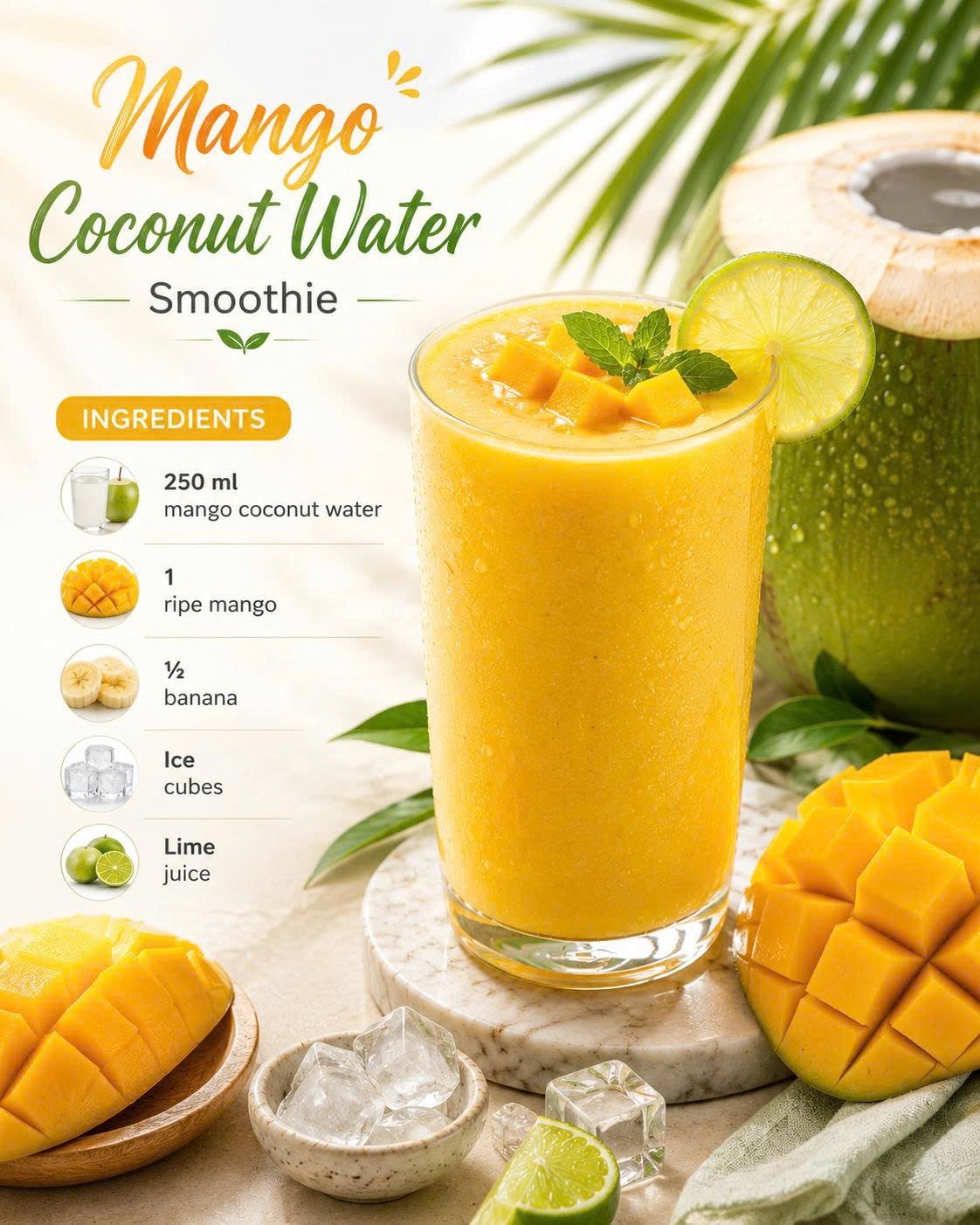
4.1. Mango Coconut Water Smoothie
Ingredients
- 250 ml mango coconut water
- 1 ripe mango
- ½ banana
- Ice cubes
- Lime juice
Why It Works
The mango flavor enhances the tropical profile while banana adds creaminess and lime introduces refreshing citrus notes.
Perfect for:
- Summer menus
- Tropical cafés
- Family beverages
Resort restaurants

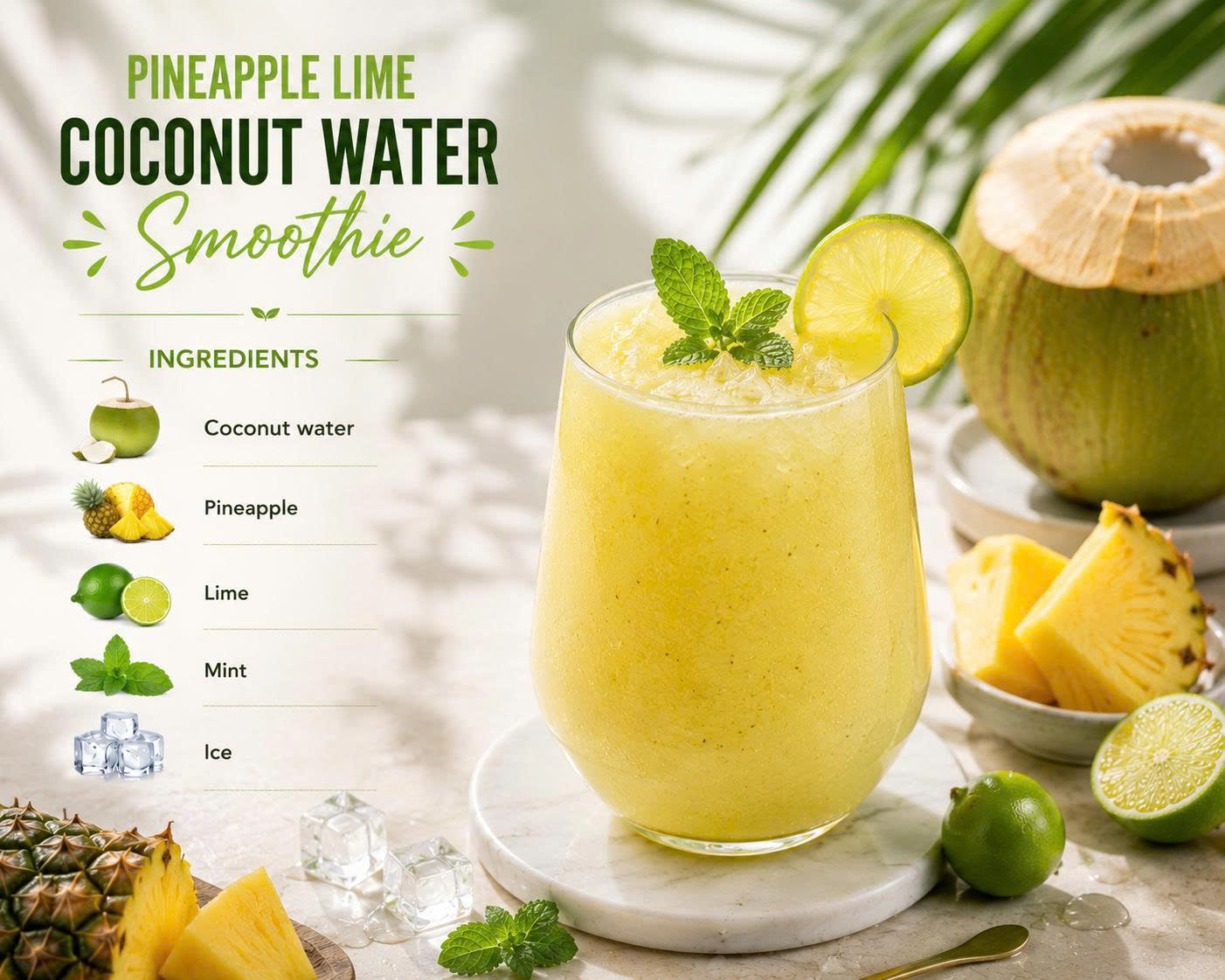
4.2. Pineapple Lime Coconut Water Smoothie
Ingredients
- Coconut water
- Pineapple
- Lime
- Mint
- Ice
Flavor Profile
Bright, juicy, refreshing, and naturally tropical.
This smoothie works particularly well for warm-weather promotions and seasonal beverage campaigns.

4.3. Banana Coconut Water Breakfast Smoothie
Ingredients
- Banana
- Coconut water
- Oats
- Cinnamon
- Ice
Flavor Profile
Smooth, creamy, and naturally balanced without becoming overly rich.
The oats contribute additional body while coconut water keeps the drink light and refreshing.
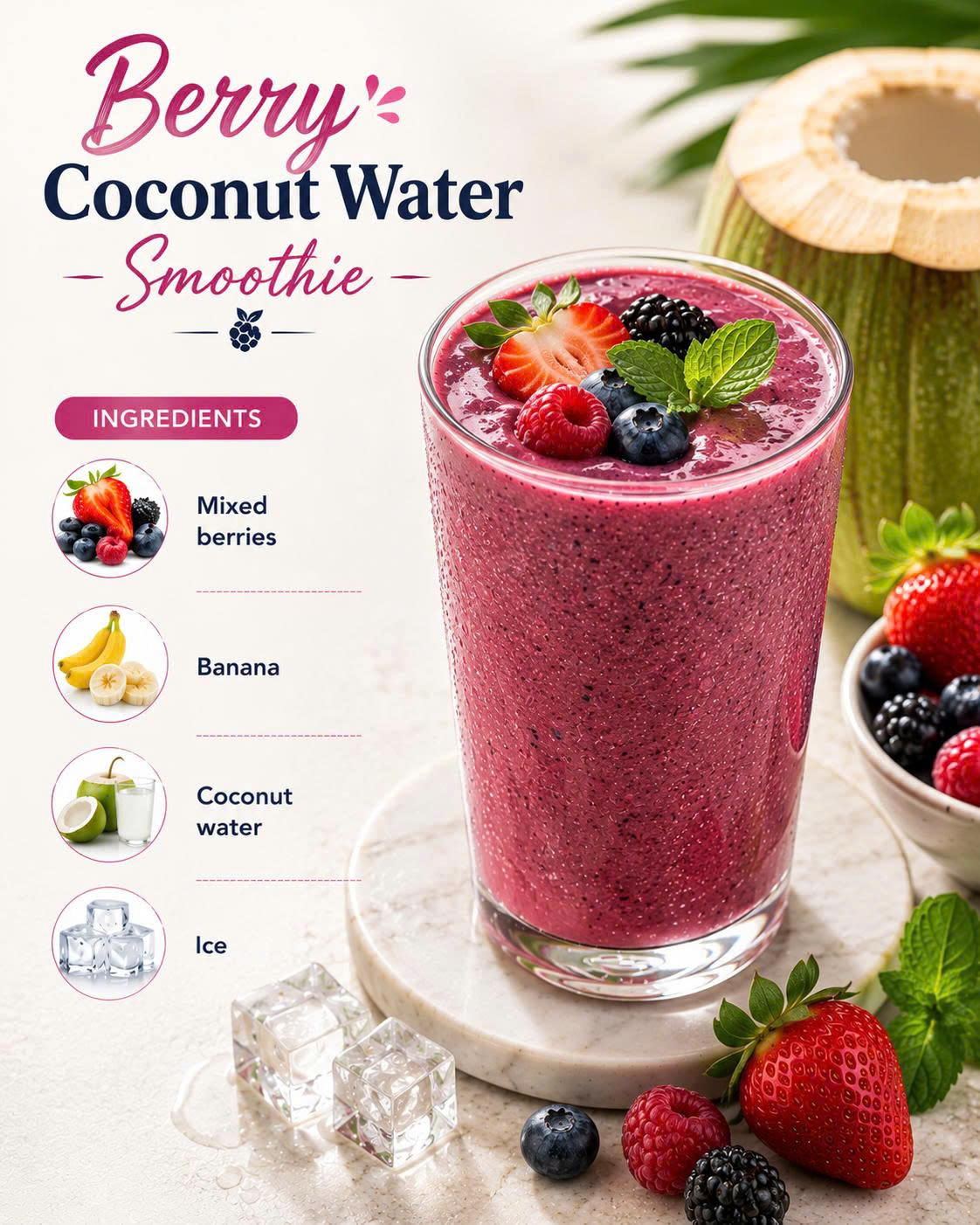
4.4. Berry Coconut Water Smoothie
Ingredients
- Mixed berries
- Banana
- Coconut water
- Ice
Flavor Profile
The natural sweetness of banana complements the vibrant acidity of berries, creating a colorful smoothie with a refreshing finish.
This recipe is especially appealing for cafés, smoothie bars, and retailers looking to promote fruit-forward beverage ideas.

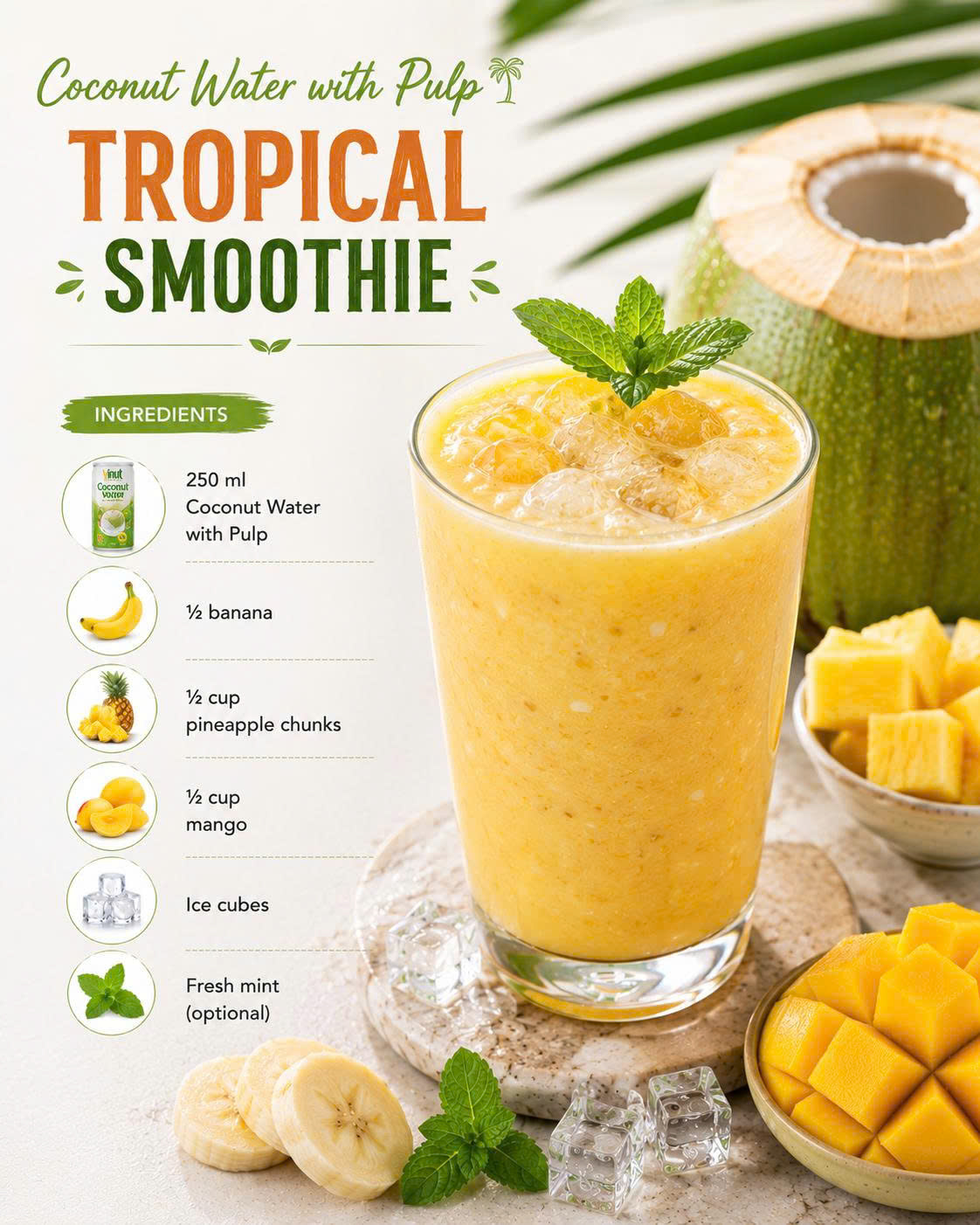
4.5. Coconut Water with Pulp Tropical Smoothie
Ingredients
- 250 ml Coconut Water with Pulp
- ½ banana
- ½ cup pineapple chunks
- ½ cup mango
- Ice cubes
- Fresh mint (optional)
Why You'll Love It
For smoothie lovers who enjoy a little more texture, coconut water with pulp adds a pleasant mouthfeel while maintaining the refreshing character of coconut water. The soft coconut pulp blends naturally with tropical fruits, creating a smoothie that feels more satisfying without becoming overly thick.
This recipe is ideal for:
- Tropical cafés
- Beach bars
- Resort beverage menus
Premium smoothie shops

4.6. Post-Activity Tropical Coconut Water Smoothie
Ingredients
- Coconut water
- Mango
- Banana
- Pineapple
- Ice
Why It Works
After outdoor activities or a busy day, many consumers look for refreshing fruit-based beverages.
A smoothie made with coconut water and tropical fruits offers a light, enjoyable option that is easy to prepare and pleasant to drink when served chilled.
Rather than emphasizing performance or recovery claims, this smoothie simply provides a refreshing tropical beverage that fits an active lifestyle.
4.7. Light Summer Coconut Water Mocktail Smoothie
Ingredients
- Mango coconut water
- Pineapple
- Mango
- Crushed ice
- Fresh lime
- Mint leaves
Serving Suggestion
Blend until smooth and serve in a tall glass garnished with fresh pineapple or lime slices.
This colorful smoothie is well suited for:
- Summer promotions
- Café seasonal menus
- Hotel welcome drinks
- Tropical-themed events
Its vibrant appearance also makes it highly suitable for social media photography and digital marketing campaigns.
5. How to Choose Coconut Water for Smoothies
Not all coconut water products are identical. Choosing the right one depends on your recipe, flavor preference, and intended application.
5.1. Check the Ingredient List
A simple ingredient list is often the best starting point.
When selecting coconut water, review the label carefully to understand what has been included. Different products may contain coconut water only, while others include fruit juice, pulp, or natural flavors designed for specific taste profiles.
For recipe development and commercial applications, understanding the ingredient list helps ensure consistency across multiple servings.
5.2. Look for Not-From-Concentrate Options
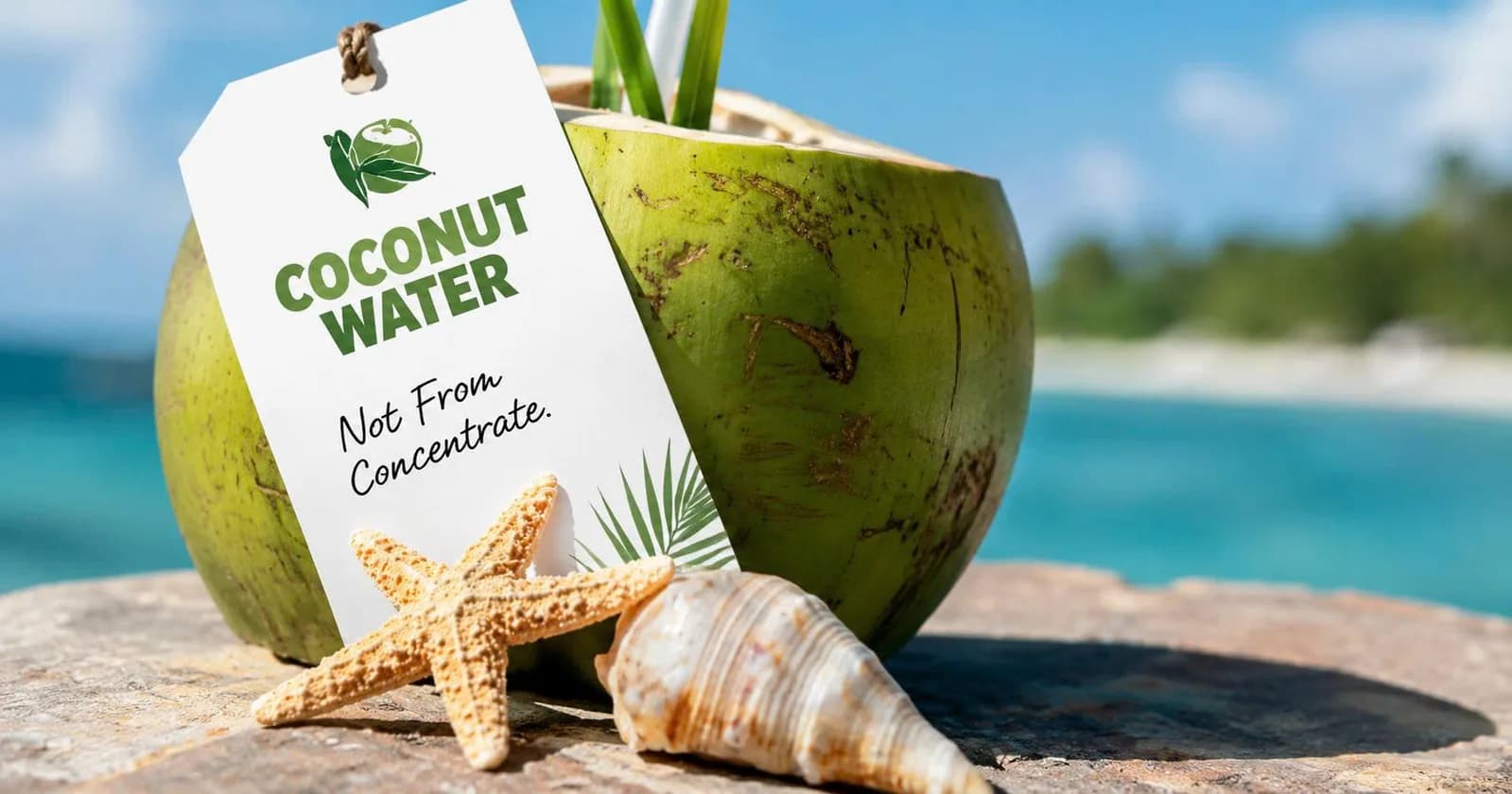
Some consumers and foodservice buyers prefer coconut water that is labeled as Not From Concentrate, when available on the product packaging.
This production method helps preserve the naturally clean taste of coconut water and aligns with the growing demand for premium beverage options.
Always refer to the product label to confirm whether this claim applies to the specific SKU.
5.3. Choose Mango or Pulp Variants for More Flavor
Different smoothie recipes benefit from different coconut water varieties.
Selecting the appropriate variety allows cafés, retailers, and consumers to create beverages with distinct flavor profiles while minimizing the need for additional ingredients.
5.4. Review Sugar Information
When comparing coconut water products, buyers should also review:
- Nutrition Facts
- Added sugar information
- Serving size
- Package format
- Shelf life
- Storage recommendations
These details help ensure the product matches the intended recipe and consumer expectations.
6. Retail and Foodservice Ideas for Coconut Water Smoothies
Smoothie recipes are not only valuable for consumers—they also provide opportunities for retailers, cafés, distributors, and foodservice operators to inspire purchases and increase product visibility.
6.1. Recipe Cards for Supermarkets
Simple recipe cards displayed alongside coconut water and fresh fruit can encourage shoppers to try new beverage combinations at home.
Examples include:
- Mango Coconut Smoothie
- Berry Coconut Smoothie
- Pineapple Lime Tropical Smoothie
These easy-to-follow recipes can support seasonal promotions and create additional engagement in the beverage aisle.
6.2. Cross-Merchandising with Tropical Fruits
Retailers can merchandise coconut water alongside:
- Mangoes
- Pineapples
- Bananas
- Berries
- Dragon fruit
- Passion fruit
Displaying these products together encourages shoppers to purchase multiple complementary ingredients for smoothie preparation.
6.3. HoReCa and Café Menu Applications
Restaurants, cafés, hotels, and resorts can use coconut water as a versatile smoothie base for:
- Signature tropical beverages
- Seasonal drink menus
- Breakfast buffets
- Wellness-inspired café offerings
- Resort welcome drinks
Offering several fruit combinations allows businesses to expand their beverage menu while using a consistent coconut water base.
6.4. E-commerce Bundle Ideas
Online retailers can create convenient smoothie bundles featuring:
- Coconut Water
- Frozen fruit mixes
- Smoothie recipe guides
- Reusable straws
- Beverage glassware
Recipe-focused bundles help consumers discover new ways to enjoy coconut water while adding value to online purchases.
A Tropical Base for Everyday Smoothie CreativityCoconut water offers a simple yet versatile foundation for creating refreshing smoothies inspired by tropical flavors. Whether paired with mango, pineapple, berries, banana, or more exotic fruits such as dragon fruit and passion fruit, it allows each ingredient to shine while maintaining a naturally light and enjoyable taste. For consumers, coconut water makes it easy to prepare refreshing beverages at home. For cafés, retailers, and foodservice professionals, it provides endless opportunities to develop seasonal drinks, recipe promotions, and menu innovations. |