1. Why Certifications Matter in the Buyer Journey?
Certifications often influence buyer decisions before product sampling or price negotiations even begin.
They help importers quickly evaluate whether a beverage supplier has:
- Organized production systems
- Quality management processes
- Export readiness
- Documentation discipline
For buyers managing multiple supplier options, certifications reduce uncertainty and make supplier comparisons easier.
2. Certifications Build Trust Before the First Order
Many international buyers work with suppliers they have never met in person. Certifications help bridge this trust gap through third-party validation.
Strong certification support can improve confidence in:
- Product consistency
- Manufacturing standards
- Supply reliability
- Export professionalism
Combined with strong catalogs and product presentation, certifications help brands appear more prepared for international business partnerships.
3. Food Safety Certifications Carry Strong Commercial Value
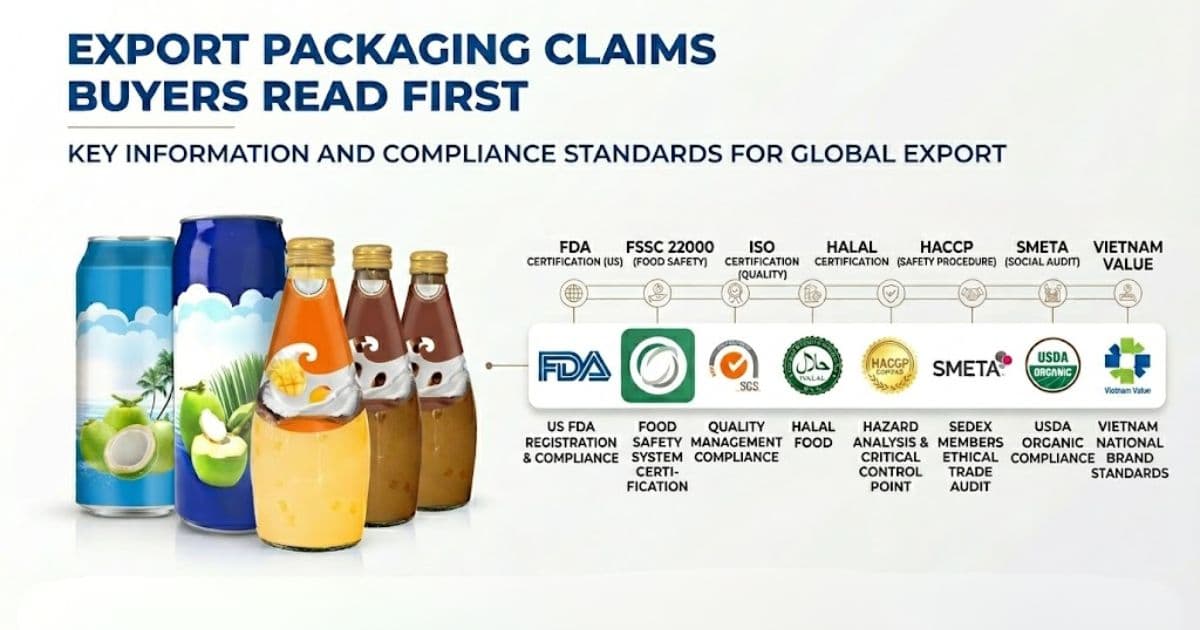
Food safety and quality management certifications are often among the first documents buyers review.
These certifications help reassure importers that a supplier follows recognized production and safety procedures.
Rather than viewing certifications as technical paperwork alone, buyers often see them as signals of lower operational risk and stronger long-term supply capability.
Clear and updated documentation also matters. Buyers typically prefer:
- Current certificates
- Clear issue dates
- Organized files
- Easy-to-understand certification scope
4. Certifications Support International Market Expansion
Certifications help beverage brands communicate more effectively across different export markets because they provide a shared language of trust and operational assurance.
They are especially valuable in:
- Modern retail
- Distributor partnerships
- Cross-border trade
- Foodservice supply chains
However, certifications create the most value when connected to a clear business message. Simply displaying logos without explanation may weaken communication effectiveness.
Common mistakes include:
- Using outdated certificates
- Showing too many certification logos without structure
- Failing to explain relevance to buyers
- Not connecting certifications to export readiness
Different buyers also evaluate certifications differently. Some use them during supplier screening, while others focus on them later during operational validation.
For beverage brands, the goal should be clear, organized, and buyer-friendly certification communication.
At VINUT, certifications are part of our broader commitment to export readiness, product quality, and international market support.
Conclusion
Certifications are more than compliance documents. They are commercial tools that help beverage brands build trust, reduce buyer hesitation, and strengthen international market entry opportunities.
While certifications do not replace strong products or competitive pricing, they help buyers move more confidently toward supplier discussions and long-term partnerships.
Explore VINUT certifications or contact our team to learn more about export-ready beverage solutions for international markets.