I. Introduction
The global demand for tamarind-based beverages continues to grow as consumers increasingly seek natural, flavorful, and functional drinks. Tamarind juice, known for its refreshing sweet and tangy taste, has become a popular choice in many international markets.
However, for international buyers, taste alone is not enough. One of the most critical factors in building long-term partnerships with suppliers is quality consistency in tamarind juice export.
Importers, distributors, and beverage brands depend on stable product quality to maintain customer trust, regulatory compliance, and brand reputation. When tamarind juice suppliers consistently deliver the same flavor, color, acidity, and safety standards, it strengthens the reliability of the entire global supply chain.
II. Why Is Quality Consistency Important in Tamarind Juice Export?
Consistency is a cornerstone of successful food and beverage exports. International buyers expect every shipment to match the same specifications as previous orders.
Several key factors explain why consistency is so important. /blog/Tamarind Juice: A Growing Trend in Europe
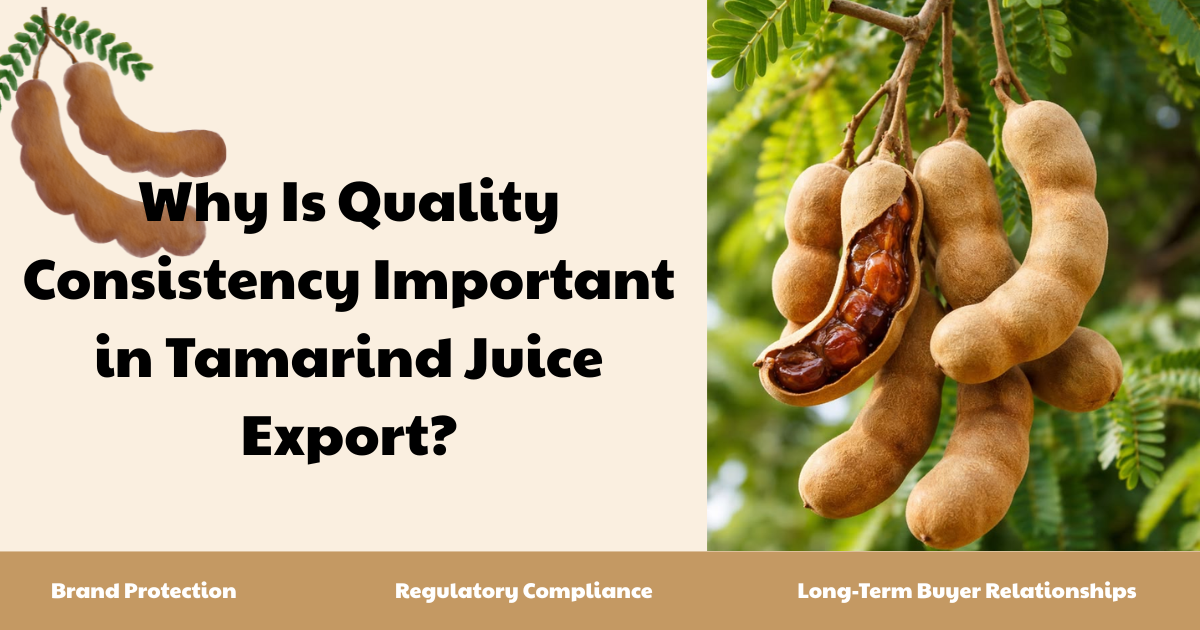
1. Brand Protection
Retailers and beverage brands rely on stable product quality to maintain their reputation. If tamarind juice varies in taste, texture, or color from batch to batch, consumers may lose trust in the brand.
2. Regulatory Compliance
Different countries enforce strict food safety regulations. Maintaining consistent product quality ensures compliance with international standards such as HACCP, ISO, and FDA requirements, helping exporters avoid regulatory issues.
3. Long-Term Buyer Relationships
When importers find a reliable tamarind juice supplier, they are more likely to establish long-term contracts. Consistency builds trust, reduces risk, and strengthens partnerships between manufacturers and distributors.
III. Key Factors That Ensure Tamarind Juice Export Quality
Maintaining high-quality tamarind juice requires strict control across the entire production process, from raw materials to packaging and logistics.
1. High-Quality Raw Tamarind Selection
Consistent juice quality begins with selecting high-quality tamarind. Mature tamarind pods with the right balance of sweetness and acidity help create the signature flavor profile of tamarind beverages.
Professional manufacturers often source tamarind from certified farms where harvesting, storage, and handling follow strict agricultural standards.
2. Standardized Production Process
Consistency in flavor and texture requires controlled and standardized manufacturing processes.
Reliable exporters typically use:
- Automated extraction systems
- Standardized pulp-to-water ratios
- Controlled pasteurization processes
- Advanced filtration technology
These technologies ensure each batch maintains the same taste and quality profile.
3. Quality Control and Laboratory Testing
Professional exporters implement multiple testing stages to ensure stable product quality.
Typical quality tests include:
- Acidity measurement (pH level)
- Brix level testing (sugar concentration)
- Microbiological safety testing
- Color and viscosity consistency checks
This systematic quality control process helps ensure that every shipment meets international food safety standards.
4. Stable Packaging and Cold Chain Logistics
Even a well-produced beverage can degrade during transportation if packaging and logistics are not properly managed.
Export-grade tamarind juice typically uses:
- Aseptic packaging technology
- Food-grade drums or containers
- Temperature-controlled transportation
These solutions help maintain product stability during long-distance shipping.
IV. Conclusion: Consistency Drives Long-Term Success
In tamarind juice export, consistency is key to building trust and maintaining market access. Stable quality across taste, safety, and performance helps brands meet regulations, protect their reputation, and satisfy consumers.
Suppliers who ensure consistent quality at every stage—from raw materials to delivery—are more likely to secure long-term partnerships and succeed in the global market.
Q&A
Why is quality consistency important when importing tamarind juice?
Quality consistency is essential for protecting brand reputation, ensuring compliance with international food safety regulations such as HACCP, ISO, and FDA, and building long-term, reliable relationships between beverage buyers and suppliers.
How do manufacturers ensure a consistent flavor profile in tamarind juice exports?
Reliable exporters maintain consistent flavor by sourcing high-quality, mature tamarind pods and utilizing standardized production processes. This includes automated extraction, precise pulp-to-water ratios, and controlled pasteurization to ensure every batch matches the required specifications.
What quality control tests are standard for export-grade tamarind juice?
Professional manufacturers conduct rigorous laboratory testing across multiple stages. Standard tests include acidity (pH) measurement, Brix level (sugar concentration) testing, microbiological safety checks, and evaluations for color and viscosity consistency.
How does packaging impact the quality of tamarind juice during international shipping?
Proper packaging and logistics are critical to prevent product degradation during transit. Export-grade tamarind juice relies on aseptic packaging technology, food-grade containers, and temperature-controlled logistics to maintain product stability over long distances.