1/ Is Coconut Water Low in Calories?
Coconut water is often a relatively lower-calorie drink than many sugary soft drinks and fruit juices, but it is not calorie-free. Mayo Clinic estimates that an 8-ounce (240 mL) serving may contain about 45–60 calories. The exact amount depends on the serving size, natural sugar content, added sugar, pulp and whether the drink contains other fruit ingredients.
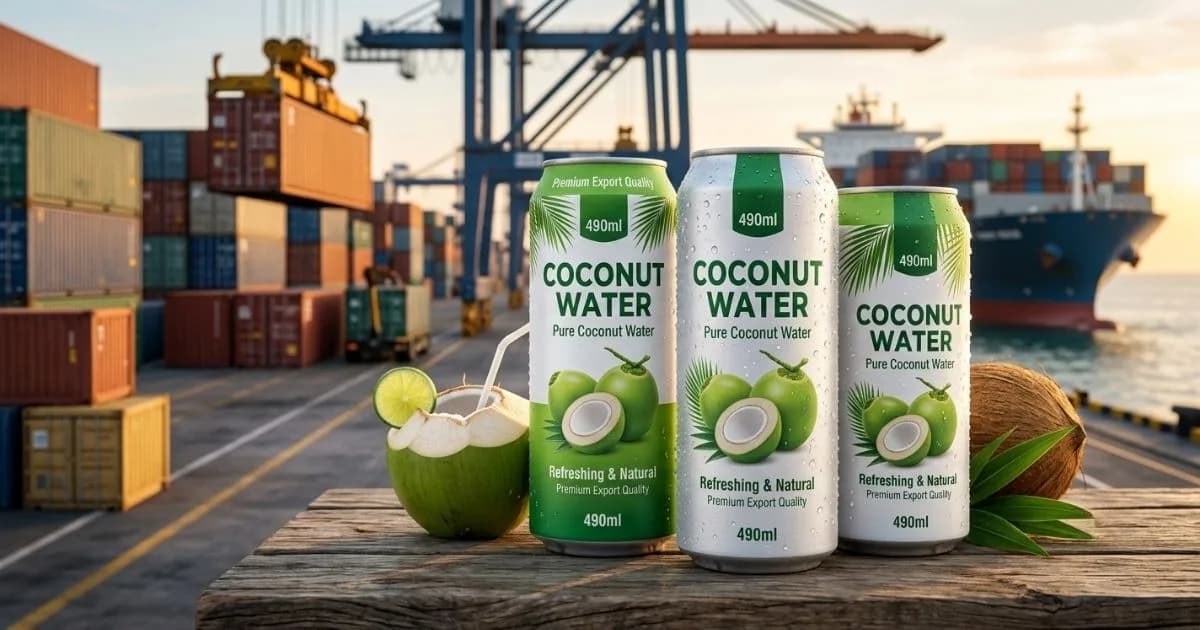
The most useful habit is to read the nutrition label rather than judge a drink by its name or front-of-pack wording. A large bottle or can may contain more than one serving, so the calories for the whole container can be higher than the number first seen on the label.
2/ Why Coconut Water Is Considered a Lighter Beverage
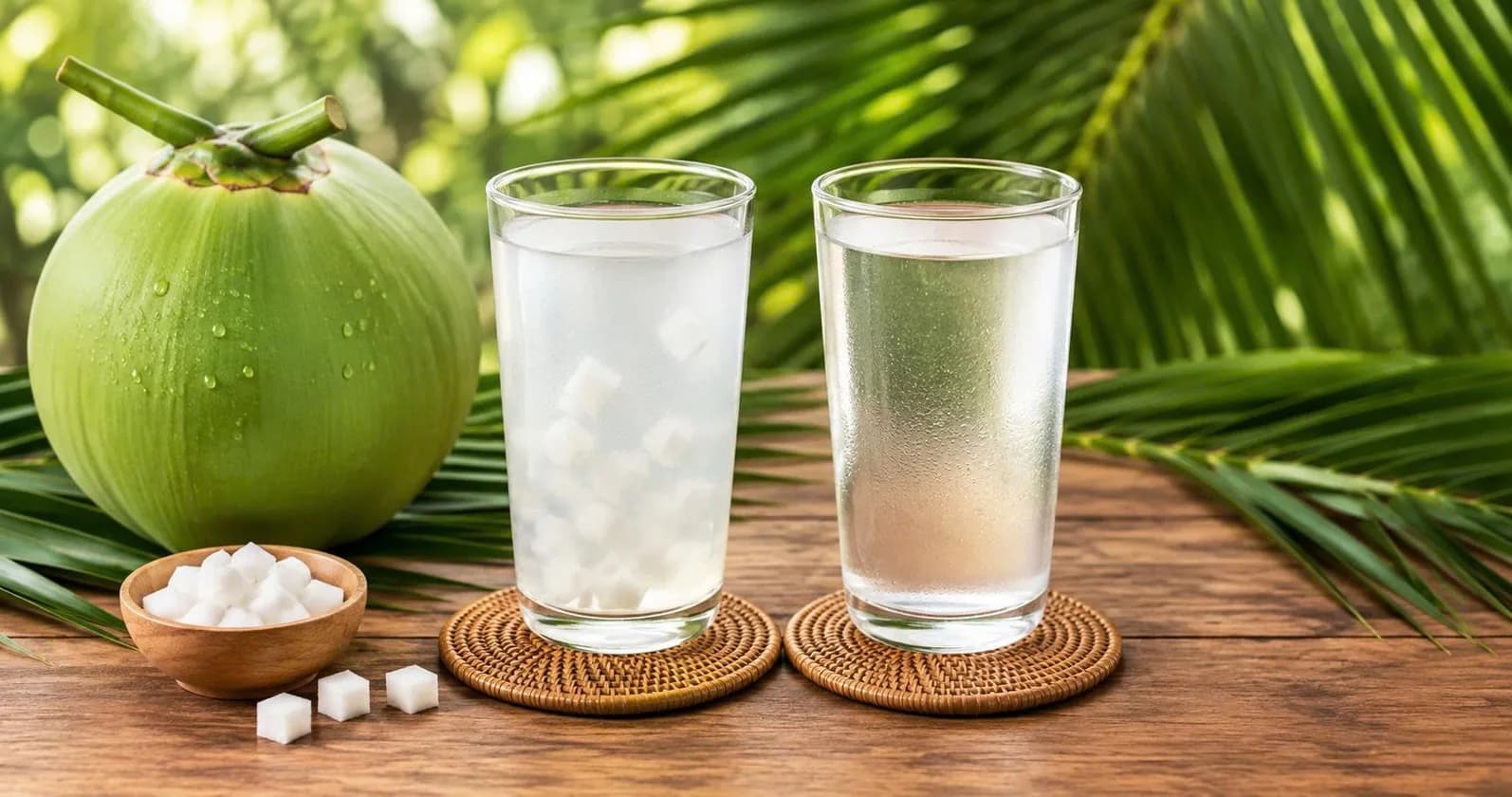
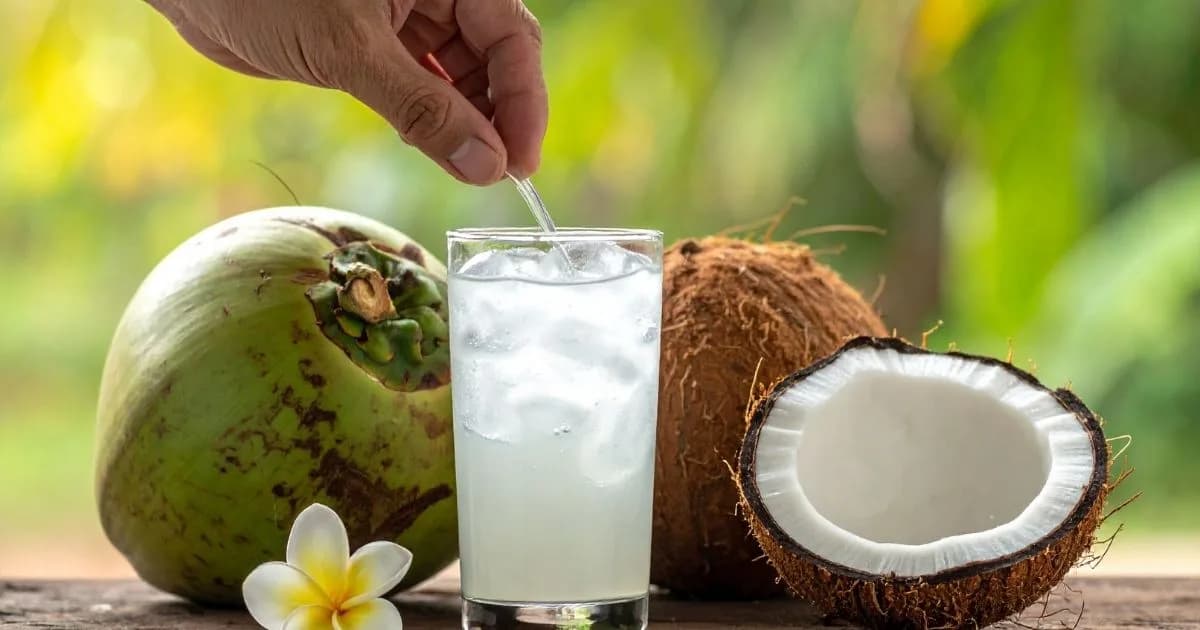
Coconut water is the clear liquid found inside coconuts. It is different from coconut milk, which is made using coconut water and grated coconut. Because plain coconut water is mostly water and usually contains less added sugar than soft drinks, it is often described as a lighter refreshment.
Coconut water also contains electrolytes, including potassium and sodium, although the amounts differ between products. This can make it appealing after everyday activities or exercise. It does not mean that coconut water is more hydrating than plain water. Mayo Clinic notes that coconut water is no more hydrating than water.
“Light” or “calorie-conscious” should not be interpreted as “fat-burning,” “weight-loss,” or “healthy for everyone.” A drink can fit into a balanced diet while still contributing calories and sugar.
3/ How Many Calories Are in Coconut Water?
3.1 Typical calories by serving size
For a useful comparison, start with a standard 240 mL serving. The estimated 45–60 calorie range from Mayo Clinic applies to approximately 8 ounces. A larger package will show more calories per container simply because it contains more liquid.
For example, a 500 mL package is a little more than two 240 mL servings. It should not be compared directly with a small 240 mL carton. Compare calories per 100 mL, calories per equal serving and calories per full container.
4/ Total Sugar vs. Added Sugar

Total sugars include naturally occurring sugars from coconut water and fruit juice. Added sugars are sugars introduced during processing or formulation. These terms should not be treated as synonyms.
A product described as no added sugar may still contain natural sugar and calories. It is therefore not automatically “sugar-free.” A flavored coconut water may also have a different sugar and calorie profile from plain coconut water, especially if fruit juice, syrup or another sweetener is included.
To understand the product, read three parts of the label together: calories, total sugars and the ingredient list. This gives a more complete picture than relying on a single claim such as “natural,” “light” or “no added sugar.”
5/ Coconut Water Compared with Soda, Juice and Sports Drinks
The Academy of Nutrition and Dietetics reports that unflavored coconut water generally has fewer calories and less added sugar than soft drinks, while warning that package serving sizes can be misleading. This is a general comparison, not a guarantee that every coconut water is lower in calories than every soda or juice.
A fair comparison uses the same serving size and checks calories, total sugar, added sugar and ingredients. Fruit juices vary widely in concentration and serving size. Sports drinks also differ in sugar, sodium and calorie content. Coconut water contains electrolytes, but it is not automatically a better choice for every activity or person.
Beverage | Main comparison points |
Coconut water and soda | Calories, total sugar, added sugar and serving size |
Coconut water and fruit juice | Juice percentage, concentration, sugar and calories |
Coconut water and sports drink | Electrolytes, sugar, calories and intended use |
Coconut water and plain water | Water provides hydration without the calories of a sweetened drink |
The most accurate conclusion is usually conditional: coconut water may be a lighter alternative when the label supports that comparison.
6/ How to Read a Coconut Water Nutrition Label
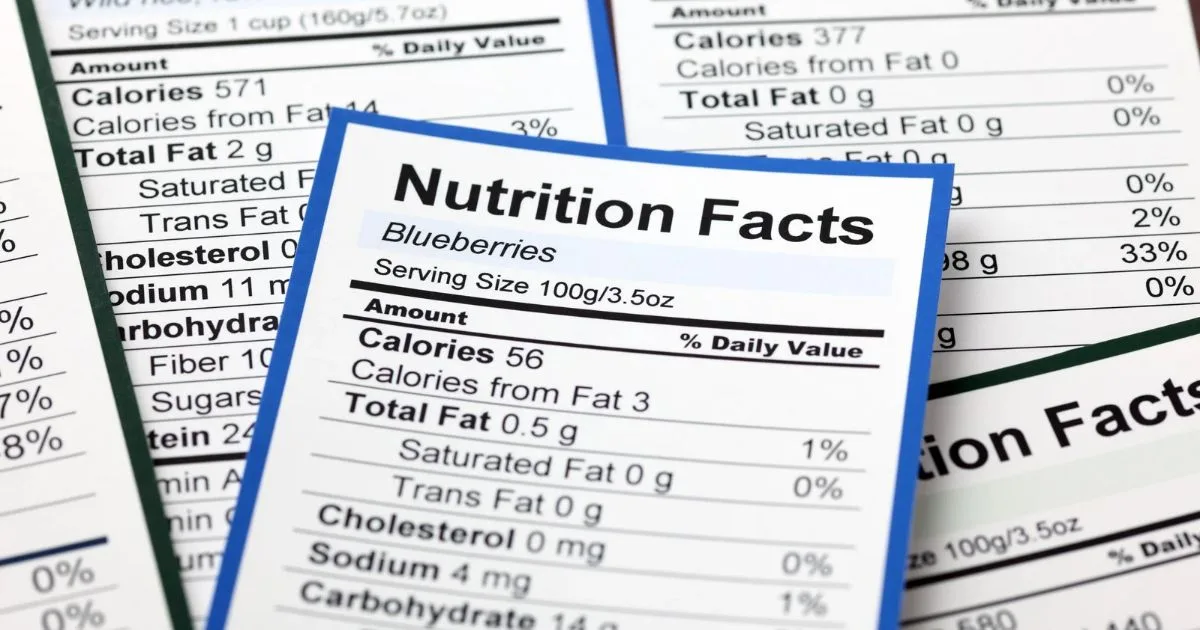
A practical label review can be completed in six steps. First, check the serving size and the number of servings per container. Second, note calories for both one serving and the entire package. Third, compare total sugar with added sugar. Fourth, read the ingredient list to identify fruit blends, sweeteners, pulp or concentrates. Fifth, check storage instructions and shelf life where relevant. Finally, review any nutrition or marketing claim against the applicable labeling rules in the country where the product is sold.
This method is useful for shoppers, nutrition educators, retailers and importers. It also helps avoid a common mistake: assuming that a product is low in calories simply because it is made from coconut water.
Label detail | What it tells you |
Calories per serving | The energy in the declared portion |
Servings per container | Whether the package contains more than one portion |
Calories per container | The total if the whole package is consumed |
Total sugars | Natural sugars plus any added sugars |
Added sugars | Sugars introduced during formulation |
Nutrition values can also vary because of coconut maturity, processing, filtration, concentration, flavoring and added ingredients. For that reason, a general category estimate is useful for context, but the product’s own label is the best source for the final number.
7/ Common Claims: What They Do and Do Not Mean
Nutrition language can be helpful when it is precise. “No added sugar” refers to formulation, not the absence of all sugar. “Contains electrolytes” describes the presence of minerals; it does not prove a medical or performance benefit. “Natural” is not a substitute for checking calories and ingredients. “Low calorie” should be used only when the product meets the relevant legal definition in its market.
Coconut water should not be presented as a treatment, a guaranteed weight-management solution or a drink that is superior to water for everyone. Balanced language gives readers a clearer basis for making their own choices.
8/ When Coconut Water May Fit into a Diet
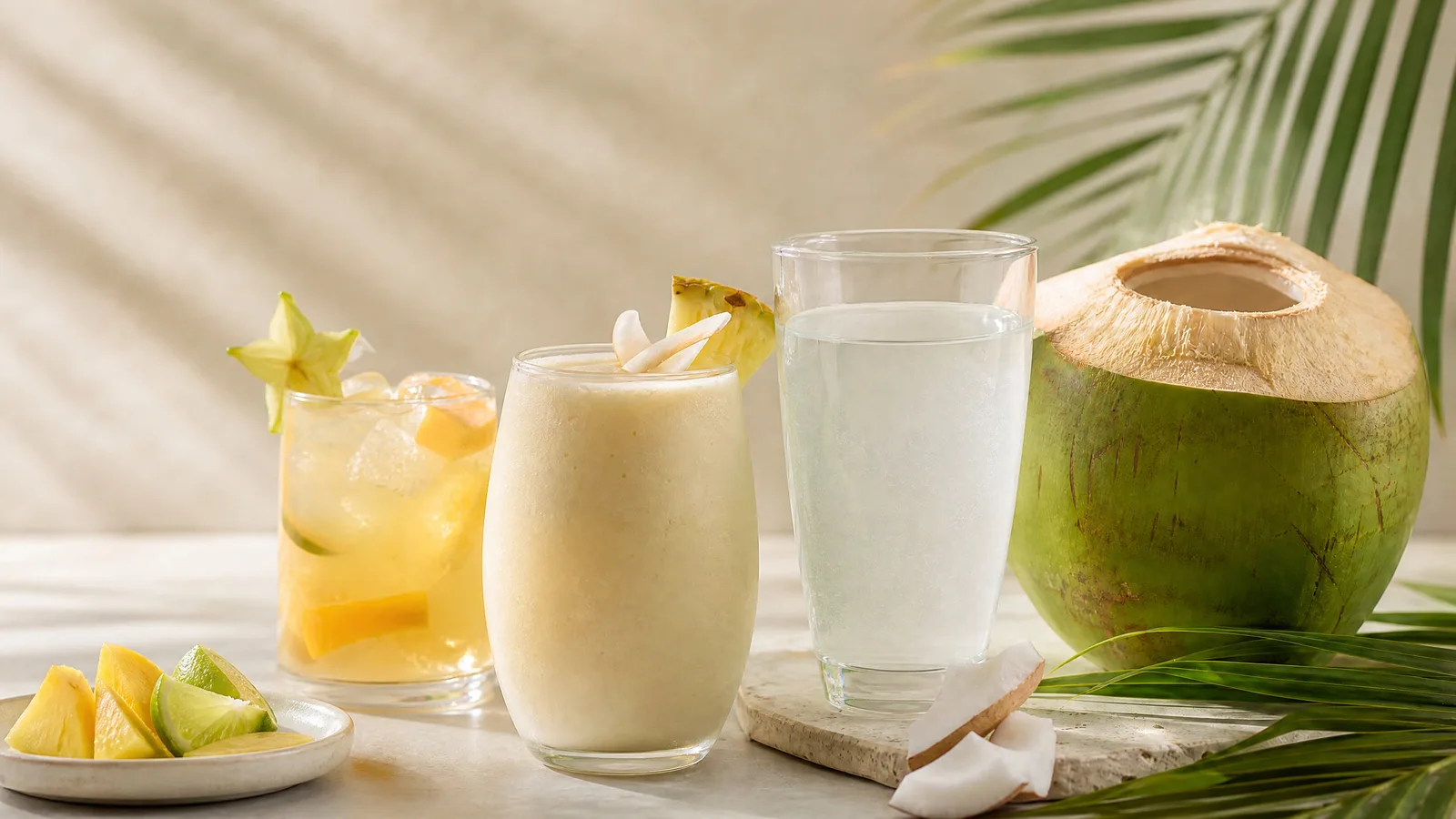
Coconut water may work as a chilled refreshment, an alternative to a more heavily sweetened beverage, or an ingredient in smoothies and non-alcoholic tropical drinks. Some people also choose it after casual exercise because of its flavor and electrolyte content.
The appropriate choice depends on the person’s overall diet, portion size, activity, health needs and taste preferences. People who need to monitor sugar, potassium or fluid intake should consider the full nutrition label and seek individual advice from a qualified health professional when necessary.
9/ FAQ: Coconut Water Calories and Sugar
Is coconut water low in calories?
It is often lower in calories than many sugary drinks, but it is not calorie-free. A typical 240 mL serving may contain about 45–60 calories.
Does coconut water contain natural sugar?
Yes. Coconut water naturally contains sugar. Some formulations may also contain added sugar, so check both total and added sugars.
Is no added sugar the same as sugar-free?
No. “No added sugar” means that sugar was not added during formulation. Natural sugar may still be present.
Is coconut water better than soda?
It may be a lighter choice when its calories and added sugar are lower than those of a comparable soda. Compare equal serving sizes and ingredients.
Is coconut water more hydrating than water?
No. Coconut water contains electrolytes, but Mayo Clinic states that it is no more hydrating than plain water.
What should I check on the label?
Check serving size, servings per container, calories, total sugar, added sugar and ingredients. Also review claims and storage information where relevant.
So, is coconut water low in calories? It is often a relatively lower-calorie option than many sugary drinks, but it still contains calories from natural sugar and may contain added sugar. The amount depends on the formulation and serving size. The best way to compare coconut water is to use equal portions and review calories, total sugar, added sugar, ingredients and servings per container. That approach is more reliable than assuming that every coconut water product has the same nutrition profile. |