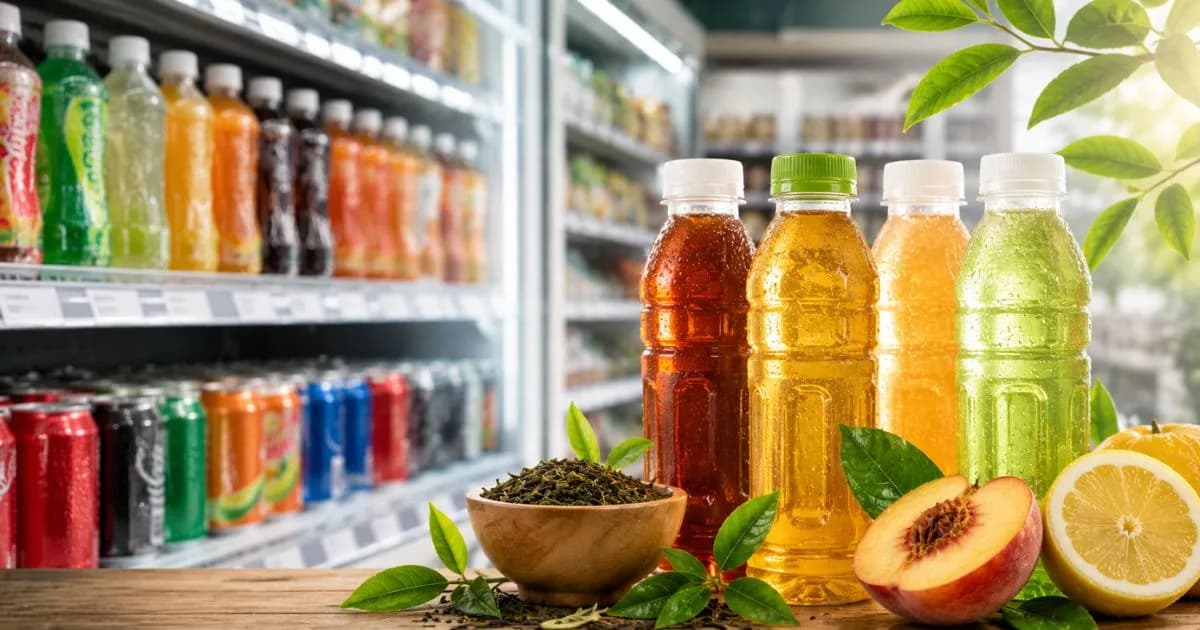
The beverage shelves in convenience stores are changing. While carbonated soft drinks have remained popular for decades, many consumers are now exploring different options that match their changing lifestyles and preferences.
Among these changes, tea-based drinks have become one of the fastest-growing beverage categories. Ready-to-drink tea (RTD tea), iced tea, and low-sugar tea beverages are appearing more frequently in convenience stores, supermarkets, and online channels.
This shift does not mean consumers are completely moving away from soft drinks. Instead, it reflects a broader trend: people are looking for beverages that offer convenience, familiar flavors, and more transparent ingredient information.
What Are Tea-Based Drinks?
Tea-based drinks are beverages made with tea as a key ingredient, often combined with fruits, botanicals, or other flavor elements.
Common examples include:
- Green tea drinks
- Black tea beverages
- Iced tea
- Fruit-infused tea
- Herbal tea drinks
Unlike traditional brewed tea, ready-to-drink tea is designed for immediate consumption. It provides the experience of tea in a convenient format, making it suitable for busy lifestyles.
For convenience stores, this category fits well because consumers often look for quick refreshment options during commuting, working, traveling, or daily activities.
Why Are Consumers Choosing Tea-Based Drinks?
Several consumer trends are influencing the growth of tea beverages.
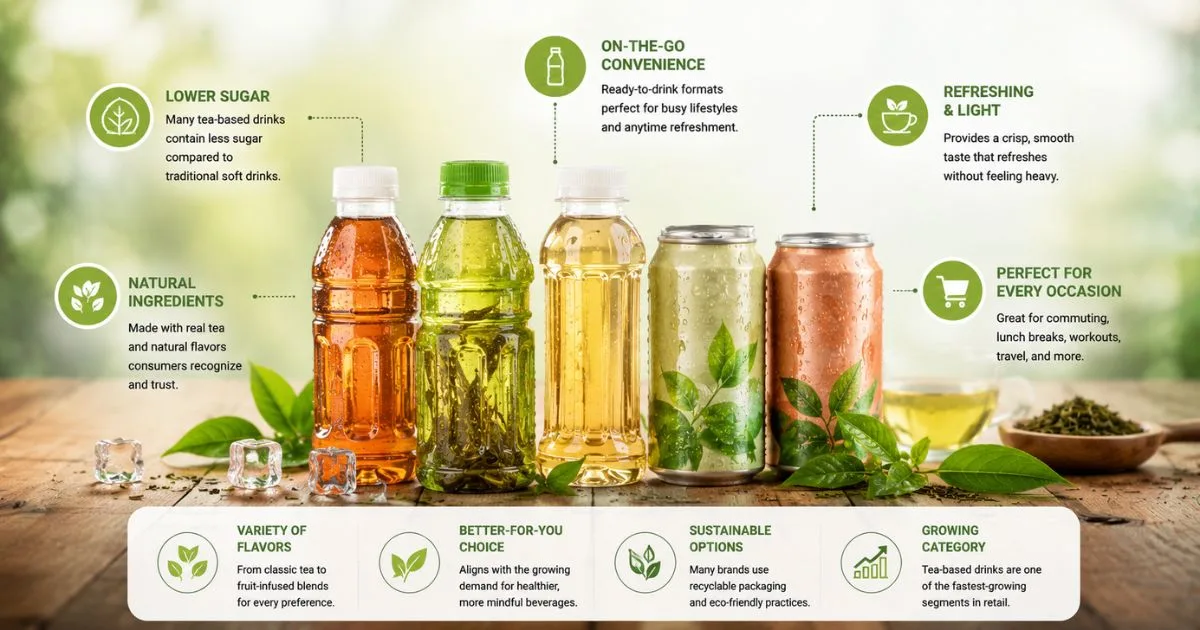
1. Growing Interest in Lower-Sugar Options
One of the biggest changes in beverage consumption is increased awareness of sugar content.
Many consumers now check:
- Total sugar
- Added sugar
- Calories
- Ingredient lists
- Serving sizes
This has encouraged the beverage industry to develop more balanced sweetness levels and clearer product information.
Tea-based drinks often attract consumers who want a flavorful beverage experience without choosing extremely sweet options.
However, consumers should always review nutrition labels because sugar levels can vary between products.
2. Clean Label and Ingredient Transparency
Modern beverage shoppers want to better understand what they are drinking.
A clean-label approach focuses on:
- Simple ingredient lists
- Clear labeling
- Recognizable ingredients
- Transparent product information
Tea naturally has a strong connection with simplicity because it comes from a familiar ingredient: tea leaves.
As a result, many consumers view tea-based beverages as an option that fits their preference for straightforward products.
3. Tea Offers More Flavor Variety
Soft drinks are often associated with a limited range of flavor profiles. Tea beverages, on the other hand, offer a wider variety of taste experiences.
Popular tea flavors include:
Green Tea
- Light
- Fresh
- Mild tea notes
Black Tea
- Stronger flavor
- Richer aroma
- Often paired with fruit flavors
Fruit Tea
- Combines tea with familiar flavors such as lemon, peach, or tropical fruits
This variety allows tea-based drinks to reach different consumer preferences across regions and markets.
Why RTD Tea Works Well in Convenience Stores
Convenience stores depend heavily on products that match fast-moving consumer habits.
RTD tea fits this environment because it offers:
Convenience
Consumers can purchase and drink it immediately without preparation.
Portability
Bottle and can formats make tea easy to carry for:
- Work
- Travel
- Outdoor activities
- Daily routines
Chilled Consumption
Many consumers associate tea beverages with refreshment, making them suitable for cold beverage sections.
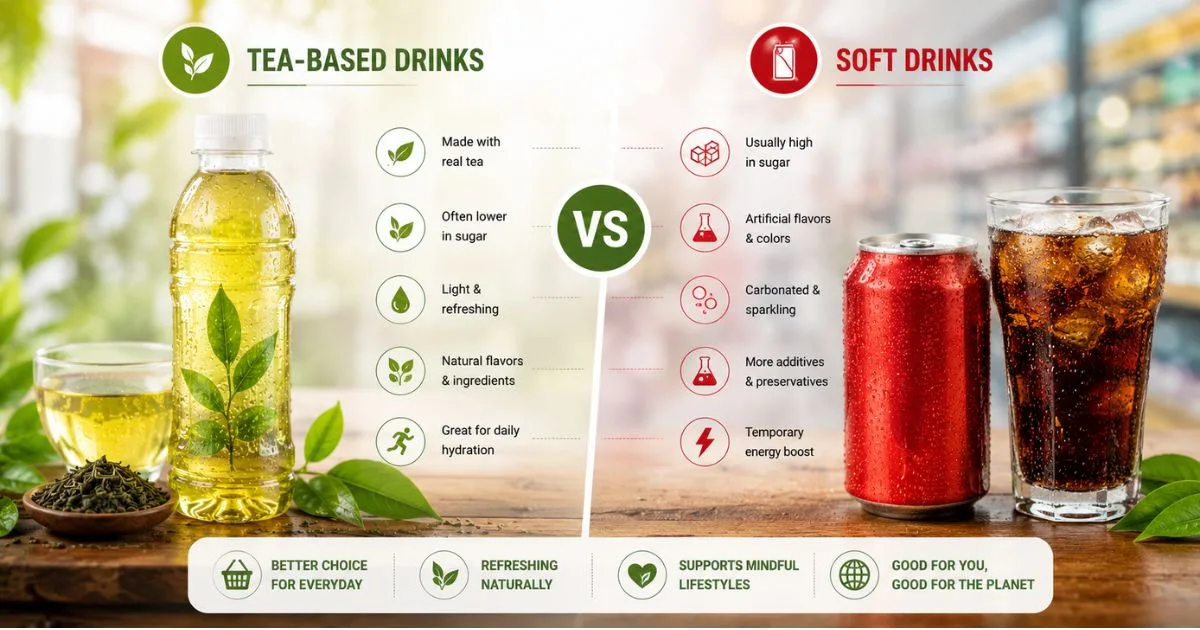
Tea-Based Drinks vs Soft Drinks: How Are They Different?
Tea-based drinks and soft drinks serve different consumer needs.
| Category | Tea-Based Drinks | Soft Drinks |
|---|---|---|
| Main ingredient | Tea extract or brewed tea | Carbonated flavored base |
| Flavor profile | Tea, fruit, botanical notes | Sweet, sparkling flavors |
| Consumer interest | Variety, transparency, lighter taste | Familiar refreshment |
| Common formats | Bottles, cans | Bottles, cans |
The growth of tea beverages is not simply about replacing soft drinks. It is about expanding choices for consumers.
What Beverage Buyers Should Consider
For retailers and beverage buyers, choosing tea-based beverages requires looking beyond trends.
Important factors include:
Sugar Level
Review nutrition information to understand sweetness levels and ensure alignment with consumer expectations.
Ingredient List
Check:
- Tea source
- Flavor ingredients
- Sweeteners
- Preservatives
- Additives
Packaging Format
Common formats include:
- PET bottles
- Aluminum cans
The best choice depends on storage, distribution, and customer habits.
Flavor Acceptance
Familiar flavors such as green tea, black tea, lemon, and peach often have wider consumer recognition.
Conclusion: A New Era of Beverage Choices
The rise of tea-based drinks reflects a larger change in consumer behavior. Convenience remains important, but shoppers are also paying more attention to ingredients, sugar levels, and beverage variety.
For convenience stores and beverage categories, RTD tea represents an opportunity to offer more choices that match modern consumption habits.
Rather than replacing traditional beverages completely, tea-based drinks are becoming another important part of the evolving beverage landscape.