
Tropical beverage demand in the United States should not be judged by a single trending flavor or viral product. For importers, distributors, and retail buyers, stronger demand signals emerge when factors such as consumer familiarity, retail presence, packaging fit, distributor interest, and repeat-purchase potential align.
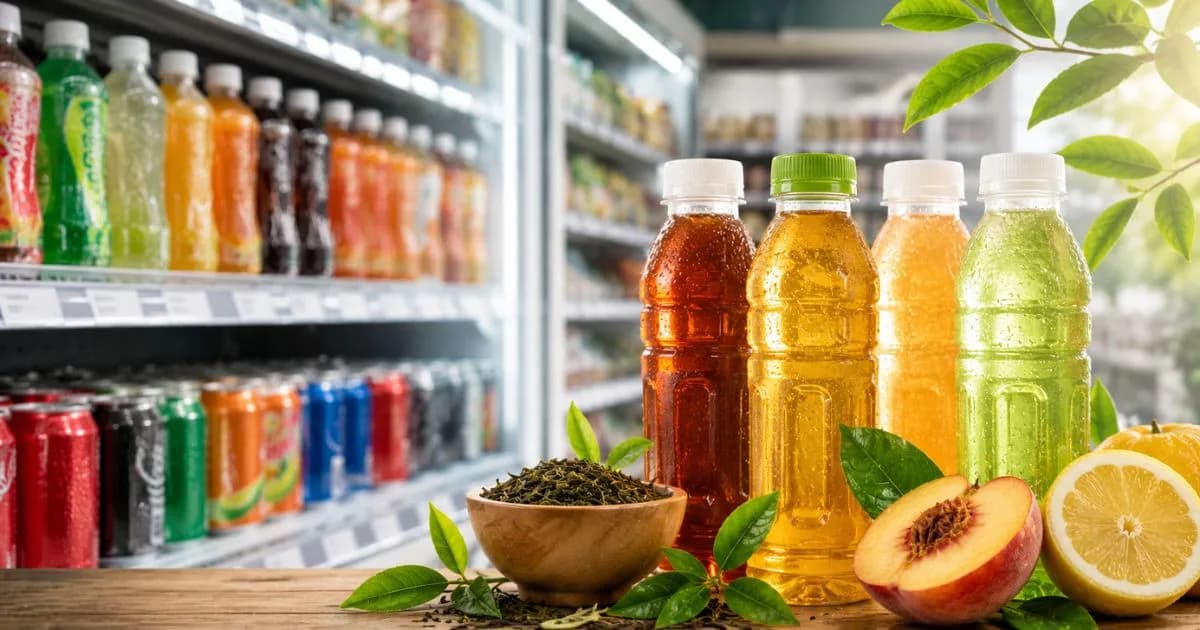
The U.S. beverage market is diverse, and tropical beverages span categories such as coconut water, fruit juices, aloe vera drinks, and sparkling beverages. Rather than simply asking whether tropical drinks are trending, buyers should evaluate whether these signals can translate into sustainable commercial demand.
1. What Is a Beverage Demand Signal?
A beverage demand signal is an observable indicator suggesting that consumers, retailers, distributors, or other market participants are becoming more receptive to a product or category.
These signals can appear in different parts of the market. Examples include:
- increasing consumer familiarity with a category or flavor;
- expansion of a category across retail channels;
- distributor inquiries and sample requests;
- new product launches;
- adoption of particular packaging formats;
- repeat orders;
- broader retail assortment; and
- presence across multiple relevant channels.
However, a signal should not be confused with proof of long-term demand.
Retailers beginning to carry a category does not guarantee that the category will succeed. Distributor inquiries do not necessarily lead to purchase orders. A viral flavor does not automatically produce repeat purchases. Similarly, a wave of product launches may reflect experimentation rather than sustained category growth.
For that reason, buyers should look for signal convergence. When consumer familiarity, retail presence, packaging fit, commercial interest, and repeat-purchase indicators begin pointing in the same direction, the evidence becomes more meaningful than any one signal viewed independently.
2. Growing Consumer Familiarity Can Lower the Barrier for Tropical Categories
One of the first questions a buyer should ask is simple:
Will consumers understand what this product is?
Consumer familiarity matters because unfamiliar categories usually require more education. A shopper who already recognizes a flavor or beverage type can more quickly understand what to expect from the product.
Tropical flavors such as mango, pineapple, coconut, guava, passion fruit, and lychee can therefore play different roles within a beverage portfolio depending on the target consumer and channel.
The important distinction is not necessarily which flavor is “most popular.” Without category-specific sales data, that conclusion would be too broad. Instead, buyers can evaluate the amount of consumer education each flavor or category may require.
Questions worth considering include:
- Is the flavor already recognizable to the target consumer?
- Does the product require explanation before trial?
- Would it fit mainstream grocery, specialty retail, or both?
- Could a more familiar flavor serve as the hero SKU while less familiar flavors support discovery?
This approach turns flavor selection from a trend exercise into a portfolio decision.
3. Coconut Water Shows How a Tropical Category Can Move Toward Mainstream Consumption
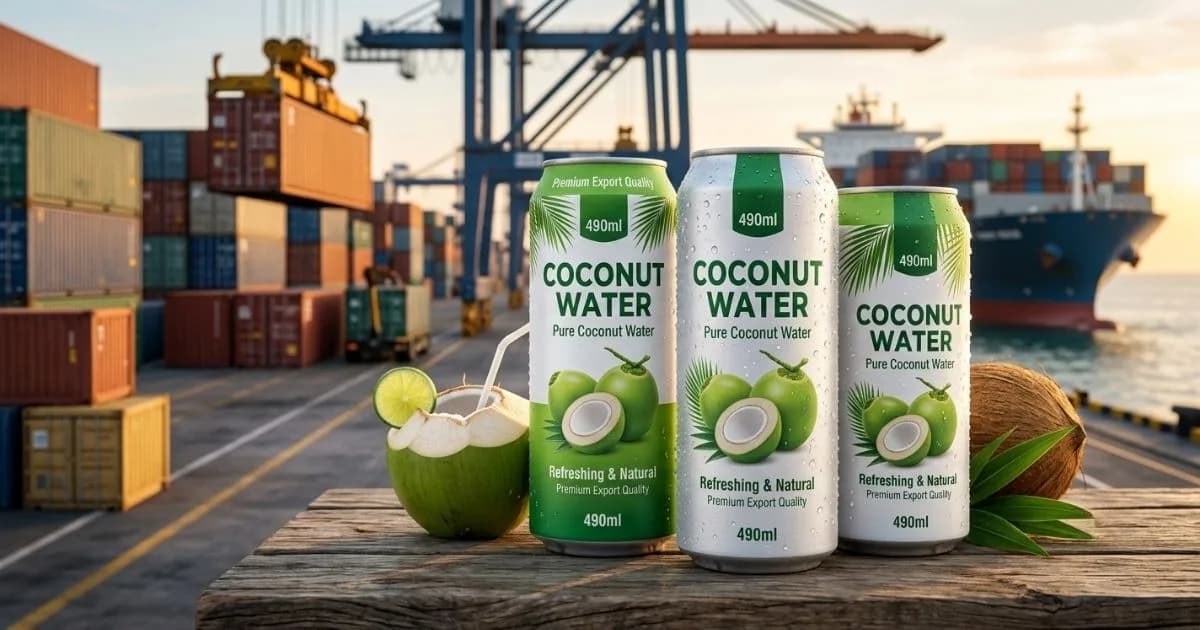
Coconut water provides a useful example of how a tropical beverage can become easier for consumers and buyers to understand.
Its commercial relevance is not based on “tropical” positioning alone. The category can be communicated around recognizable consumption occasions such as refreshment and hydration, while single-serve formats can make the product suitable for individual consumption.
From a buyer's perspective, several signals are worth examining:
- whether consumers understand the category;
- whether the product has a clear consumption occasion;
- whether appropriate single-serve and multipack formats exist;
- whether the category appears beyond specialty channels; and
- whether flavor extensions can broaden the range without confusing the core proposition.
The lesson extends beyond coconut water.
A tropical category becomes easier to evaluate when consumers can quickly answer four questions: What is it? When would I drink it? Why would I choose it? And is the format convenient for that occasion?
Category familiarity alone does not guarantee commercial success, but it can reduce one important barrier: the amount of education required before trial.
4. Tropical Juice Demand Depends on the Balance Between Familiarity and Discovery
Tropical juice portfolios present buyers with a different challenge: balancing familiar flavors with product discovery.
A portfolio built entirely around unfamiliar flavors may create differentiation but require significant consumer education. On the other hand, a range containing only familiar flavors may be easier to understand but offer limited differentiation.
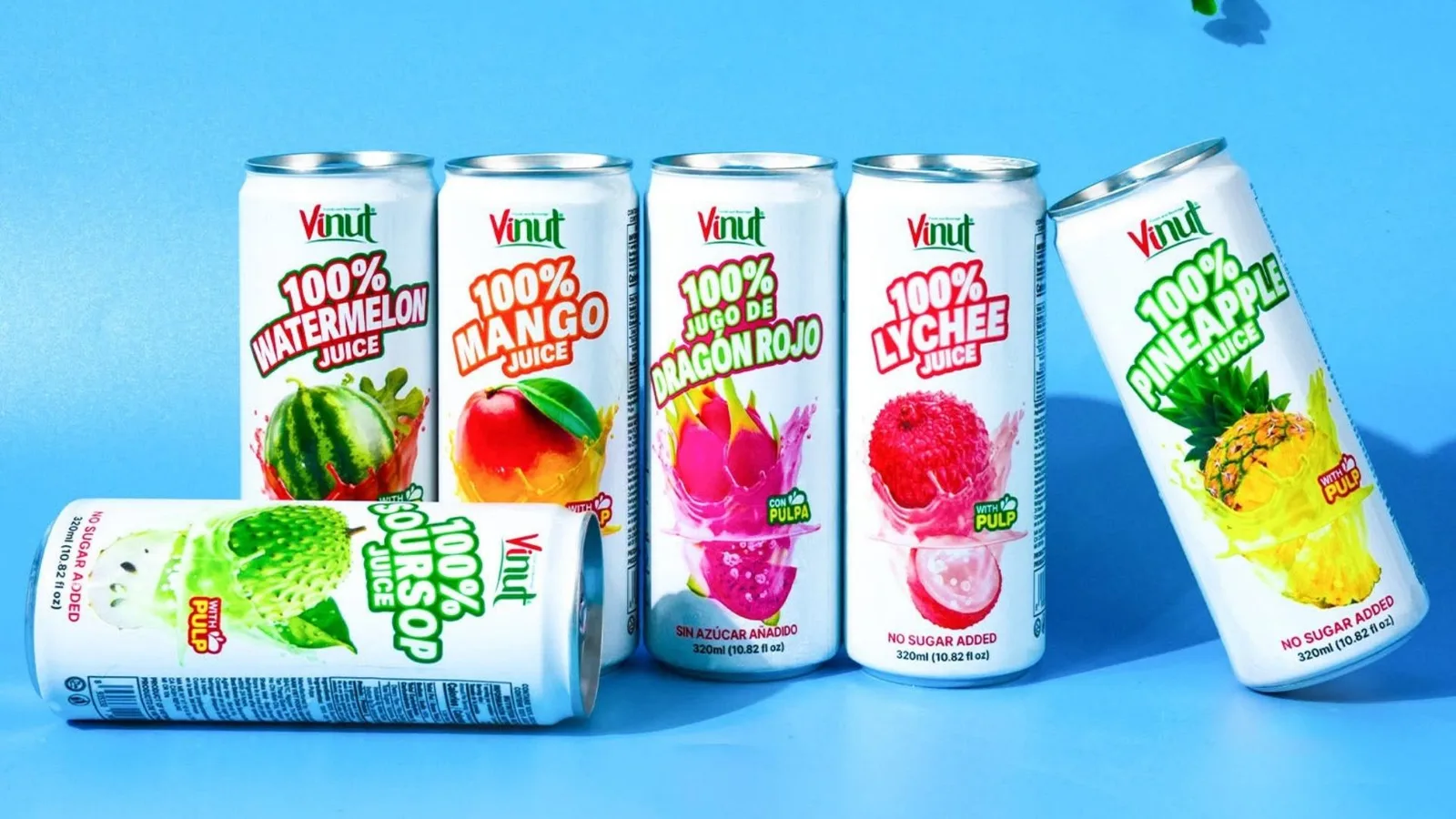
One practical approach is a Hero → Support → Discovery structure.
4.1 Hero Flavors: Create an Accessible Entry Point
Hero flavors are intended to provide an accessible entry point to the range. They should be relatively easy for the target consumer to understand and suitable for the primary sales channel.
For buyers, the role of a hero flavor is not simply to represent the most popular option. It should help consumers understand the portfolio with minimal education while providing a clear starting point for evaluating the range.
4.2 Support Flavors: Expand the Portfolio
Support flavors broaden the portfolio while remaining relatively approachable. They can provide additional variety without moving too far from flavors or product experiences that the target consumer can understand.
From a portfolio perspective, these SKUs can help buyers build assortment breadth after establishing a clear hero product.
4.3 Discovery Flavors: Add Differentiation
Discovery flavors can provide differentiation, regional relevance, or additional appeal within specialty channels. Because these flavors may require more consumer education, buyers should consider carefully where and how they are introduced.
This framework also helps buyers avoid a common portfolio mistake: introducing too many unfamiliar SKUs before enough commercial information exists to support them.
Instead of asking, “How many tropical flavors can we launch?”, the more useful question is:
“What role does each flavor play in the portfolio?”
5. Aloe Vera Beverages Illustrate the Specialty-to-Broader-Market Pathway
Aloe vera beverages demonstrate another possible route into the U.S. market.
Unlike conventional juice, aloe vera drinks may have characteristics such as pulp, texture, and visible pieces that make the drinking experience distinctive. Those characteristics can create differentiation, but they can also increase the amount of explanation required for consumers unfamiliar with the category.
A product may therefore establish an initial position in ethnic or specialty retail, where category familiarity is potentially higher, before attempting broader distribution.
Moving beyond those channels depends on more than initial consumer interest. Buyers should consider whether:
- the product name clearly communicates the category;
- packaging makes the contents understandable;
- flavors are accessible to the intended audience;
- the consumption occasion is clear; and
- the product proposition can be understood without extensive explanation.
The broader lesson is that specialty retail can function as an entry point rather than a permanent market boundary.
A beverage that begins in a niche channel may have the potential to expand, but only if the product becomes understandable and relevant to consumers outside its initial base.
6. Channel Expansion Is a Stronger Signal Than Attention Alone
One of the most useful commercial demand signals is where a beverage appears.
The U.S. market includes multiple relevant channels: ethnic retail, specialty grocery, mainstream grocery, natural retail, convenience, foodservice, club retail, and e-commerce.
These channels should not be treated as interchangeable. Each can reveal something different about how a product is being adopted.
Channel | Demand Signal to Observe | Buyer Question |
|---|---|---|
| Ethnic retail | Category familiarity | Is there already a consumer base for the category? |
| Specialty grocery | Product differentiation | Does the product offer a clear reason to enter a curated assortment? |
| Mainstream grocery | Assortment expansion | Can the category move beyond a specialist audience? |
| Convenience | Single-serve suitability | Does the format work for grab-and-go consumption? |
| Foodservice | Menu compatibility | Does the beverage fit a meal or immediate-consumption occasion? |
| E-commerce | Multipack and shipping suitability | Is the product practical to sell and ship online? |
| Club retail | Larger pack or multipack suitability | Can the product support household or stock-up purchasing? |
The importance of channel should not be underestimated. USDA Economic Research Service data show how differently Americans purchase food across at-home and away-from-home occasions. In 2025, food away from home represented 56.3% of total U.S. food expenditures, while food at home accounted for 43.7%. These figures describe the broader food market rather than tropical beverages specifically, but they illustrate why beverage demand should not be evaluated through grocery shelves alone.
For tropical beverage buyers, appearance across multiple appropriate channels can be more informative than online attention because it suggests that the product is finding more than one commercial use case.
The key word is appropriate. Presence everywhere is not automatically better. The channels must make sense for the product, price, packaging, and consumption occasion.
7. Packaging Formats Reveal How Consumers Are Expected to Use the Product
Packaging is more than a container. It communicates how, where, and sometimes why a beverage is expected to be consumed.
Common formats for tropical beverages include aluminum cans, PET bottles, glass bottles, cartons, single-serve packs, and multipacks.
The buyer should connect four elements:
Packaging → Occasion → Channel → Consumer Behavior
For example, single-serve packaging may align with convenience stores, foodservice, travel, or grab-and-go occasions because the consumer is expected to drink the product individually and relatively soon after purchase.
Multipacks can serve a different behavior. They may be more appropriate for household purchasing, club retail, or e-commerce, where shoppers buy several units at once.
Glass bottles may create a different positioning and handling requirement than PET bottles or cans. Cartons may suit still beverages and household consumption but present different shelf, shipping, and merchandising considerations.
The buyer question should therefore not simply be:
“Does the package look attractive?”
It should be:
“Is the packaging format consistent with how and where consumers are expected to use the product?”
When format, channel, and occasion align, packaging itself becomes part of the demand signal.

8. Clear Product Communication Strengthens Buyer Confidence
Before consumers evaluate a beverage, buyers have to understand it.
That makes product communication particularly important for imported beverages.
FDA states that food offered for import into the United States must comply with U.S. food-labeling laws and regulations. Labeling and packaging must be informative and truthful, and most prepared foods and drinks are subject to labeling requirements.
For juice beverages specifically, FDA guidance explains that beverages represented as containing fruit or vegetable juice generally require a percentage-juice declaration. This includes both carbonated and non-carbonated beverages that purport to contain juice.
Compliance, however, is only one part of buyer readiness.
A buyer reviewing a product should be able to determine quickly:
- What is the product?
- Which category does it belong to?
- What makes it different?
- What ingredients does it contain?
- What claims appear on the package?
- What is the flavor?
- What is the pack size?
- How should the product be positioned?
Complex communication creates friction. If the buyer cannot determine whether a product is a juice, juice drink, coconut beverage, aloe vera beverage, sparkling drink, or another category without studying the packaging closely, the same problem may eventually reach consumers.
Clear category naming, ingredient transparency, readable claims, flavor clarity, and visible pack-size information can therefore support both regulatory readiness and commercial understanding.
9. Repeat-Purchase Potential Matters More Than Novelty
Novelty can create trial.
It cannot, by itself, create a sustainable category.
This distinction is particularly important for tropical beverages because unusual flavors, textures, packaging, and ingredients can generate initial curiosity. A consumer may buy something once because it looks different from familiar beverages.
The commercial question is what happens after that first purchase.
Buyers should separate trial potential from repeat-purchase potential.
Factors that may influence repeat purchase include:
- drinkability;
- flavor accessibility;
- price-position fit;
- a recognizable consumption occasion;
- practical packaging; and
- consistent product quality.
Consumer research also illustrates why taste-related considerations cannot be ignored when evaluating repeatability. In a 2025 survey of 1,000 U.S. adults conducted by the International Food Information Council, respondents expressed strong interest in sweetness while also showing concern about the overall sweetness of their diets: eight in ten said reducing overall dietary sweetness was important to them.
That finding should not be interpreted as a tropical-beverage demand statistic. Rather, it illustrates a broader buyer consideration: a beverage needs to balance sensory appeal with evolving consumer expectations.
A product that wins attention because it is unusual but does not fit a repeatable drinking occasion may have strong trial potential and weak long-term demand.
10. Multicultural Demand Can Be an Entry Point, Not the Final Market
The U.S. beverage landscape includes consumers with exposure to foods, ingredients, and flavors from many culinary traditions.
For some tropical beverage categories, ethnic grocery and multicultural retail can provide an initial route to market because consumers shopping those channels may already recognize the category or flavor.
However, buyers should avoid assuming that a product entering through specialty retail must remain there.
Broader expansion becomes more plausible when the beverage has:
- A simple product story;
- An accessible flavor profile;
- Suitable packaging;
- Appropriate pricing; and
- Sufficient retail readiness.
This distinction matters strategically.
Specialty retail can help demonstrate whether a category has an existing consumer base. Broader channels then test another question:
Can the product proposition travel beyond the consumers who already understand it?
That progression is a stronger demand signal than simply identifying a niche audience.
11. Distributor Interest Is an Important Commercial Signal
Some of the most valuable demand signals do not come directly from consumers. They come from importers and distributors evaluating the product.
Commercial inquiries often focus on questions such as:
- What is the MOQ?
- What is the shelf life?
- Which certifications are available?
- What is the packing configuration?
- How many units fit in a container?
- Which flavors are available?
- Is VINUT branded distribution available?
- Is market exclusivity possible?
- What is the lead time?
A single inquiry should not be interpreted as purchase intent.
The signal becomes more meaningful when the conversation progresses.
For example:
Initial inquiry → Sample request → Specification review → Pricing discussion → SKU shortlist → Repeat communication
The farther a buyer progresses through this sequence, the more commercially meaningful the interest may become.
Exporters should therefore track not only the number of inquiries they receive but also the depth and progression of those inquiries.

12. How U.S. Buyers Should Evaluate Tropical Beverage Demand
No single indicator can determine whether a tropical beverage will succeed in the United States.
A more disciplined evaluation combines seven areas.
Evaluation Area | Question to Ask |
|---|---|
| 1. Category familiarity | Do target consumers understand what the product is? |
| 2. Flavor accessibility | Is the flavor recognizable, or will it require education? |
| 3. Channel fit | Which retail or foodservice channels naturally fit the product? |
| 4. Packaging fit | Does the format match the expected consumption occasion? |
| 5. Product communication | Can buyers and consumers quickly understand the product, ingredients, flavor, and positioning? |
| 6. Repeat-purchase potential | Is there a reason to purchase the beverage repeatedly after initial trial? |
| 7. Supplier readiness | Can the supplier support quality consistency, documentation, realistic MOQ, pricing, and lead times? |
The framework is most useful when the seven factors are evaluated together.
For example, a beverage might have an accessible mango flavor and attractive packaging but lack the price structure required for its target retail channel.
Another product may have strong specialty-retail familiarity but require too much explanation for mainstream grocery.
A third may receive strong initial buyer interest while its MOQ or lead time makes commercial adoption difficult.
Demand is therefore not simply a consumer question.
Buyer readiness and supplier readiness must be evaluated alongside consumer acceptance.
13. What Export Beverage Brands Should Learn from These Signals
For beverage exporters evaluating the United States, several practical lessons follow from this framework.
First, do not chase a single trend. Viral flavors and short-term attention can be useful discovery signals, but they should be validated against channel presence, buyer interest, and repeatability.
Second, begin with a clear hero SKU. A portfolio does not need maximum variety at market entry. It needs products with understandable roles.
Third, design packaging around channel and occasion. A package that works well for e-commerce or household purchasing may not be the right format for convenience retail.
Fourth, prepare buyer documentation before commercial conversations deepen. U.S. importers are responsible for ensuring imported food meets applicable safety and labeling requirements, and FDA can examine imported products for compliance. Supplier readiness therefore forms part of market readiness.
Finally, separate novelty from durable demand. The strongest evidence rarely comes from one spectacular signal. It comes from several smaller signals reinforcing one another over time.
Key Takeaways
- Tropical beverage demand should not be evaluated through a single trend or flavor.
- Category and flavor familiarity can reduce the amount of consumer education required.
- Expansion across appropriate commercial channels is generally more meaningful than attention alone.
- Packaging should align with the channel, consumption occasion, and expected purchasing behavior.
- Repeat-purchase potential is more commercially important than novelty-driven trial.
- Consumer demand, buyer readiness, and supplier readiness should be evaluated together.
The most useful question for a U.S. beverage buyer is not: “Are tropical beverages trending?” It is: “Are there enough independent signals to suggest that consumers understand the product, the right channels can sell it, the format fits the occasion, buyers can work with the supplier, and consumers have a reason to purchase it again?” That distinction changes market evaluation from trend watching into commercial analysis. Tropical flavors may attract attention. New formats may encourage trial. Specialty channels may provide an entry point. Distributor inquiries may reveal interest. But sustainable demand becomes more credible when those signals begin to reinforce one another. For importers, distributors, retailers, and export beverage brands, that is the more useful way to evaluate tropical beverage demand in the United States. |