I/ Why Coconut Water Fits Modern Retail Beverage Aisles
1.Natural Hydration and Better-for-You Beverage Demand
Modern consumers increasingly look for beverages that align with healthier lifestyles and cleaner ingredient expectations. Coconut water is widely associated with natural refreshment and tropical hydration, making it attractive for wellness-focused retail shelves.
In supermarkets, coconut water can complement categories such as:
- Functional beverages
- Natural drinks
- Sports hydration
- Tropical fruit beverages
- Better-for-you refreshments
The growing interest in healthier alternatives has helped coconut water gain visibility in both mainstream and premium retail channels.
2. Tropical Flavor Profile and Broad Consumer Familiarity
- Coconut is already a globally recognized flavor across food and beverage categories. Coconut water benefits from this familiarity while also offering a refreshing tropical identity that appeals to consumers seeking new beverage experiences.
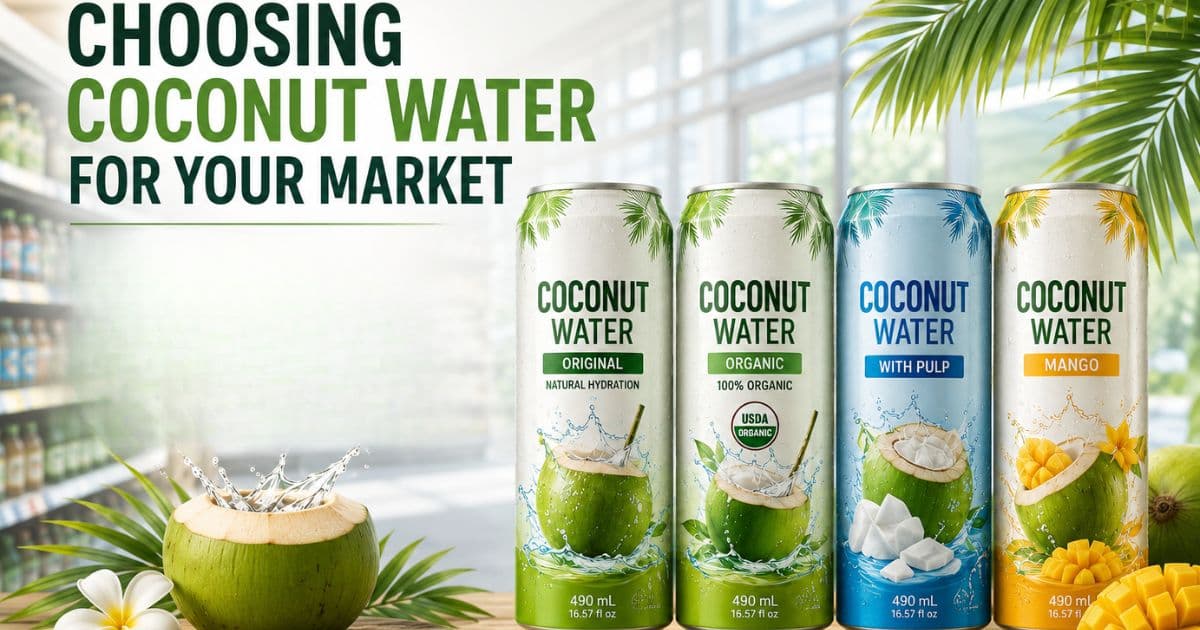
- Flavored varieties such as mango coconut water can further expand appeal to younger shoppers and flavor-driven buyers.
3. Single-Serve Convenience for Chilled and Ambient Sections
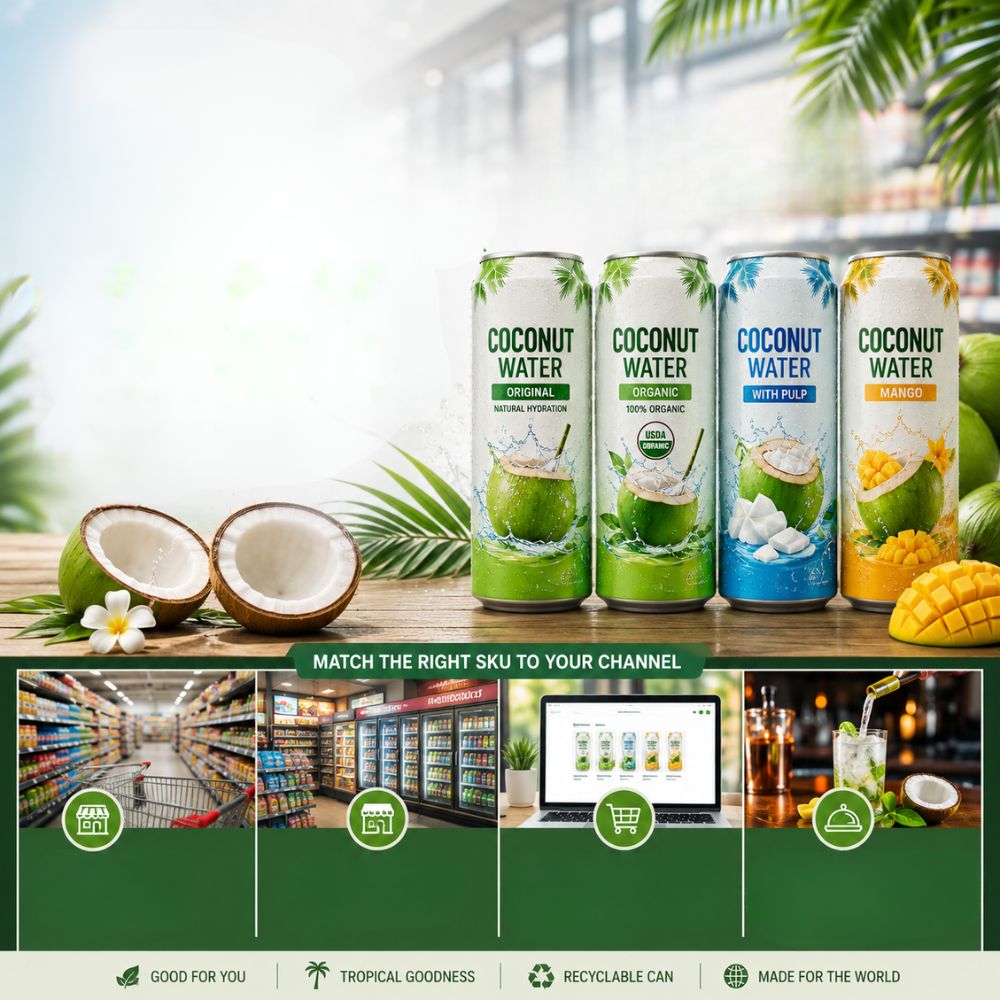
Single-serve packaging plays a major role in retail beverage success. Coconut water in 490 mL cans fits well into:
- Chilled coolers
- Grab-and-go beverage aisles
- Convenience store refrigerators
- Ambient shelf displays
- E-commerce beverage bundles
This flexibility allows retailers to position coconut water in multiple traffic-driving areas.
II/ What Retail Buyers Should Check Before Listing Coconut Water
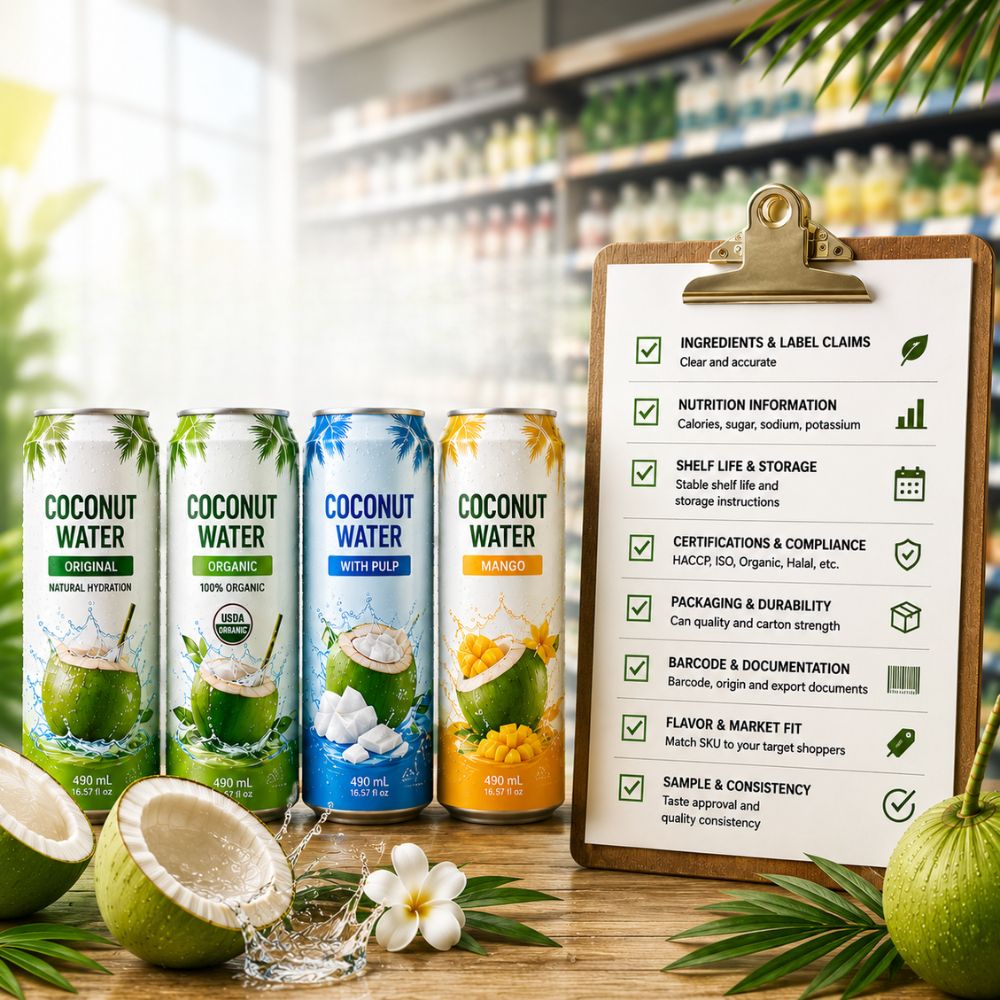
1.Ingredients and Label Claims
Retail buyers should first review the ingredient list carefully. Claims such as:
- Organic
- No added sugar
- 100% coconut water
- Natural flavor
- USDA Organic
must match official product labeling and supporting documentation.
Accurate label claims help retailers avoid compliance risks and maintain consumer trust.
2. Nutrition Information
Buyers should evaluate:
- Calories per serving
- Sugar content
- Sodium levels
- Potassium information
- Serving size consistency
Nutrition transparency is increasingly important in supermarket and convenience store purchasing decisions.
3. Shelf Life and Storage Instructions
Shelf stability is critical for distribution planning and inventory management. Retailers should confirm:
- Product shelf life
- Recommended storage conditions
- Ambient or chilled compatibility
- Export handling requirements
Longer shelf life can improve inventory flexibility for wholesalers and distributors.
4. Certifications and Market Compliance
Importers and retail chains often require documentation such as:
- HACCP
- ISO certifications
- Halal certification
- USDA Organic (where applicable)
- Market-specific labeling compliance
Proper documentation helps streamline onboarding for retail chains and distributors.
5. Packaging Durability and Carton Configuration
Retail buyers should verify:
- Can durability
- Secondary packaging strength
- Carton configuration
- Pallet efficiency
- Export readiness