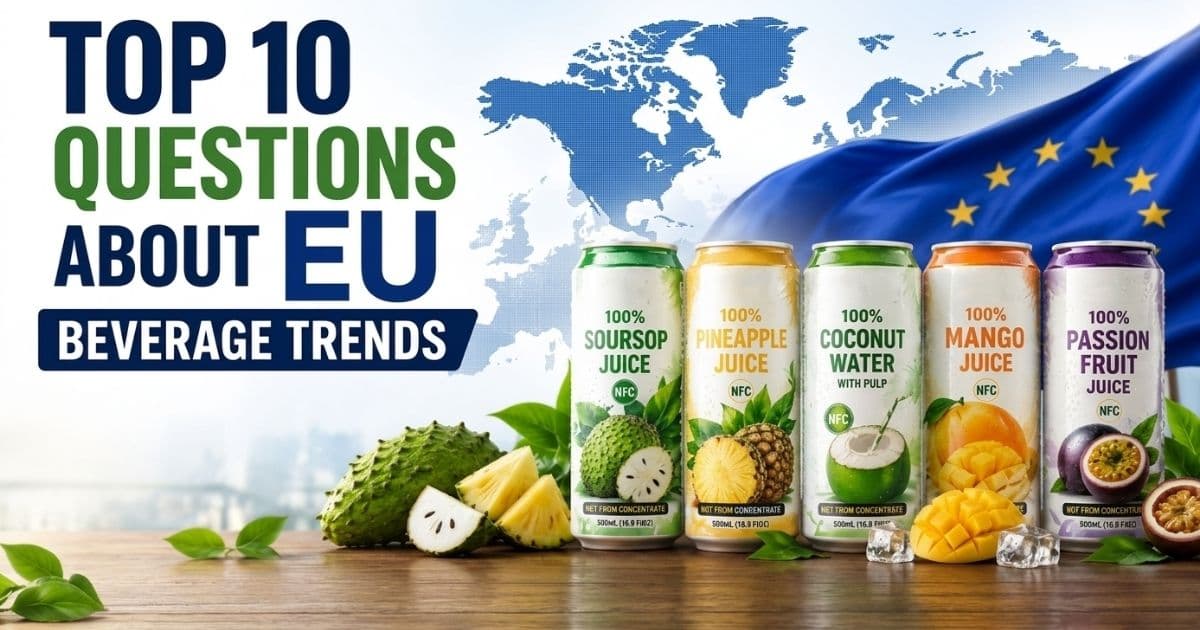
The European beverage market continues to evolve as sustainability trends, consumer preferences, and retail standards change rapidly. In 2026, importers, distributors, and retail buyers are becoming more selective when choosing beverage suppliers and products.
From packaging and shelf life to labeling compliance and sustainability, buyers are asking more detailed questions before making purchasing decisions.
Understanding these concerns can help beverage exporters improve market readiness, strengthen brand positioning, and create better long-term opportunities in Europe.
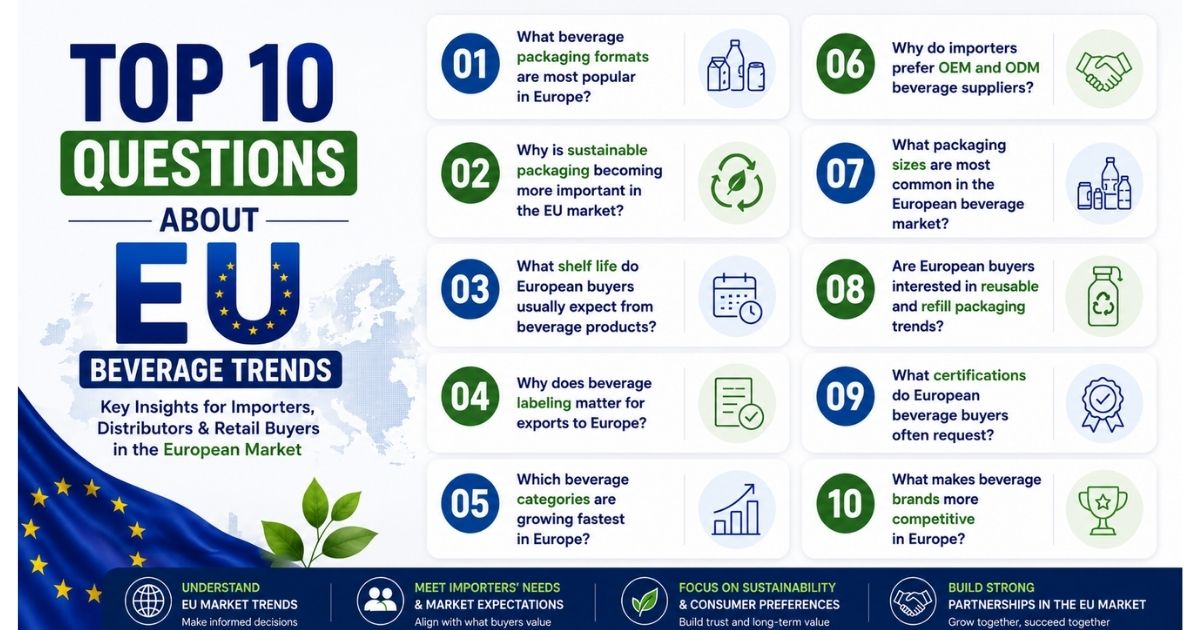
1. What Beverage Packaging Formats Are Most Popular in Europe?
European buyers often prefer packaging formats that combine convenience, sustainability, and transportation efficiency.
Popular packaging options include:
- Aluminum cans
- PET bottles
- Glass bottles
- Carton packaging
- Slim cans for energy and functional beverages
Packaging preferences may vary depending on retail channels, target consumers, and regional trends.
2. Why Is Sustainable Packaging Becoming More Important?
Sustainability has become one of the biggest priorities in Europe’s beverage industry.
Many buyers now look for:
- Recyclable packaging
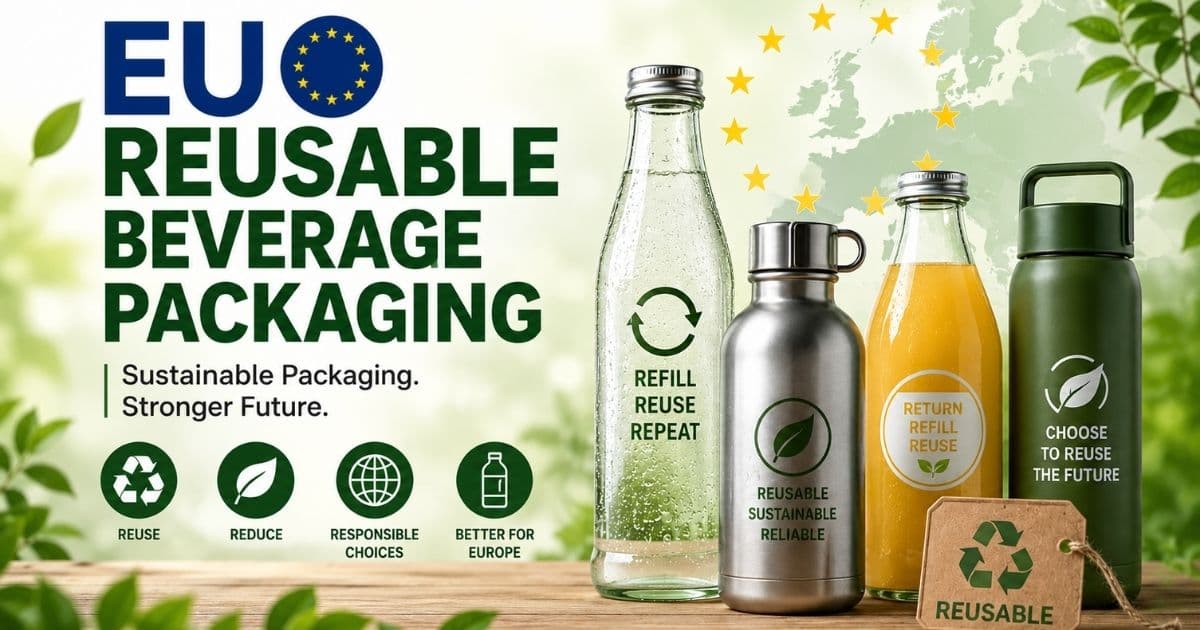
- Reusable packaging systems
- Reduced plastic usage
- Lightweight materials
- Eco-friendly labeling
Brands that support sustainability goals may improve their attractiveness to European buyers and retail partners.
3. What Shelf Life Do European Buyers Usually Expect?
Shelf-life expectations depend on beverage categories and distribution channels.
In many cases, buyers prefer products with stable shelf life to support:
- International shipping
- Warehouse storage
- Retail distribution
- Promotional campaigns
Longer shelf life may also improve inventory management and reduce product risks.
4. Why Does Beverage Labeling Matter in Europe?
Labeling compliance is one of the most important requirements in the European beverage market.
Buyers commonly check for:
- Ingredient lists
- Nutrition information
- Allergen declarations
- Barcode and traceability details
- Language requirements
- Expiration or best-before dates
Incorrect labeling may create import delays and regulatory risks.
5. Which Beverage Categories Are Growing in Europe?
Several beverage categories continue to gain attention in Europe, including:
- Functional beverages
- Fruit juice drinks
- Plant-based beverages
- Low-sugar drinks
- Sparkling beverages
- Energy drinks
- Healthy hydration products
Health-conscious and convenience-focused products are becoming increasingly popular among European consumers.
6. Why Do Buyers Prefer OEM and ODM Beverage Suppliers?
Many importers and distributors prefer suppliers that offer flexible OEM and ODM beverage solutions.
Buyers often look for suppliers capable of supporting:
- VINUT branded distribution production
- Customized packaging
- Flavor development
- Formula adjustments
- Flexible packaging sizes
OEM and ODM services may help buyers create stronger product differentiation in local markets.
7. What Packaging Sizes Are Most Common in Europe?
Popular beverage packaging sizes in Europe may include:
- 250ml
- 330ml
- 500ml
- 1L
- Family-size formats
Packaging size selection often depends on consumption habits, retail channels, and target customer groups.
Single-serve packaging remains highly popular in convenience retail and on-the-go consumption segments.
8. Are Buyers Interested in Reusable Packaging Trends?
Reusable and refill packaging systems are gaining attention across Europe as sustainability initiatives continue to grow.
Some buyers are increasingly interested in:
- Returnable glass bottles
- Refillable packaging systems
- Reduced packaging waste
- Circular economy packaging models
Sustainability trends are expected to continue influencing purchasing decisions in 2026 and beyond.
9. What Certifications Do European Buyers Often Request?
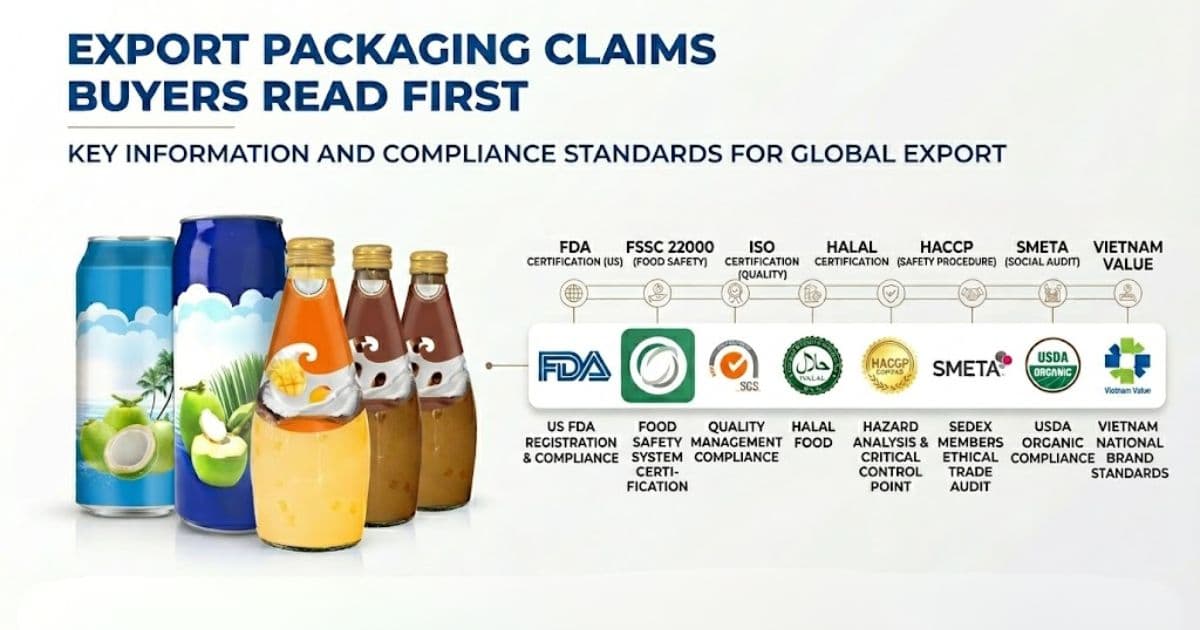
Depending on the market and beverage category, buyers may request certifications such as:
- HACCP
- ISO
- GMP
- HALAL
- FDA-related compliance
- Organic certifications
These certifications may help improve buyer confidence and support international market expansion.
10. What Makes Beverage Brands More Competitive in Europe?
European buyers often prefer suppliers that demonstrate:
- Consistent product quality
- Reliable export capability
- Flexible manufacturing services
- Strong packaging presentation
- Regulatory awareness
- Sustainability commitment
Brands that combine product quality with strong packaging and adaptability may create better long-term opportunities in the European market.
Conclusion
The European beverage market is becoming increasingly competitive and sustainability-focused. Importers, distributors, and retail buyers are asking more detailed questions about packaging, labeling, shelf life, and product positioning before selecting suppliers.
For beverage exporters, understanding these buyer expectations may help improve export readiness, strengthen brand positioning, and create more business opportunities in Europe in 2026.