Ramadan food traditions are remarkably diverse.
When sunset arrives and the daily fast ends, water is often the first drink at Iftar. But around the world, Ramadan tables may also feature colorful fruit drinks, floral syrups, yogurt beverages, hibiscus infusions and recipes passed down through generations.
In Syria, apricot-based Qamar al-Din is closely associated with Ramadan. In Lebanon and neighboring Levantine countries, dark Jallab is served over ice. Tamarind drinks appear across Egypt and the Levant, while South Asian families may serve rose-colored sharbat. In Malaysia and Singapore, Ramadan bazaars are closely associated with Air Katira.
These drinks reflect much more than thirst.
They tell stories about local fruits, spices, trade, climate, family traditions and the different cultures in which Ramadan is observed.
1. Traditional Ramadan Drinks at a Glance
Drink | Country or Region | Main Characteristics |
| Qamar al-Din | Syria and the Arab world | Apricot-based |
| Jallab | Levant | Fruit molasses, floral notes |
| Tamr Hindi | Egypt and Levant | Tamarind, sweet and tart |
| Karkadeh | Egypt and Sudan | Hibiscus |
| Sobia | Egypt and Saudi Arabia | Recipes vary by country |
| Kharoub | Egypt, Palestine and Levant | Carob |
| Erk Sous | Syria and Levant | Licorice root |
| Rooh Afza | South Asia | Floral and herbal syrup |
| Air Katira | Malaysia and Singapore | Milky, textured drink |
| Es Timun Suri / Es Buah | Indonesia | Fruit, ice and syrup |
Recipes vary considerably between countries, cities and families, so these descriptions should be understood as introductions rather than fixed formulas.
2. Why Are Special Drinks Important During Ramadan?

People observing the Ramadan fast abstain from food and drink from dawn until sunset.
Iftar marks the end of that daily fasting period.
Across many cultures, families have developed drinks that have become closely associated with this moment.
Some are made from ingredients that store well, such as:
- Dried apricots
- Tamarind
- Dates
- Grape molasses
- Hibiscus
- Carob
- Licorice root
- Rose syrup
Others reflect tropical ingredients and local food traditions.
Ramadan drinks can therefore be understood as part of a wider cultural landscape rather than one universal Islamic menu.
There is no single drink that Muslims around the world consume during Ramadan.
3. Qamar al-Din – Syria and the Arab World
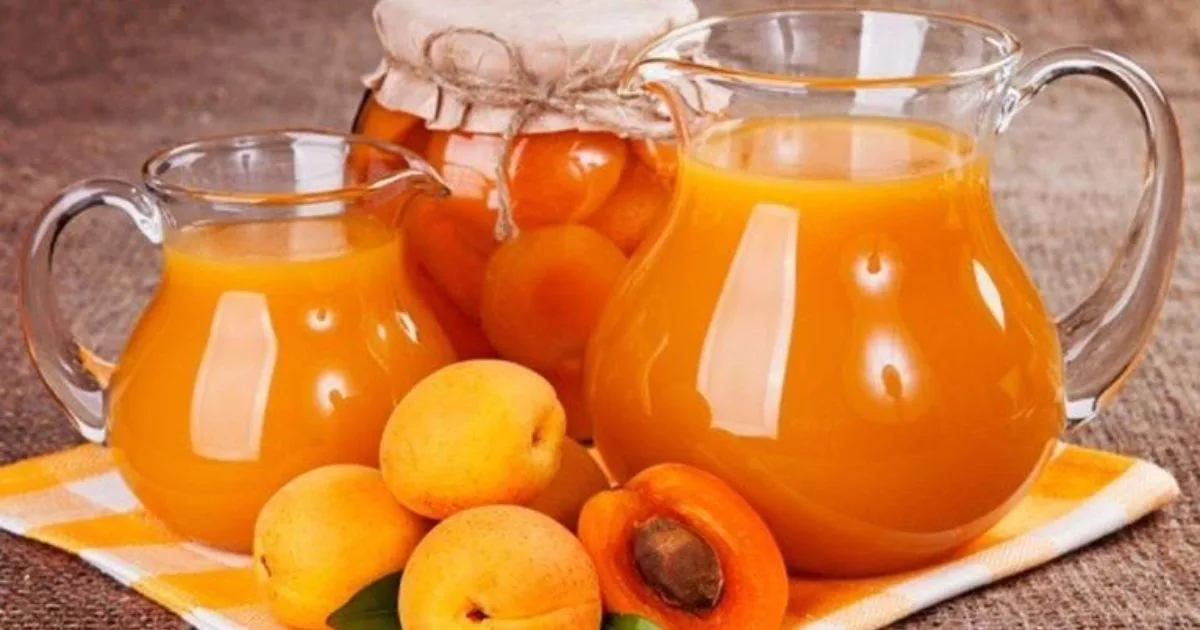
Qamar al-Din is one of the best-known drinks associated with Ramadan in the Arab world.
Its story is particularly connected with Syria.
Traditionally, ripe apricots are processed into a thick paste or fruit leather that can be dried into sheets. To prepare the drink, the apricot sheet is softened or soaked in water until it produces a rich orange-colored beverage.
Depending on the recipe, additional ingredients may include:
- Sugar
- Rose water
- Orange blossom water
- Nuts
Qamar al-Din is closely associated with Syria's Ghouta region near Damascus and later became popular across other parts of the Middle East and North Africa.
Today, it can appear both as a drink and as an ingredient in Ramadan desserts.
Its distinctive apricot flavor makes it one of the most recognizable seasonal beverages on many Arab Ramadan tables.
4. Jallab – Lebanon, Syria, Palestine and Jordan
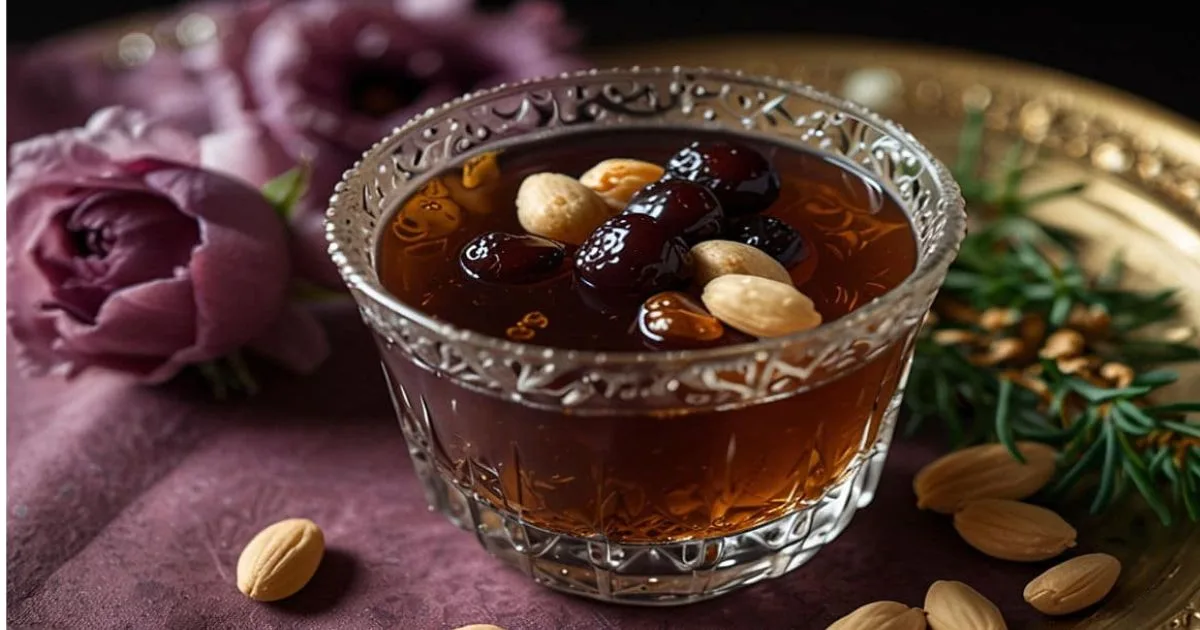
Jallab is a dark, sweet beverage associated particularly with the Levant.
Recipes vary, but traditional versions commonly combine fruit molasses such as date or grape molasses with floral ingredients such as rose water.
It is often served:
- Chilled
- Over crushed ice
- With pine nuts
- With raisins
In Lebanon, demand for Jallab traditionally rises significantly during Ramadan. In Syria, it also appears among the special beverages served with Iftar.
One of Jallab's most distinctive features is its presentation.
The dark drink, pale pine nuts and raisins floating over crushed ice make it visually different from many other Ramadan beverages.
Jallab demonstrates how fruit preservation ingredients such as molasses can become part of an important seasonal food tradition.
5. Tamr Hindi – Egypt and the Levant
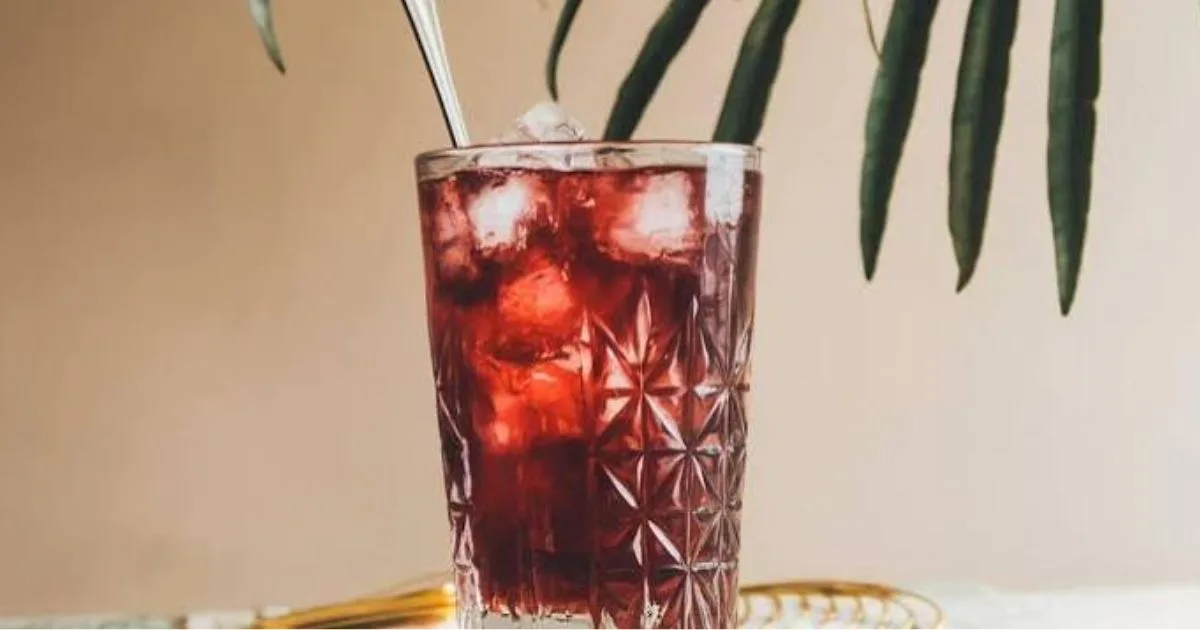
Tamr Hindi is the Arabic name commonly used for a tamarind drink.
Tamarind pulp is soaked or extracted in water, strained and usually sweetened to create a drink with a characteristic balance between sourness and sweetness.
Tamr Hindi is especially associated with Ramadan in Egypt and parts of the Levant.
It may be served cold at Iftar and is also commonly sold by street vendors in some cities during Ramadan.
Recipes are simple in principle:
Tamarind + Water + Sweetener
But families may adjust:
- Concentration
- Sweetness
- Floral flavorings
- Serving temperature
The result ranges from sharply tart to noticeably sweet.
6. Karkadeh – Egypt and Sudan
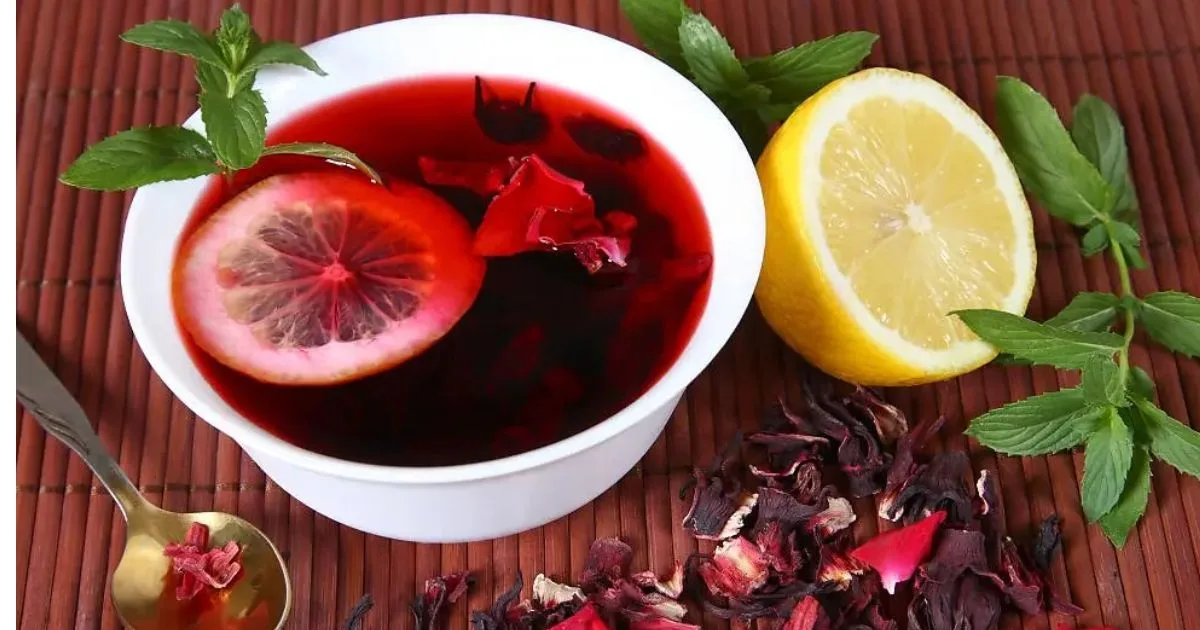
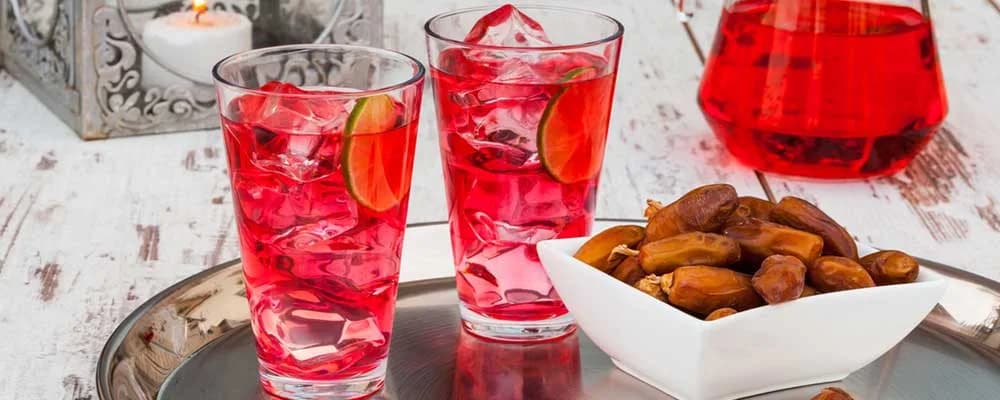
The deep red color of Karkadeh makes it immediately recognizable.
Karkadeh is prepared from dried hibiscus, or roselle, which is infused in water.
It has a naturally tart flavor and may be served either hot or cold, although chilled versions are especially common as refreshments.
The drink is strongly associated with Egypt and Sudan and is also enjoyed during Ramadan.
Typical preparation may involve:
- Dried hibiscus
- Water
- Sugar to taste
Some versions may include other flavorings.
Its rich ruby color also makes Karkadeh popular beyond Ramadan at family gatherings and celebrations.
Karkadeh is therefore not exclusively a Ramadan drink, but Ramadan is one of the occasions during which it frequently appears.
7. Sobia – Egypt and Saudi Arabia
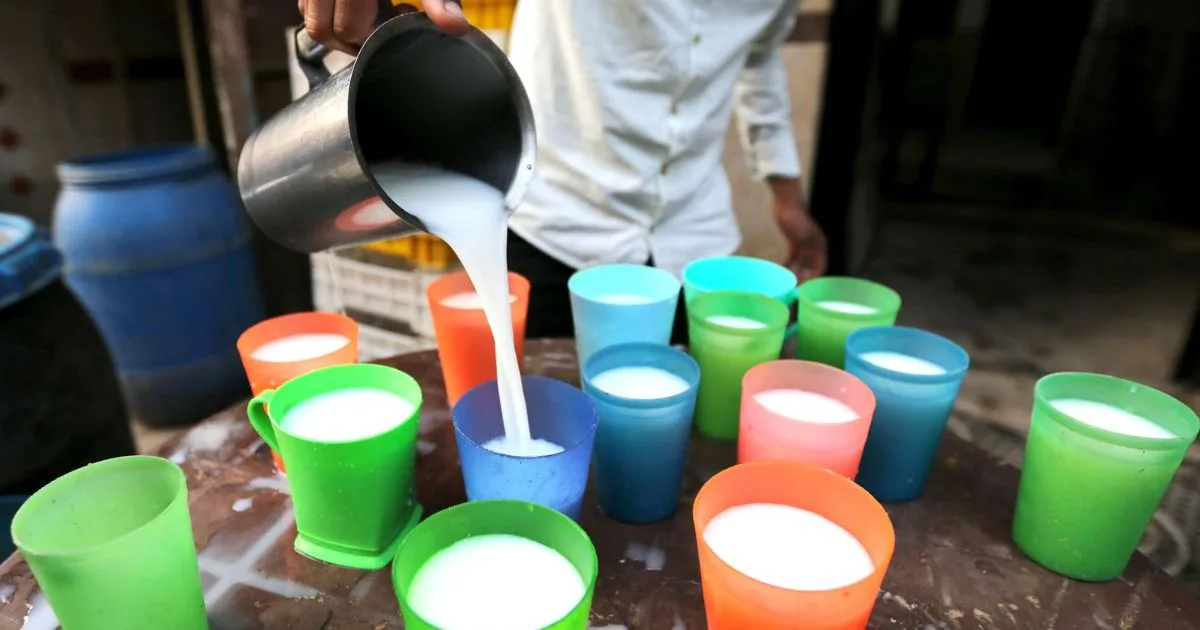
Sobia, sometimes written Sobya or Subia, provides an excellent example of why Ramadan drinks should not be described as having one universal recipe.
Egyptian and Saudi versions can be quite different.
In Egypt, modern Sobia commonly has a creamy profile and may include ingredients such as:
- Rice
- Coconut
- Milk
- Sugar
- Vanilla
In Saudi Arabia's Hijaz region, traditional Sobia follows a different preparation tradition.
The beverage has become particularly associated with Ramadan in cities such as Jeddah, Makkah and Madinah, where recipes can be passed between generations. Arab News describes it as a characteristic Hijazi Ramadan drink whose family recipes vary.
Therefore:
Egyptian Sobia ≠ necessarily the same recipe as Hijazi Sobia.
This distinction is important when discussing traditional food culture.
8. Kharoub – Egypt, Palestine and the Levant
Kharoub, or carob drink, is made from the pods of the carob tree.
The drink can be prepared by extracting flavor from carob and combining it with water and, depending on the recipe, sugar.
It has a dark color and a distinctive roasted, earthy flavor.
Kharoub is associated with Ramadan tables in Egypt, Palestine and other parts of the Levant. Arab News lists it among drinks commonly prepared for breaking the Ramadan fast.
In parts of Syria, carob drinks are also served alongside other Ramadan favorites such as:
- Tamarind
- Licorice
- Jallab
Like many traditional drinks, preparation varies by location and household.
9. Erk Sous – Traditional Licorice Drink
Another distinctive Ramadan beverage found in Syria and other parts of the Levant is a cold drink made from licorice root, often called Erk Sous or similar regional spellings.
It should not be confused with alcoholic drinks that may have similar transliterations.
The Ramadan drink is made from licorice root and has a distinctive combination of natural sweetness and bitterness.
In Syria, licorice drinks are especially visible in markets and streets during Ramadan, alongside Tamarind, Qamar al-Din and Jallab.
Traditional drink sellers may serve it from characteristic containers, making the beverage part of both the taste and visual culture of Ramadan streets.
Because licorice can interact with certain health conditions and medications, it should not be promoted as a health drink simply because it is traditional.
10. Rooh Afza – India, Pakistan and Bangladesh
In South Asia, one of the most recognizable drinks associated with Ramadan is Rooh Afza.
Unlike ancient regional drinks, Rooh Afza is a commercial syrup.
It was developed in Delhi in the early twentieth century and became deeply integrated into food culture across India, Pakistan and Bangladesh. During Ramadan it is commonly prepared for Iftar by mixing the concentrate with water or milk.
Its flavor combines floral, herbal and fruit notes.
Its characteristic deep pink-red color has also become visually associated with South Asian Iftar tables.
Because Rooh Afza is a trademarked commercial product, it is more accurate to describe it as:
a historic South Asian beverage strongly associated with Ramadan
rather than a generic category of traditional drink.
More broadly, South Asia has a long tradition of sharbat, a family of sweet drinks prepared from fruits, flowers, herbs or syrups.
11. Air Katira – Malaysia and Singapore
Ramadan drink traditions change significantly as we move into Southeast Asia.
Air Katira is particularly associated with Johor in Malaysia and is also popular in Singapore during Ramadan.
Singapore's official heritage resources describe Air Katira as a drink made with ingredients that can include:
- Evaporated milk
- Katira gum
- Basil seeds
- Malva nuts
- Rose-flavored syrup
- Sugar
Additional versions may include dates, almonds, lychee or other flavors.
The drink is known for its unusual combination of:
milky + floral + textured
rather than simply being a fruit beverage.
Air Katira is particularly visible at Ramadan bazaars, where modern variations continue to develop alongside traditional versions.
This makes it a good example of a Ramadan beverage tradition that is still evolving.
12. Es Timun Suri – Indonesia
Indonesia, home to one of the world's largest Muslim populations, has an enormous variety of foods and drinks associated with buka puasa, or breaking the fast.
One popular example is Es Timun Suri.
Timun Suri is a melon-family fruit widely associated with Ramadan markets in Indonesia.
The fruit may be combined with:
- Water
- Ice
- Syrup
- Basil seeds
- Grass jelly
- Nata de coco
- Other ingredients
Indonesia's official tourism website specifically lists Es Timun Suri as a popular beverage for breaking the Ramadan fast.
Its pale fruit pieces and iced presentation make it especially distinctive in Indonesia's tropical climate.
13. Es Buah – Indonesia
Another widely enjoyed Indonesian option is Es Buah, literally an iced fruit mixture.
There is no fixed recipe.
Typical ingredients might include:
- Watermelon
- Melon
- Papaya
- Pineapple
- Dragon fruit
- Avocado
- Nata de coco
- Jelly
- Ice
- Syrup
Some versions also include milk or coconut-based ingredients.
Indonesian government culinary resources identify Es Buah as a popular choice for buka puasa during Ramadan.
Es Buah sits somewhere between a drink and a fruit dessert.
That flexibility is part of its appeal.
Families and vendors can adapt the ingredients based on local fruit availability and personal preference.
14. Are Ramadan Drinks the Same Everywhere?
No.
Ramadan is a global religious observance, but its food culture is highly local.
Consider the contrast:
Syria: Apricot, tamarind, licorice and molasses
Egypt: Hibiscus, tamarind, carob and Sobia
Saudi Arabia: Hijazi Sobia and other regional drinks
South Asia: Sharbat and Rooh Afza
Malaysia and Singapore: Air Katira
Indonesia: Es Timun Suri and Es Buah
Climate, agriculture, migration and local history have all shaped these traditions.
This diversity is one reason Ramadan food culture cannot be represented accurately by a single menu.
15. Traditional Does Not Always Mean Low in Sugar
Many Ramadan drinks are made with:
- Syrup
- Sugar
- Molasses
- Sweetened milk
- Dried fruit
Their cultural importance does not automatically make them everyday hydration substitutes.
WHO recommends drinking water regularly between Iftar and Suhoor and limiting sweetened beverages.
Traditional drinks can still be enjoyed as part of Ramadan.
A practical approach is:
Water for primary hydration + traditional beverages for taste, culture and enjoyment
Sweetness can also be adjusted when drinks are prepared at home.
16. Water Still Comes First
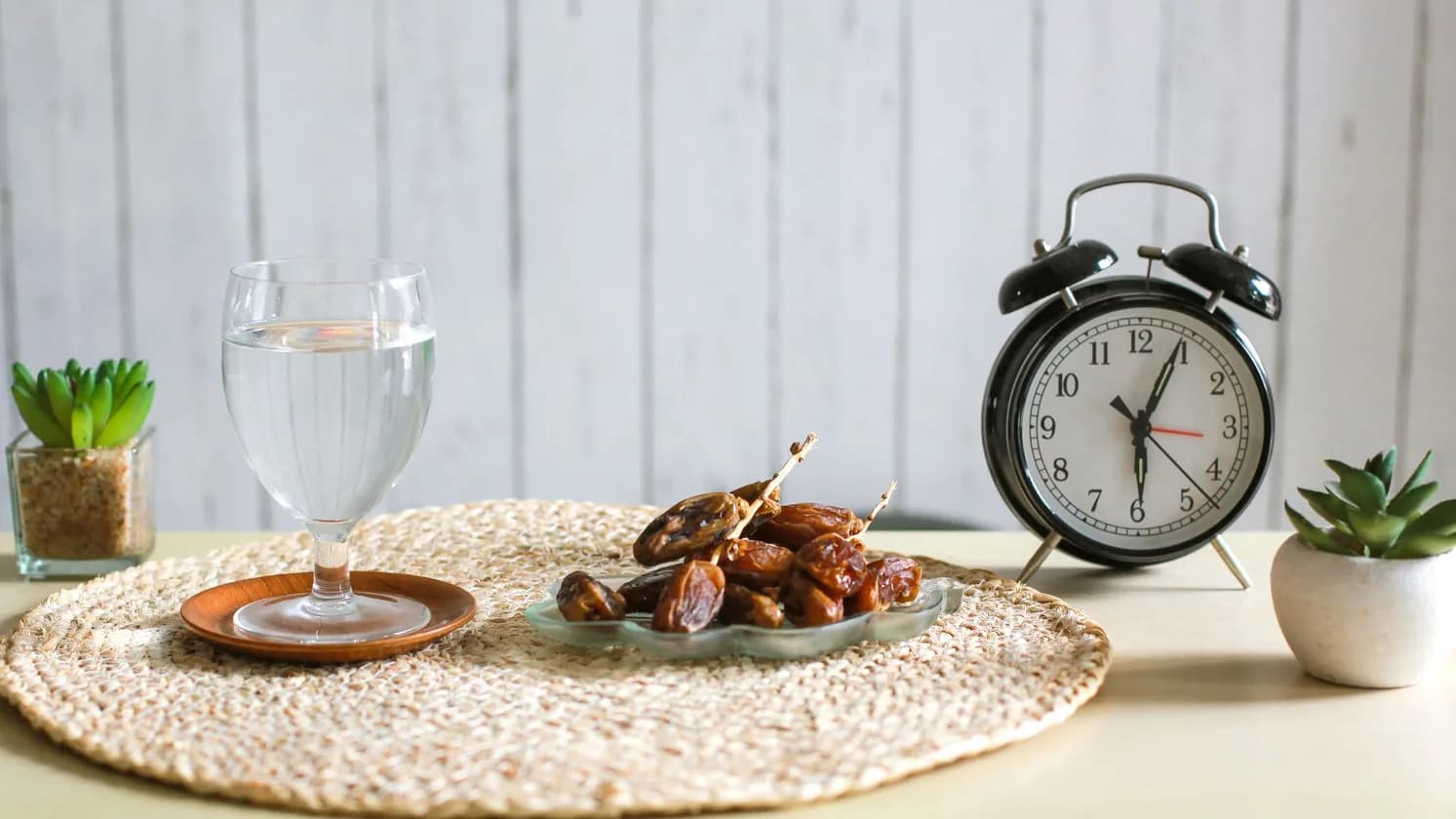
Even with the remarkable variety of Ramadan beverages around the world, the simplest drink remains the most important for hydration:
Water.
Traditional beverages should complement rather than replace regular water intake during the non-fasting period.
A typical Iftar might therefore include:
Water + Dates + Traditional Drink + Meal
rather than relying exclusively on sweet beverages.
17. What Ramadan Drinks Tell Us About Culture
Ramadan drinks offer a fascinating way to understand local food traditions.
Many are built around ingredients that historically made sense in their environment:
- Apricots in Syria
- Tamarind across the Middle East
- Hibiscus in Egypt and Sudan
- Carob in Mediterranean regions
- Rose and herbal syrups in South Asia
- Tropical fruits in Indonesia
- Seeds, gums and floral flavors in Malaysia and Singapore
The result is not one Ramadan beverage culture but many.
A glass served at Iftar can reflect geography, agriculture, family history and generations of culinary adaptation.
18. Frequently Asked Questions
18.1 What are traditional Ramadan drinks?
Traditional Ramadan drinks vary by country. Examples include Qamar al-Din, Jallab, Tamr Hindi, Karkadeh, Sobia, Kharoub, Air Katira and various South and Southeast Asian fruit and sharbat drinks.
18.2 What do people drink at Iftar?
Water is commonly consumed when breaking the fast. Depending on the country, Iftar may also include fruit drinks, milk or yogurt beverages, herbal drinks and traditional Ramadan beverages.
18.3 What is the most famous Middle Eastern Ramadan drink?
There is no single drink for the entire Middle East. Qamar al-Din, Jallab, Tamarind, Sobia, Karkadeh, Kharoub and licorice drinks are all associated with Ramadan in different regions.
18.4 What is Qamar al-Din?
Qamar al-Din is an apricot-based preparation strongly associated with Syria and Ramadan. Dried apricot paste or fruit leather is soaked in water to prepare the drink.
18.5 What is Jallab?
Jallab is a Levantine beverage generally prepared from fruit molasses and floral flavorings. It is commonly served cold with ice, raisins and pine nuts.
18.6 What is a traditional Ramadan drink in India and Pakistan?
Sharbat drinks are widely consumed, and the commercial syrup Rooh Afza has become particularly associated with Iftar across India, Pakistan and Bangladesh.
18.7 What do Indonesians drink during Ramadan?
Popular Ramadan refreshments include Es Timun Suri, Es Buah and many other regional iced fruit drinks.
18.8 Are traditional Ramadan drinks healthy?
Their nutritional profiles vary greatly. Some contain fruit or other plant ingredients, while others may contain substantial amounts of sugar or syrup. Being traditional does not automatically make a drink nutritionally preferable.
18.9 Can traditional Ramadan drinks replace water?
They can contribute fluid, but water should remain the primary hydration drink between Iftar and Suhoor.
From the apricot orchards associated with Qamar al-Din in Syria to Ramadan bazaars serving Air Katira in Southeast Asia, drinks offer a unique window into how different communities experience the holy month. There is no universal Ramadan beverage. Instead, Ramadan brings together hundreds of local traditions: Apricot. Tamarind. Hibiscus. Carob. Molasses. Rose. Milk. Seeds. Tropical fruits. Each culture gives Iftar its own flavors. Exploring those drinks is therefore not simply about discovering new beverages. It is a way of understanding the history, ingredients and traditions that make Ramadan different across the world. |