Beverage quality control is the system of checks and measurements used to confirm that raw materials, the manufacturing process, packaging, and finished product meet defined specifications. It can include incoming material checks, in-process checks, fill and packaging inspection, laboratory testing, sensory evaluation, and finished-product release. Buyers should read QC alongside specifications, traceability records, corrective-action history, and the supplier's broader food safety system. QC does not guarantee zero defects, and no single test tells the whole quality story.
Most beverage suppliers will say some version of "we have strict quality control" — but on its own, that sentence tells a buyer very little. A sharper question set helps far more: How is quality defined for this specific product? Does a written specification actually exist? Who checks it, and at what stage of production? How are the results recorded, and what happens when a batch fails? "Quality" should never be treated as an adjective a supplier simply applies to itself — it only becomes useful once it is turned into defined, verifiable requirements that can be checked against and evidenced.
1. Foundations: What Beverage Quality Control Actually Means
1.1 What Is Beverage Quality Control ?
QC means inspecting, measuring, testing, and verifying a product or process against predefined requirements. It is not one department or one test — it can apply at receiving, during production, at packaging, and on finished goods. This approach is the foundation of how VINUT manages quality across its own production lines.
1.2 Beverage Quality Control vs. Beverage Quality Assurance: Not the Same Thing
Quality Control focuses on inspection, testing, and measured results. Quality Assurance focuses on the systems, procedures, prevention, and training meant to help requirements be met in the first place.
| Quality Control | Quality Assurance |
|---|---|
| Detects whether requirements are met | Builds systems to help requirements be met |
| Product/process focused | System/process focused |
| Inspection/testing | Procedures, controls, audits |
| Batch-level evidence | Ongoing system evidence |
Good QA does not remove the need for QC — the two are complementary.
1.3 Product Quality and Food Safety Must Also Be Distinguished
Food safety concerns whether a product is safe under applicable requirements, often managed through a system such as HACCP or a broader scheme like ISO 22000. Product quality can include taste, color, aroma, consistency, fill level, and packaging appearance. A product can be food-safe but fail a sensory specification, or look acceptable while a food-safety issue exists elsewhere.
2. Beverage Product Specifications: The Reference Point for Every Pass/Fail Decision
2.1 Product Specifications Define What "Acceptable" Means
Without a clear specification, QC has no reference point for pass or fail. A specification can cover identity, ingredients, sensory profile, physical and chemical parameters, microbiological criteria, net contents, packaging, storage, and shelf life.
2.2 Specifications Should Be Product-Specific
Beverage product specifications are the written reference behind every pass/fail decision. Before asking how a supplier tests, buyers should ask which beverage product specifications exist for each SKU and which version is currently approved.
3. Controlling Raw Materials and Formulation
3.1 Raw Material Quality Is the First Control Point
Quality begins before production starts. Checks can include identity, supplier information, appearance, condition, documentation, and relevant test results, depending on the material — there is no single universal test.
3.2 Ingredient Specifications Help Control Incoming Materials
Suppliers should maintain requirements for relevant ingredients — fruit components, sugar or sweeteners, extracts, flavors, and additives. Finished-product consistency depends partly on the consistency of incoming materials.
3.3 Water Quality Is Particularly Important in Beverage Manufacturing
Water is often a major component of a beverage, so its treatment, monitoring, and records matter to QA/QC. Any specific regulatory limit should be cited only from an official market source.
3.4 Supplier Qualification Supports Raw Material Quality
Raw material control isn't limited to checking deliveries on arrival. QA can also include an approved supplier list, supplier-level specifications, documentation, and a review process for new suppliers.
3.5 Formulation Control Helps Keep Product Consistent
A formulation needs management of recipe/version, ingredient quantities, addition sequence, and processing conditions. Without this control, taste, color, nutrition, or stability can drift between batches.
3.6 Formula Version Control Is Part of Quality Management
A sample version and a commercial version of a formula are not automatically the same thing — both need control, and any change should follow a defined change-control process.
4. Beverage Manufacturing Quality Control: In-Process Controls During Production
4.1 In-Process Quality Checks Help Detect Problems Before Finished Product Release
Checks can occur at blending, processing, filling, or packaging, depending on the system. The goal is to catch deviations early rather than waiting for the finished-product stage.
4.2 Process Parameters and Product Parameters Should Be Kept Separate
A process parameter describes a manufacturing operating condition; a product parameter is a characteristic measured on the beverage itself. Buyers don't need every process setting, but process control exists to support product consistency.
5. Sensory, Physical, Chemical and Microbiological Testing
5.1 Sensory Evaluation Is an Important Quality Tool
Beverages may need evaluation for color, aroma, taste, texture, mouthfeel, carbonation, or pulp distribution, depending on category. A meaningful sensory test needs a reference, defined criteria, and a controlled comparison — not just "it tastes good."
5.2 Sensory Quality Must Be Linked to an Approved Reference
If each reviewer judges taste independently, consistency suffers. Structured evaluation can use an approved sample, a sensory specification, or a reference profile, since sensory judgment is inherently subjective and needs structure.
5.3 Physical and Chemical Testing Provides Measurable Evidence
Depending on the beverage, testing may cover pH, soluble solids, acidity, viscosity, carbonation, or other relevant parameters. These are illustrative categories, not a universal list — no target values are set here without a product-specific, authoritative source. See VINUT's product range for examples of the beverage categories these tests commonly apply to.
5.4 Microbiological Testing Has a Different Purpose
Microbiological testing relates to food safety and stability, and can involve a defined test plan, acceptance criteria, and release requirements, often informed by Codex Alimentarius principles for microbiological criteria. Specific organisms or limits are not listed here as universal requirements; any such detail needs a proper technical source.
5.5 Laboratory Testing Should Be Interpreted Against Specifications
A lab result alone often cannot say pass or fail — that needs the test method, the specification, and the acceptance criterion.
5.6 Test Methods Matter
Two labs can use different methods for the same parameter and get different numbers. When relevant, buyers or QA should know the test method, laboratory, sample, unit, and date — laboratory accreditation itself is a topic for a separate, more technical article.
5.7 Sampling Quality Affects Testing Quality
If a sample isn't representative of the batch, the result may not reflect the whole batch. A controlled sampling plan matters — this guide does not set out a statistical sampling formula, only the principle that sample selection matters.
6. Packaging, Fill and Labeling Controls
6.1 Net Content and Fill Control Are Part of Beverage Quality
Fill level, net content, and container consistency connect to specification, packaging, and, where applicable, regulatory requirements. Legal fill tolerances should be cited only from an official, market-specific source — for the U.S.
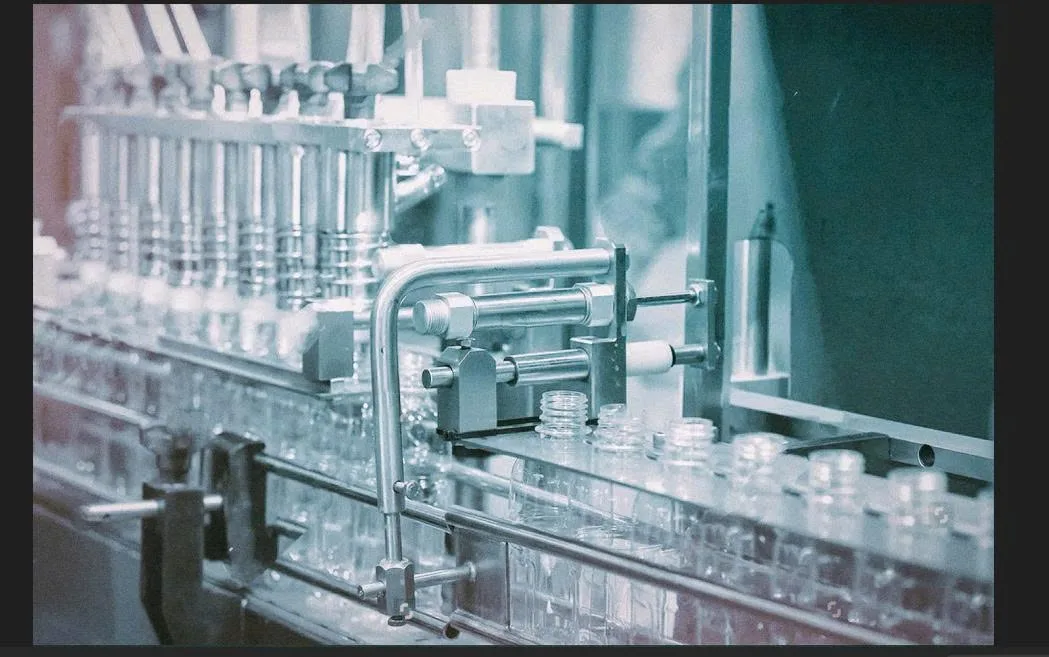
Net Content and Fill Control Are Part of Beverage Quality
6.2 Closure Integrity Matters
Closures — can seams, bottle caps, lids, seals — can be checked for condition and seal performance. Packaging integrity directly affects how well a product is protected after leaving the line.
6.3 Packaging Quality Is More Than Visual Appearance
Packaging QC can examine dents, leakage, cracks, deformation, closure, label position, print quality, and carton condition. A defect can be cosmetic, functional, or safety-related, and should be classified accordingly.
6.4 Label Accuracy Is Also a Quality-Control Issue
A label needs to correctly show SKU, flavor, language/version, date code, barcode, and other required information. Correct formula with the wrong label is still a serious quality issue.
6.5 Artwork Version Control Prevents Labeling Errors
Suppliers serving multiple markets, languages, or private-label programs need to ensure the correct artwork is used for the correct run — a common, preventable source of errors.
7. Batch Identity, Traceability and Release
7.1 Date Coding and Lot Coding Support Product Control
Coding can identify production date, batch, line, or lot, supporting traceability, stock rotation, complaint investigation, and recall — this guide does not prescribe a specific coding format.
7.2 Batch Identification Is Essential for Traceability
A complaint requires identifying which production batch, ingredient lot, and packaging lot a product came from, where relevant, or investigation becomes far harder.
7.3 Finished Product Testing Is Only One Part of QC
Finished product may be tested before release, but a final test alone does not guarantee quality. Quality is built from raw material, process, packaging, and finished-product controls together.
7.4 Batch Release Should Follow Defined Criteria
A batch shouldn't be released simply because production finished. Release can require review of QC results, documentation, packaging status, deviations, and required approvals — the exact process varies by supplier.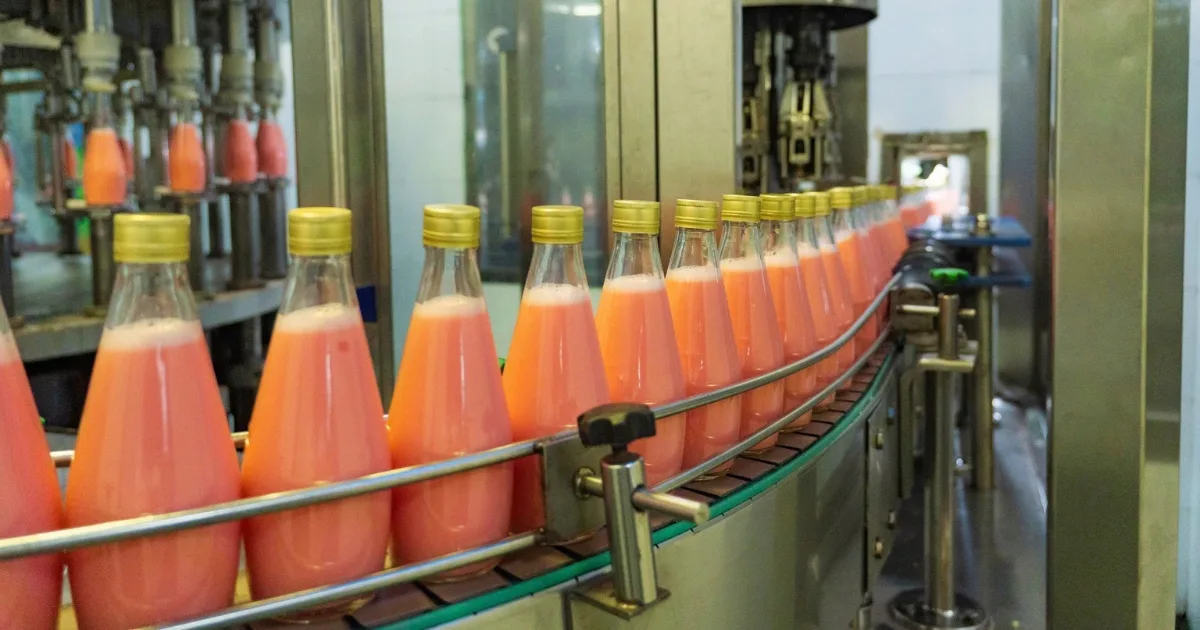
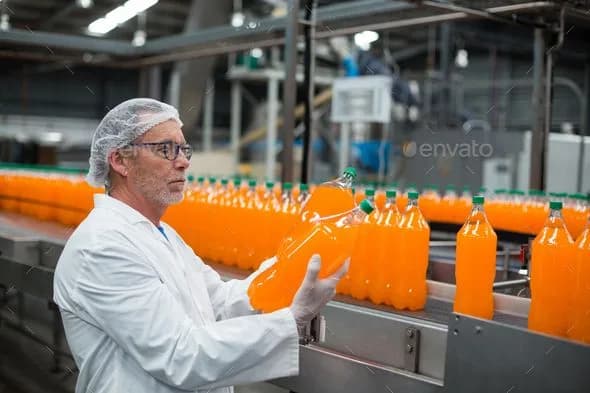
Beverage bottling production line with glass bottles filled with fruit juice
7.5 Hold and Release Status Must Be Controlled
Finished goods can sit in different statuses — hold, released, rejected, under investigation. Product that hasn't been released should never accidentally end up in a shipment.
8. Certificates of Analysis and Stability
8.1 Certificate of Analysis Can Summarize Batch-Level Test Results
A COA can include product ID, batch, selected results, specification limits, and status. Importantly: a COA is not a certification.
8.2 COA Should Be Matched to the Actual Batch
Buyers should confirm the SKU, lot/batch, production date, and shipment on a COA match what's being received. A COA from a different batch shouldn't stand in as direct evidence if batch-specific evidence was requested.
8.3 Retention Samples Can Support Future Investigation
Some suppliers retain batch samples for complaint comparison, stability review, or investigation. Retention duration and policy vary by supplier system and requirements.
8.4 Stability Monitoring Supports Shelf-Life Confidence
A product may be reviewed over time for sensory, physical, chemical, or microbiological parameters, as relevant, to understand how it holds up across its claimed shelf life.
8.5 Shelf-Life Testing and Routine QC Are Different
Routine QC asks whether the current batch meets specification now. Shelf-life validation asks whether the product stays acceptable for its claimed duration — related but distinct activities.
9. Storage, Transport and Incoming Inspection
9.1 Storage Conditions Can Affect Quality After Production
Quality doesn't end at the filling line. Temperature, light, humidity, and handling can affect a beverage afterward, so suppliers should define appropriate storage conditions.
9.2 Warehouse Quality Controls Matter
Warehouse controls can include status tracking, lot segregation, damage checks, storage monitoring, and FEFO/FIFO rotation where applicable — this is not a full warehouse SOP, just a reminder that storage is part of the quality chain.
9.3 Transport Can Introduce Quality Risks
Shipping can introduce carton damage, denting, breakage, leakage, or temperature exposure. An arrival inspection helps distinguish a production defect from transport damage.
9.4 Buyer Incoming Inspection Adds Another Layer of Verification
On arrival, importers can check quantity, case condition, packaging, labels, lot codes, and selected samples. Buyers don't need to replicate a factory's full QC — incoming inspection should be risk-based.
10. Batch-to-Batch Consistency
10.1 Quality Consistency Across Batches Matters More Than One Excellent Sample
An initial sample can be genuinely excellent. What buyers actually need is evidence that batch after batch — first, second, third, and beyond — falls within the approved specification.
10.2 Quality Variation Should Be Distinguished from Specification Failure
Products can show normal batch-to-batch variation. That's acceptable as long as it stays within the approved range — not every small variation is a quality defect.
11. Handling Non-Conformance and Complaints
11.1 Non-Conforming Product Requires Controlled Handling
Non-conforming product needs to be identified, segregated, investigated, and given a disposition according to the quality system — which can include rework, rejection, or hold, where appropriate and permitted.
11.2 Non-Conformance Should Trigger Root-Cause Investigation When Appropriate
Handling a failed batch isn't the end. A functioning system also asks why it happened, using investigation, root-cause analysis, and corrective action — buyers should watch closely when an issue recurs.
11.3 Corrective Action and Preventive Thinking Matter
Corrective action addresses the cause of an issue that already occurred. Preventive thinking aims to reduce the chance of it happening again. Full CAPA methodology is beyond this guide's scope.
11.4 Customer Complaints Are Part of the Quality Feedback Loop
Complaints can relate to product, packaging, transport, or retailer handling. A functioning system records, investigates, responds to, and links complaints to a batch, feeding results back into future production.
11.5 Complaint Rate Alone Can Be Misleading Without Context
A raw complaint count says little without units sold, complaint type, severity, and whether a cause keeps recurring. No universal "acceptable" complaint rate is proposed here — it depends heavily on product and category.
11.6 Quality Issues Should Be Classified by Risk
A misaligned label and a food-safety failure aren't the same severity and shouldn't be treated as equivalent. Suppliers should classify issues by risk; an exact risk matrix is beyond this guide's scope.
11.7 Critical Quality Issues Should Not Be Offset by Strong Commercial Performance
A SKU that sells well is not exempt from a serious food-safety, regulatory, or integrity issue — commercial success does not offset a critical quality failure.
12. Change Control and Documentation
12.1 Change Control Helps Protect Product Consistency
Changes to an ingredient supplier, formula, process, packaging, or artwork should be evaluated before implementation where appropriate, and an importer may need notification depending on the commercial agreement.
12.2 Quality Documents Need Version Control
Specifications, artwork, test methods, and QC records need controlled versions — otherwise a buyer may be working from an outdated specification while the supplier has moved to a newer one.
12.3 Document Consistency Is a Quality Signal
Information across a specification, label, COA, catalogue, and buyer documents should be consistent. Conflicts are a signal to seek clarification before proceeding.
12.4 Quality Records Provide Evidence That Controls Were Performed
"We always check this" is not sufficient evidence on its own. Depending on due diligence level, buyers may need to see that checks are recorded and results reviewed, not just performed informally.
12.5 Calibration and Measurement Control Support Reliable QC Results
Measurement equipment needs to be appropriate and controlled — if the instrument can't be trusted, neither can the result built on it. Calibration standards themselves are beyond this guide's depth.
12.6 Personnel Training Affects Quality Execution
A good procedure is only as reliable as the person following it. A quality system needs role clarity, training, and demonstrated competency, without turning this guide into an HR manual.
13. Audits and Certification
13.1 Internal Audits Support Quality-System Verification
An internal audit checks procedures, records, and compliance with a supplier's own system — a distinct activity from a third-party certification audit, and the two shouldn't be treated as equivalent.
13.2 Third-Party Certifications Support, but Do Not Replace, Product Verification
Quality documentation, Quality documentation, or other GFSI-recognized certifications offer meaningful system-level evidence, but buyers still need product specifications and relevant batch evidence. Certification does not guarantee every batch is automatically perfect — see VINUT's certifications page for an example of how this evidence is typically presented to buyers.
13.3 Factory Audits Provide Another Layer of Evidence
An audit lets an importer observe process, controls, records, and facility conditions directly. Not every sourcing project needs an onsite audit — it depends on risk and the buyer's own requirements.
14. Matching QC to Product Category and Packaging
14.1 Quality Control Should Match Product Risk and Complexity
A simple beverage and a more complex one can need different test plans, parameters, and frequencies. There is no single universal QC checklist for every beverage category.
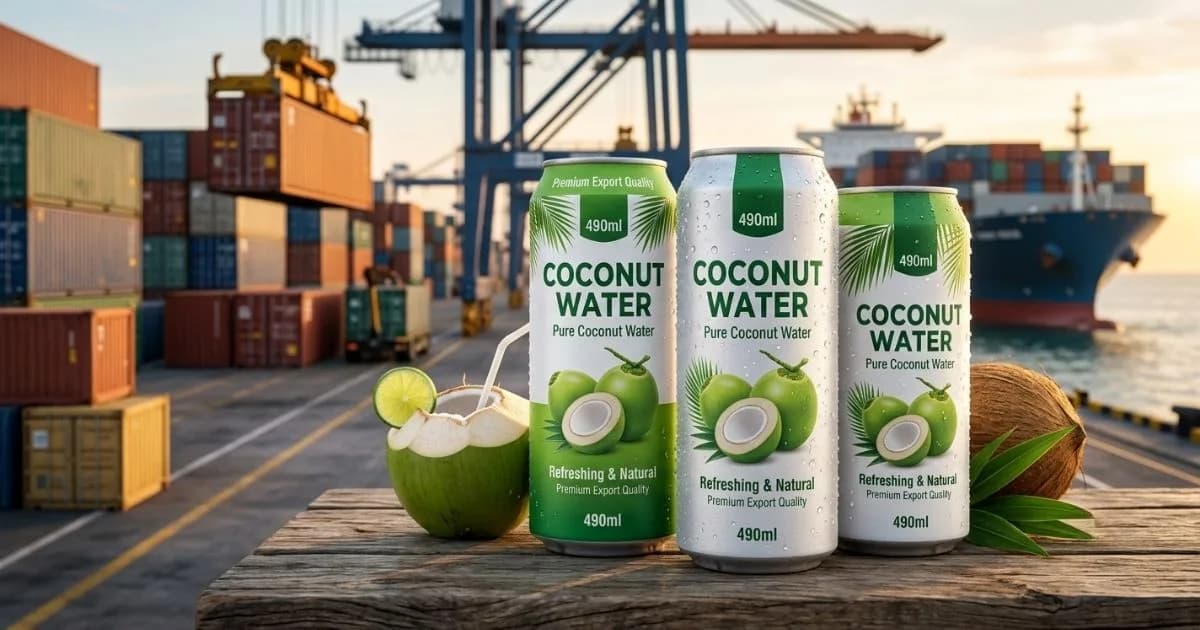
14.2 Coconut Water, Juice, Aloe and Carbonated Drinks May Require Different Controls
Without going deep technically: pulp content, carbonation, acidity, texture, and formulation can all shift which QC parameters matter most for a given category.
14.3 Packaging Format Can Also Change QC Requirements
Cans, PET, glass, and cartons each bring different closures, failure modes, and inspection needs — a quality plan needs to match the format actually used.
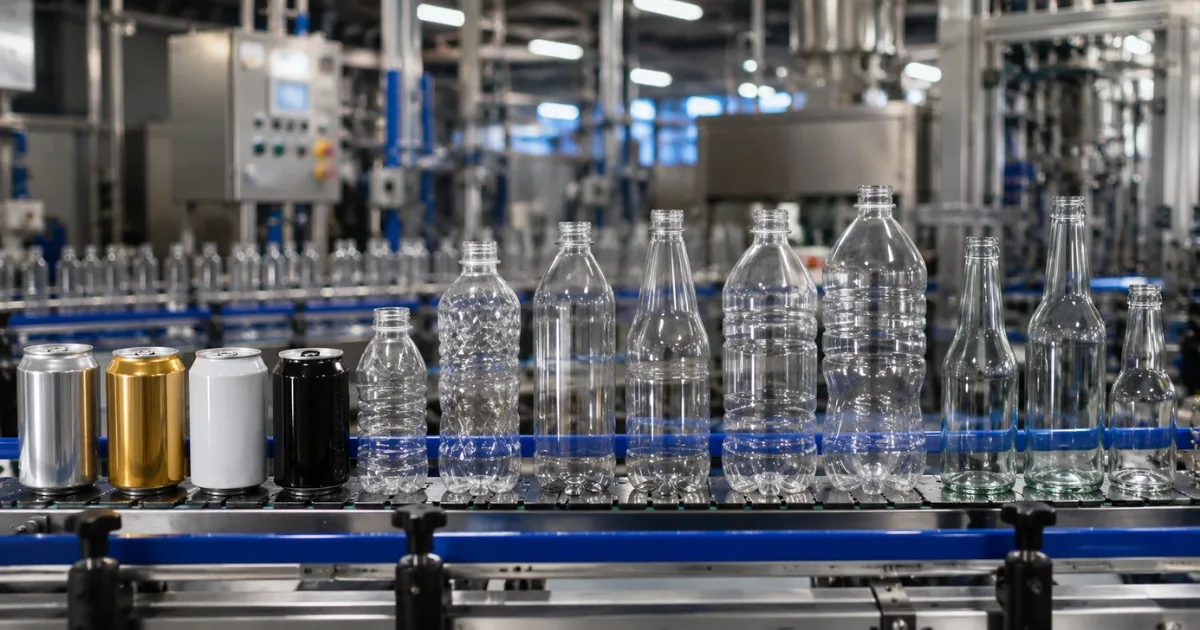
Packaging Format Can Also Change QC Requirements
15. Importers Should Ask for Evidence in Layers
Buyers don't need to request an entire QA system in the first email. Evidence can be staged:
- Stage 1 — Initial Evaluation: basic specifications, certifications, product information.
- Stage 2 — Technical Review: detailed specifications, testing information, quality documentation.
- Stage 3 — Trial/Commercial Order: batch documentation, COA where relevant, shipment-level evidence.
- Stage 4 — Supplier Monitoring: complaint trends, corrective actions, ongoing consistency.
16. A Practical Beverage Quality-Control Framework
Beverage quality control can be understood as eight layers running from raw material to feedback: Raw Materials, Formulation, Process, Filling, Packaging, Finished Product, Storage & Shipment, and Feedback & Corrective Action.
| Quality Layer | Core Question |
|---|---|
| Raw Materials | Are incoming materials consistent with approved requirements? |
| Formulation | Is the approved formula/version controlled? |
| Process | Are key manufacturing conditions controlled? |
| Filling | Is product filled consistently and correctly? |
| Packaging | Does the pack protect the product and match approved specifications? |
| Finished Product | Do test and sensory results meet specifications? |
| Storage/Shipment | Is product condition protected after production? |
| Feedback | Are complaints and deviations investigated and corrected? |
17. Buyer Quality Evidence Matrix
| Buyer Question | Possible Evidence |
|---|---|
| What product is being made? | Product specification |
| What batch was produced? | Lot/batch records |
| Did the batch meet requirements? | QC records / COA when applicable |
| Is food safety managed systematically? | Food safety system/certification evidence |
| Can the product be traced? | Traceability records/system |
| What happens when something fails? | Non-conformance/corrective-action process |
| Is quality repeatable? | Multi-batch performance and complaint history |
| Is packaging controlled? | Packaging specification and inspection records |
The right evidence for a given project depends on the level of due diligence required and the risk associated with the product and market.
18. What Buyers Should Review Before Approving a Beverage Supplier
Product: Specification available? Approved sample? Formula/version controlled?
Quality: QC checkpoints defined? Finished-product testing? Sensory criteria? Quality records kept?
Food Safety: Relevant food safety system? Certifications verified? Traceability in place?
Packaging: Packaging specification? Closure/integrity controls? Label control?
Batch: Lot coding? Release process defined? COA when relevant?
Supplier Management: Non-conformance process? Corrective action documented? Complaint handling? Change control?
19. Common Misunderstandings About Beverage QC
- "Final testing guarantees quality." It confirms one sample at one point in time, not the whole process.
- "Certification means every batch is automatically compliant." Certification is system-level assurance; batches still need their own evidence.
- "A good sample proves production consistency." It proves a product can be made once, not made repeatedly at scale.
- "Quality means only taste." It also covers physical, chemical, packaging, and labeling attributes.
- "QC and QA are the same." QC verifies results; QA builds systems meant to prevent problems.
- "COA is a certification." A COA documents batch-level results; a certification reflects a broader scheme.
- "Packaging defects are only cosmetic." Some are functional or safety-related.
- "If a product passed once, the specification no longer matters." It remains the ongoing reference for every batch.
- "More tests always mean better quality." Testing should be relevant to product risk, not simply maximized.
- "One QC plan works for every beverage category." Different beverage types and packaging formats need different controls.
Beverage Quality Control ExplainedBeverage quality control is not a single test, a slogan, or a certificate — it is a chain of defined checks running from raw materials through formulation, processing, filling, packaging, and storage, all the way to how a supplier handles a complaint months after a product has shipped. A single excellent sample proves very little on its own; what actually protects a buyer is evidence that a specification exists, that it is checked consistently, and that batch after batch falls within it. Certifications and a Certificate of Analysis both add real value, but neither replaces product-specific evidence, and neither guarantees that the very next batch will meet requirements. For importers, distributors, and procurement teams, the most useful shift is simple: stop asking whether a supplier's quality is "good," and start asking what is actually being measured, how it is recorded, and what happens when something goes wrong. |