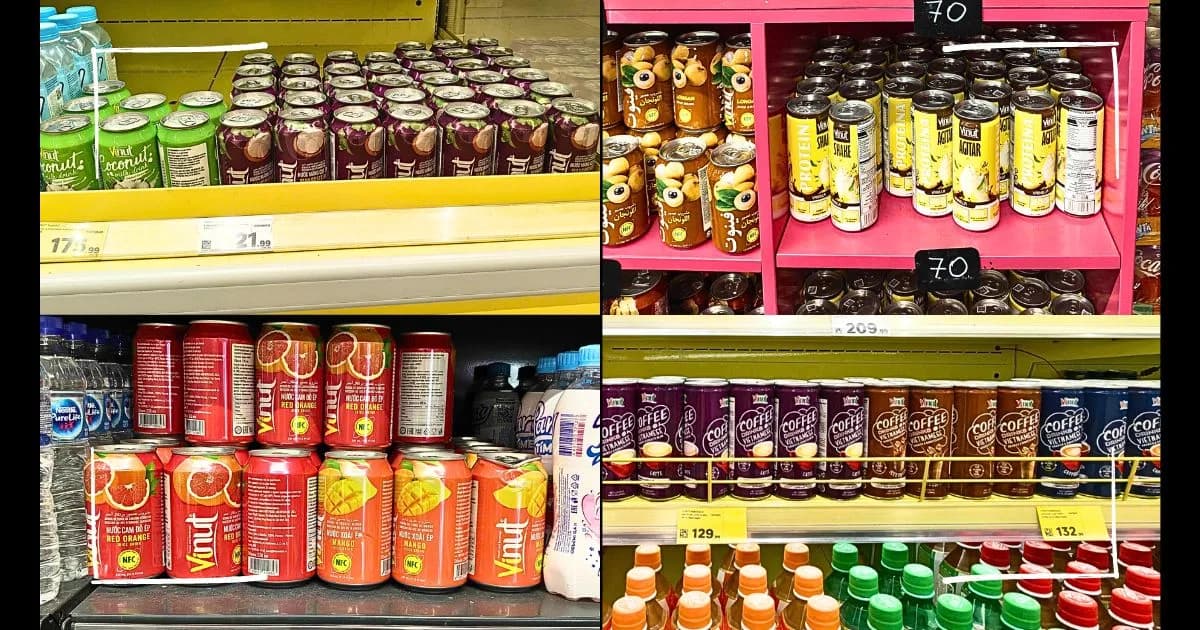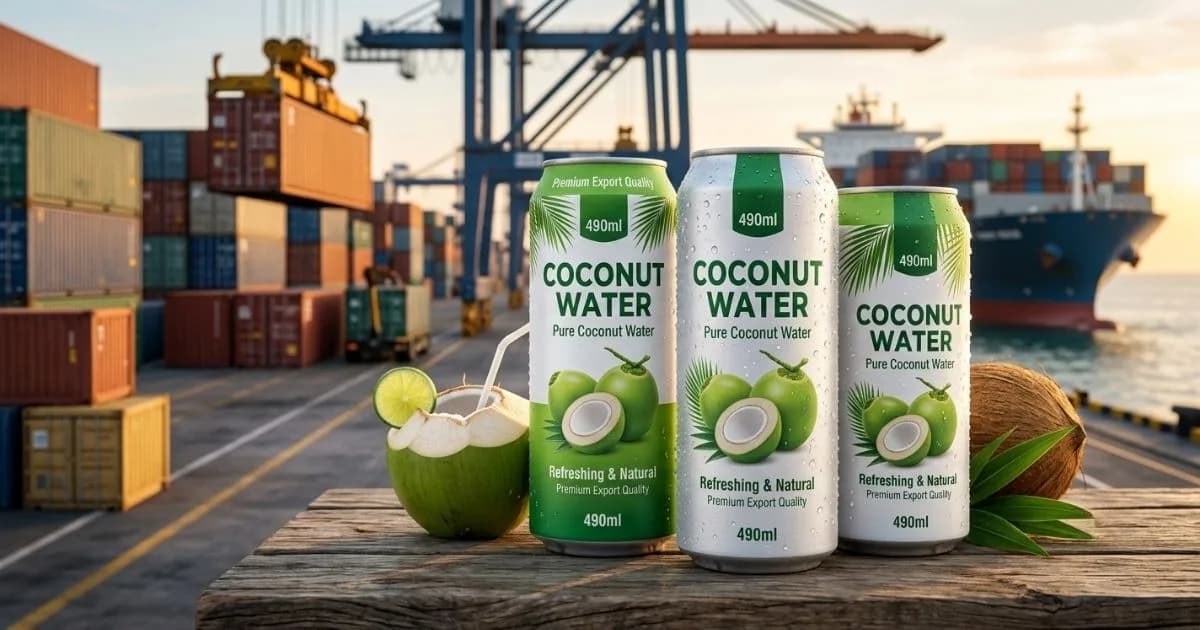

A market-specific SKU mix should be built around the needs of a particular market rather than around every product a supplier can manufacture. Beverage importers and distributors should evaluate target consumers, sales channels, category opportunities, consumption occasions, flavor familiarity, packaging format, pack size, price positioning, MOQ and inventory exposure before deciding which products belong in the assortment.
A practical sequence is:
Core demand first → Supporting choices second → Discovery products last
The key question for every product is simple:
Why should this SKU exist in this specific market?
If there is no clear consumer, channel or commercial reason, the SKU may not yet deserve a place in the range.
1. What Is a Market-Specific SKU Mix?
A market-specific SKU mix is the selected group of product variations that an importer or distributor plans to sell in a defined country, region or sales environment.
A SKU may differ according to:
- beverage category
- flavor
- formulation
- packaging material
- pack size
- product claims
- sales channel
- price segment
For example, an original coconut water in a 330 mL can and the same beverage in a larger PET bottle are different SKUs. Even if the formulation is similar, they may serve different occasions, price points, channels and consumer needs.
This is why SKU planning is not simply flavor selection.
A manufacturer may offer 10 flavors, three pack sizes and two packaging formats. That creates 60 possible combinations. However, a new market may only justify a small number of them.
The purpose of beverage assortment planning is therefore not to maximize the number of available products. It is to select the combinations that have the strongest market and commercial logic.

2. Why the Same SKU Mix Should Not Be Copied Across Markets
A global beverage portfolio can exist, but market-entry assortments should be locally justified.
Different markets may vary in:
- consumer familiarity
- flavor preferences
- retail structure
- purchasing behavior
- pricing
- packaging expectations
- regulations
- distribution systems
- cultural familiarity
- consumption occasions
A beverage range that performs well in one country should therefore not automatically be copied into another.
The same applies to supplier best-sellers.
A supplier may tell an importer that certain flavors or formats are among its most frequently ordered products. This information can be useful, but supplier sales data does not automatically prove that those products fit another market.
Instead, importers should evaluate each SKU against the conditions of the target market.
3. Start With the Market, Not the Supplier Catalogue
One of the most common mistakes in importer SKU planning is starting with the supplier's catalogue.
The process often begins with questions such as:
Which flavors are available?
Which formats can the factory produce?
Which products are the supplier's best-sellers?
These questions can be useful later, but they should not define the starting point.
The first step should be understanding the market.
Relevant research may include:
- beverage category structure
- retail channels
- shopper behavior
- flavor familiarity
- common packaging formats
- price tiers
- competitor assortment
- purchasing occasions
Only after these elements are understood should the importer map the supplier's portfolio against the market opportunity.
3.1. Define the Target Consumer
Every SKU should have a reasonably clear expected buyer.
The importer does not necessarily need highly detailed demographic data, especially when reliable information is limited. However, the team should understand enough to answer:
Who is expected to buy this SKU and why?
Useful considerations include:
- primary consumer
- purchase motivation
- consumption context
- flavor familiarity
- price sensitivity
- level of product education required
A product targeting an experienced category buyer may be able to support more differentiation.
A product entering an unfamiliar category may need clearer packaging, simpler flavor communication or a stronger hero SKU.
If the target consumer is simply defined as “everyone,” the positioning is probably too broad to guide SKU selection effectively.
3.2. Define the Sales Channel
SKU requirements can differ significantly by channel.
A beverage range may be sold through:
- supermarkets
- convenience stores
- ethnic retail
- specialty stores
- foodservice
- e-commerce
- club retail
A convenience channel may require a tighter assortment with fast product recognition and portable single-serve formats.
An e-commerce channel may be able to support deeper assortment, multipacks or variety packs.
These examples are not universal rules. Their purpose is to show that the channel can influence how many SKUs are practical and which formats deserve priority.
The importer should ask:
Where will this SKU be sold, and why is it suitable for that channel?
3.3. Identify the Consumption Occasion
Consumption occasion is another important filter.
A beverage may be intended for:
- breakfast
- meals
- grab-and-go use
- workplace consumption
- travel
- household use
- post-activity refreshment
- social occasions
Two SKUs may look different on paper but still serve the same occasion.
If two products target the same consumer, flavor profile, price point, channel and occasion, the second SKU may add complexity without generating meaningful incremental demand.
A useful question is:
What occasion does this SKU serve that another SKU does not?
4. Define the Role of Each SKU in the Assortment
Not every SKU should be treated equally.
A structured beverage SKU mix can assign different roles to different products.
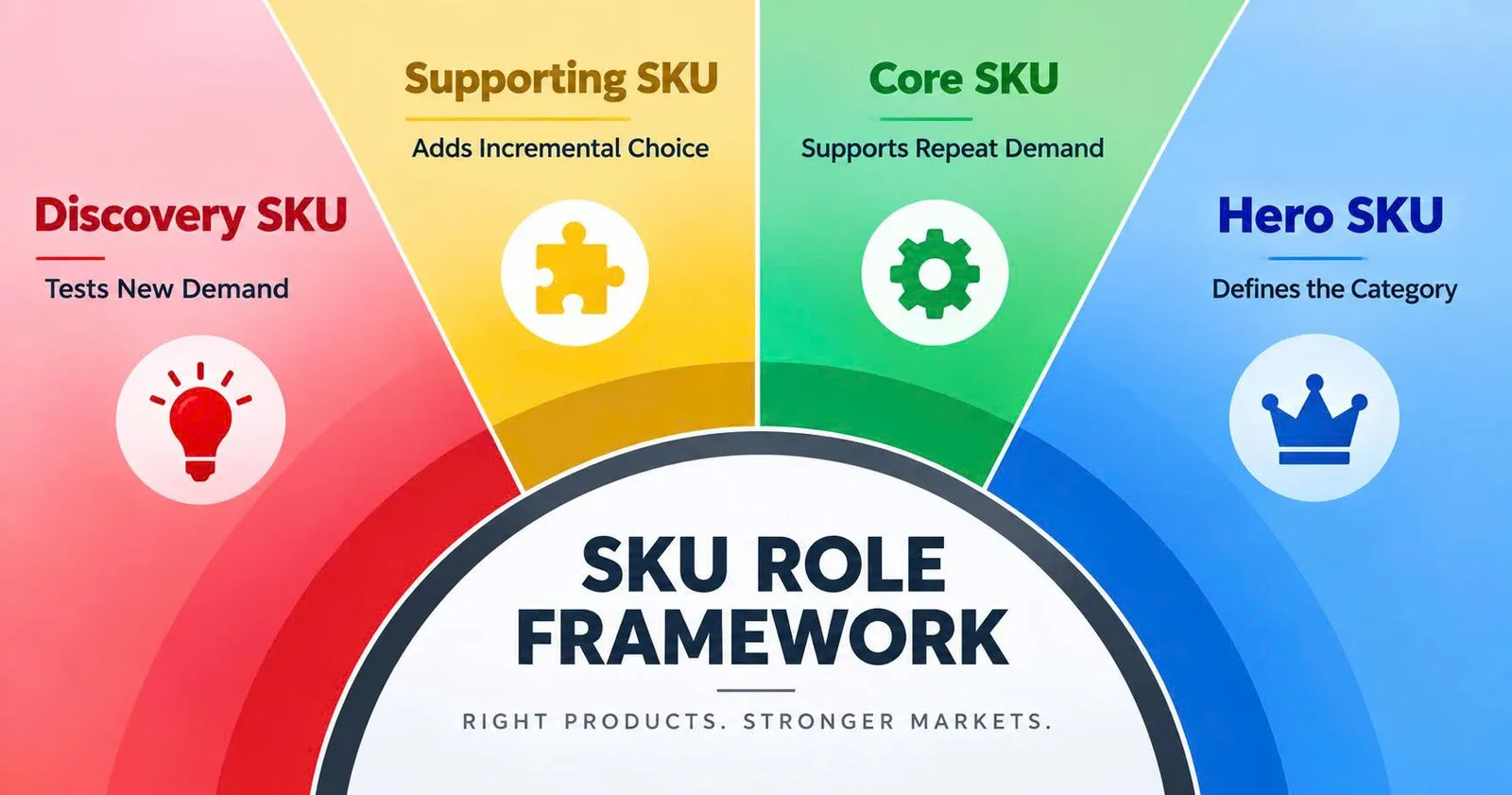
A practical framework includes:
Hero SKU → Core SKU → Supporting SKU → Discovery SKU
4.1. Hero SKU
The hero SKU is the clearest entry point into the category.
It should have:
- clear product identity
- understandable positioning
- suitable packaging
- appropriate price position
- strong channel fit
The hero is not necessarily the cheapest, newest or most unusual SKU.
A useful question is:
If the market initially accepted only one SKU, which product would explain the category most clearly?
4.2. Core SKU
Core SKUs support repeatable demand around the hero product.
They should complement the hero rather than simply duplicate it.
A strong core SKU should have:
- understandable positioning
- channel relevance
- clear flavor or product distinction
reasonable inventory potential
Core status should be supported by market and commercial logic.
4.3. Supporting SKU
Supporting SKUs should extend the range in a meaningful way.
They may introduce:
- a different flavor
- another consumer occasion
- another packaging format
- another channel
- another price point
The explanation:
“It gives consumers more choice.”
is usually not enough.
A better question is:
What additional demand does this SKU capture?
If there is no clear incremental role, the product may only be creating overlap.
4.4. Discovery SKU
Discovery SKUs can be useful for testing differentiated demand.
They may include:
- unusual flavors
- emerging categories
- premium concepts
- new formats
- less familiar formulations
However, discovery products should normally be managed as tests rather than automatically treated as permanent core items.
Before launch, the importer should define:
- what is being tested
- where it will be tested
- expected volume
- review period
- success criteria
- what happens if performance is weak
This turns a speculative SKU into a structured market-learning tool.
5. Build the Right Beverage Flavor Assortment
Flavor is one of the most visible parts of beverage SKU selection, but it should not be treated as a standalone decision.
5.1. Balance Flavor Familiarity and Differentiation
A strong assortment often needs to balance familiarity with differentiation.
A simple framework is:
Familiar → Relevant → Distinctive
An assortment built entirely around familiar flavors may struggle to create differentiation.
An assortment made entirely of unfamiliar flavors may create excessive education requirements.
The correct balance depends on the market.
Importers can review:
- retail assortment
- menu presence
- product launches
- search interest
- existing category familiarity
- buyer feedback
- distributor feedback
The goal is not to identify a universally “best” flavor.
The goal is to understand which flavors have a defensible role in the target market.
5.2. Avoid Launching Too Many Similar Flavors
A broader flavor range is not automatically a stronger range.
Consider a hypothetical assortment containing:
- Mango
- Mango-Passion Fruit
- Mango-Pineapple
- Tropical Mango
These products may appear different, but if they target the same consumer, occasion and price point, they may create too much overlap.
Importers should assess:
- taste differentiation
- visual differentiation
- consumer target
- SKU role
- channel role
Too many similar products can lead to buyer confusion, shelf cannibalization and fragmented inventory.
Each additional flavor should contribute something that the existing range does not already provide.
6. Packaging Format and Pack Size Are Part of SKU Mix
A SKU is not defined by flavor alone.
Packaging and size can change the role of the product significantly.
6.1. Match Packaging Format to the Sales Channel
A beverage may be available in:
- cans
- PET bottles
- glass bottles
- other suitable packaging formats
Importers should not launch multiple formats simply because the supplier can manufacture them.
Instead, ask:
- Which channel needs this format?
- Which occasion does it serve?
- Does the format support the target price?
- Does it create incremental demand?
- Is it commercially practical?
Packaging format should have a clear channel or consumer role.
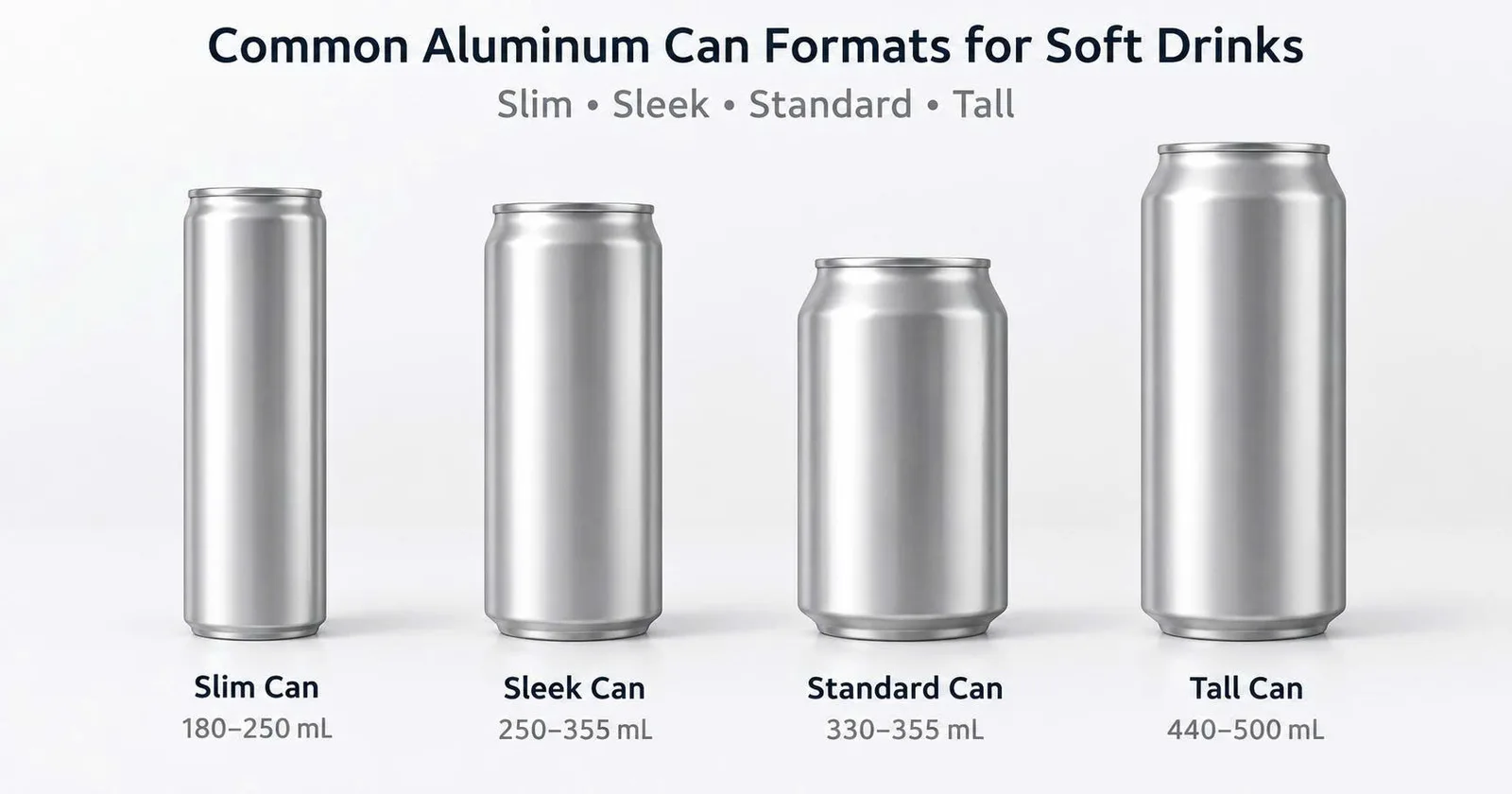
6.2. Use Pack Size as a Strategic SKU Variable
Pack size can affect:
- consumption volume
- unit price
- portability
- value perception
- shelf footprint
- case weight
- retailer fit
The same flavor offered in several sizes can quickly create multiple SKUs.
This means size expansion should be treated with the same discipline as flavor expansion.
6.3. Avoid Duplicate Size Roles
If several nearby pack sizes serve essentially the same occasion, consumer and price segment, an importer should evaluate whether all of them are necessary.
The purpose is not to declare certain sizes interchangeable.
It is to make sure that every size has a distinct role.
A useful principle is:
Flavor × Format × Size = SKU architecture
7. Use Price Architecture to Clarify SKU Roles
Price is another important layer of assortment design.
When appropriate, a portfolio may include:
Entry → Core → Premium
However, this should not become a rigid structure.
The objective is to make sure each price point has a clear purpose.
Importers should avoid:
- too many products at the same price
- unexplained price differences
premium SKUs without meaningful differentiation
7.1. Review SKU Economics Individually
- Two SKUs within the same category may have different:
- landed cost
- freight efficiency
- MOQ
- packaging cost
- target retail price
- As a result, profitability should not be assessed only at category level.
- An otherwise attractive category may contain individual SKUs that create weak margins or excessive inventory exposure.
- Each product should therefore be reviewed individually.
8. MOQ Can Limit Assortment Breadth
Minimum order quantity is one of the most important constraints in beverage SKU planning.
If each product has its own MOQ, adding more SKUs can rapidly increase inventory exposure.
A simple way to think about the risk is:
Number of SKUs × MOQ per SKU × Landed Cost
Five products may mean five separate inventory commitments.
This is especially important during market entry, when demand is still uncertain.
Importers should also determine what actually drives MOQ.
In some projects, the limitation may come from:
- printed cans
- labels
- cartons
- bottles
- caps
- packaging components
rather than from the beverage production line itself.
Understanding the real MOQ driver can materially affect assortment decisions.
8.1. Mixed-SKU Containers Should Support Strategy
Mixed-SKU container loading can sometimes allow an importer to test more products while reducing exposure to an individual SKU.
However, it can also create:
- more complex loading
- more warehouse handling
- more forecasting difficulty
- greater inventory complexity
Mixed loading is therefore not automatically the better strategy.
More importantly, importers should not add another flavor simply because a container has unused space.
The correct process is:
Select justified SKUs → Optimize container loading
not:
Find extra container space → Add unnecessary SKUs
Container efficiency should support SKU strategy, not define it.
9. Review Shelf Life and Inventory Risk by SKU
As assortment breadth increases, volume per SKU may fall.
Lower volume can mean slower turnover and greater expiry exposure.
Shelf-life planning should consider:
- total shelf life
- production timing
- transit
- customs clearance
- warehousing
- retailer inventory
- sales velocity
Importers should review inventory at SKU level rather than only at total portfolio level.
Useful indicators include:
- units in stock
- inventory value
- weeks or months of cover
- remaining shelf life
- sales velocity
A portfolio may appear healthy overall while one product accumulates excess inventory.
SKU breadth must therefore match realistic stock rotation.
10. Consider Compliance and Supplier Capability
Every additional SKU can create more commercial opportunity, but it can also increase compliance and operational work.
Depending on the product and target market, a new SKU may require additional:
- label review
- ingredient review
- nutrition information
- claim verification
- documentation
Certifications should also be checked carefully.
A certification may apply only to particular products, facilities or production scopes.
Buyers should therefore map:
SKU → Facility → Certification
Supplier capability can also limit the ideal assortment.
An importer may want several flavors across multiple formats, but the manufacturer may only produce some combinations efficiently.
Important considerations include:
- formulation capability
- packaging capability
- production scheduling
- minimum run
- changeover
- lead time
- quality consistency
A strong SKU strategy must be commercially attractive and operationally feasible.
11. Use Competitor and Market Data Carefully
Competitor assortment can provide useful insight into category structure.
Importers can analyze:
- core flavors
- packaging formats
- pack sizes
- price tiers
- channel presence
- assortment depth
However, competitor research should not become competitor copying.
The right question is:
What does the current assortment tell us about the category?
The wrong question is:
Which products should we copy?
White space also needs careful interpretation.
If a flavor or format is missing from the shelf, that does not automatically mean there is an opportunity.
Its absence may reflect:
- limited demand
- low familiarity
- weak economics
- regulatory difficulty
- previous unsuccessful launches
Importers should combine several signals before making a decision.
Buyer feedback, trade-show interest, retailer comments, search behavior and digital data can all contribute, but they should be treated as inputs rather than proof on their own.
After launch, actual sales data becomes more important than initial assumptions.
12. Launch the SKU Mix in Phases
The first assortment does not need to be perfect.
It should generate enough information to understand:
- category fit
- flavor response
- channel performance
- price acceptance
- packaging performance
while keeping inventory exposure manageable.
A phased launch can be structured as follows.
Phase 1 – Core Launch
Begin with the hero SKU and selected core products.
Phase 2 – Market Validation
Track:
- sales
- buyer feedback
- inventory movement
- repeat orders
- channel performance
Phase 3 – Controlled Expansion
Add supporting or discovery SKUs when evidence supports the decision.
Phase 4 – Rationalization
Review the range and reduce or remove products that no longer have a strong role.
SKU strategy should therefore follow a continuous cycle:
Research → Select → Launch → Measure → Expand → Rationalize
13. Build a Market-Specific SKU Selection Matrix
A decision matrix can help importers evaluate products consistently.
| Evaluation Area | Key Question |
|---|---|
| Market | Is there evidence of category relevance? |
| Consumer | Who is expected to buy this SKU? |
| Channel | Where will it be sold? |
| Occasion | When and why will it be consumed? |
| SKU Role | Is it hero, core, supporting or discovery? |
| Flavor | Is it familiar, differentiated or experimental? |
| Format | Does the packaging fit the channel? |
| Size | Does the pack size fit the occasion? |
| Price | Does it serve a clear price role? |
| MOQ | Is inventory exposure manageable? |
| Shelf Life | Can the stock rotate safely? |
| Supplier | Can it be produced consistently? |
| Compliance | Is market readiness manageable? |
| Evidence | What data supports the decision? |
This matrix turns beverage SKU selection from a subjective discussion into a more structured commercial decision.
14. Use a SKU Scorecard With Knockout Criteria
Importers may also use an internal scoring system.
| Criteria | Score |
|---|---|
| Market Relevance | 0–5 |
| Channel Fit | 0–5 |
| Consumer Clarity | 0–5 |
| Flavor Relevance | 0–5 |
| Packaging Fit | 0–5 |
| Price Fit | 0–5 |
| MOQ Feasibility | 0–5 |
| Inventory Risk | 0–5 |
| Supplier Readiness | 0–5 |
| Evidence Strength | 0–5 |
This is a decision-support framework, not an industry standard.
Scoring should also not override critical problems.
A commercially attractive SKU may still need to be rejected if it has a major regulatory, certification, shelf-life, packaging or MOQ problem.
For this reason, importers should establish knockout criteria before using a scorecard.
15. Common SKU Mix Planning Mistakes
Importers should avoid several common mistakes:
- Starting with the supplier catalogue.
- Launching too many flavors.
- Failing to define a hero SKU.
- Treating every SKU equally.
- Copying another country's assortment.
- Using global trends as proof of local demand.
- Ignoring channel differences.
- Ignoring packaging format.
- Ignoring pack size.
- Underestimating MOQ.
- Adding SKUs simply to fill container space.
- Ignoring shelf life.
- Launching products without clear SKU roles.
- Keeping slow-moving products indefinitely.
- Chasing novelty without enough commercial evidence.
A disciplined assortment strategy needs rules for removing products as well as rules for adding them.
16. Suggested Market-Specific SKU Planning Process
Importers can use the following sequence:
- Define the country or target region.
- Identify priority sales channels.
- Define target consumers.
- Identify major consumption occasions.
- Select priority beverage categories.
- Analyze existing market assortment.
- Identify potential category gaps.
- Assign SKU roles.
- Build the flavor architecture.
- Select packaging formats and sizes.
- Review price positioning.
- Review MOQ and container constraints.
- Review shelf life and inventory risk.
- Verify compliance and supplier feasibility.
- Launch, measure and adjust.
The goal is not simply to choose products.
It is to design a market-specific assortment.
17. Key Takeaways
- Market-specific SKU planning should begin with market needs rather than the supplier catalogue.
- Every product should have a clear consumer, channel or commercial role.
- Hero, core, supporting and discovery SKUs should be treated differently.
- Flavor familiarity should be balanced with differentiation.
- Packaging format and pack size are part of SKU strategy.
- MOQ can materially limit the number of products a market can support.
- Container efficiency should support assortment strategy rather than determine it.
- Shelf life and inventory rotation should be reviewed at SKU level.
- The first launch should prioritize learning, followed by expansion or rationalization based on evidence.
18. Frequently Asked Questions
18.1 What is a market-specific SKU mix?
A market-specific SKU mix is a beverage assortment selected for a defined market, consumer and sales channel. It may include different flavors, formulations, packaging formats, pack sizes and price positions.
18.2 How many SKUs should a beverage importer launch in a new market?
There is no universal number. The appropriate assortment depends on market evidence, category, channel, MOQ, shelf life, inventory capacity and supplier feasibility.
18.3 How should importers choose beverage flavors?
Flavor selection should consider local familiarity, category structure, competitor assortment, buyer feedback, differentiation and available market evidence.
18.4 Should the same beverage SKU mix be used in every country?
No single assortment should automatically be copied across markets. Consumer familiarity, pricing, channels, packaging expectations and category maturity may differ significantly.
18.5 What is a hero SKU?
A hero SKU is the clearest entry point into a beverage category or range. It should communicate the product proposition clearly and fit the intended consumer, channel and price position.
18.6 How does MOQ affect SKU selection?
Each additional SKU may create another minimum inventory commitment. Importers should therefore evaluate MOQ alongside landed cost, expected turnover and shelf life.
18.7 Should an importer add more flavors when container space is available?
Not simply to fill unused space. A SKU should first have a clear commercial role. Container planning should then be optimized around the justified assortment.
18.8 When should an importer remove a SKU?
A SKU should be reviewed when sales performance, inventory movement, profitability, strategic role or market evidence no longer justify keeping it in the range.
Building a market-specific SKU mix means selecting products that serve a clear consumer, channel and commercial role rather than simply expanding assortment size. Importers should evaluate flavor, packaging, price, MOQ, shelf life and inventory risk alongside market evidence before launch. After launch, actual sales, reorder behavior and stock performance should guide further expansion or rationalization. By managing SKUs as an evolving market-specific assortment, importers and distributors can make more disciplined decisions while keeping commercial and operational risks under control. |