Quick Answer
Packaging Formats for Coconut Beverages in Export Markets
- Choosing the right packaging format for coconut beverages is not as simple as selecting a container. Many products with strong taste and quality fail to perform in international markets due to poor packaging decisions.
- For importers and distributors, the wrong format can reduce shelf appeal, increase shipping costs, or limit access to key retail channels. On the other hand, the right packaging can enhance product positioning, improve logistics efficiency, and support long-term growth.
- This guide provides a practical breakdown of packaging formats for coconut beverages, helping buyers evaluate options based on real market conditions rather than assumptions.
I/ Introduction
Packaging plays a critical role in the success of coconut beverages in export markets. It influences not only how a product looks on the shelf but also how it is transported, stored, and consumed.
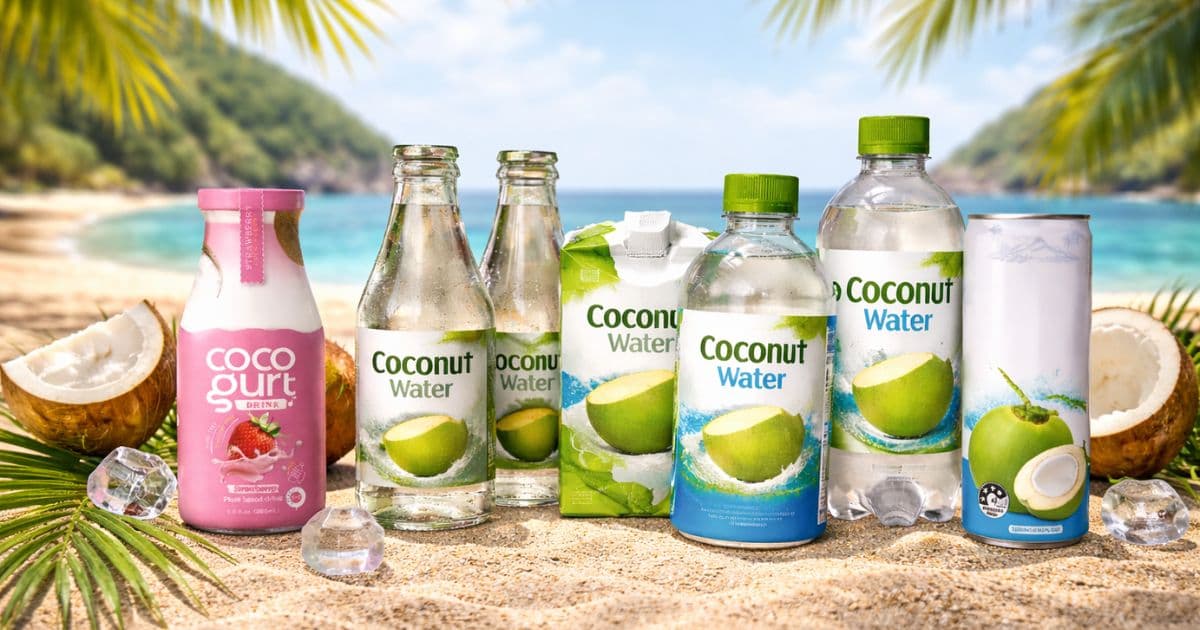
From cans and PET bottles to aseptic cartons and glass bottles, each format serves a different purpose. Understanding these differences allows buyers to align packaging choices with market expectations and commercial strategy.
II/ Packaging is a market-fit decision, not only a material choice
Packaging should always be evaluated in context.
A format that works well in one market may underperform in another due to differences in:
- - Retail structure
- - Consumer habits
- - Climate conditions
- - Price positioning
For example, a convenience-driven market may favor portable formats, while a family-oriented retail environment may require larger pack sizes.
The key is to match packaging with:
- - Target channel
- - Usage occasion
- - Price architecture
1. Cans are strong for refreshment-led coconut beverage positioning
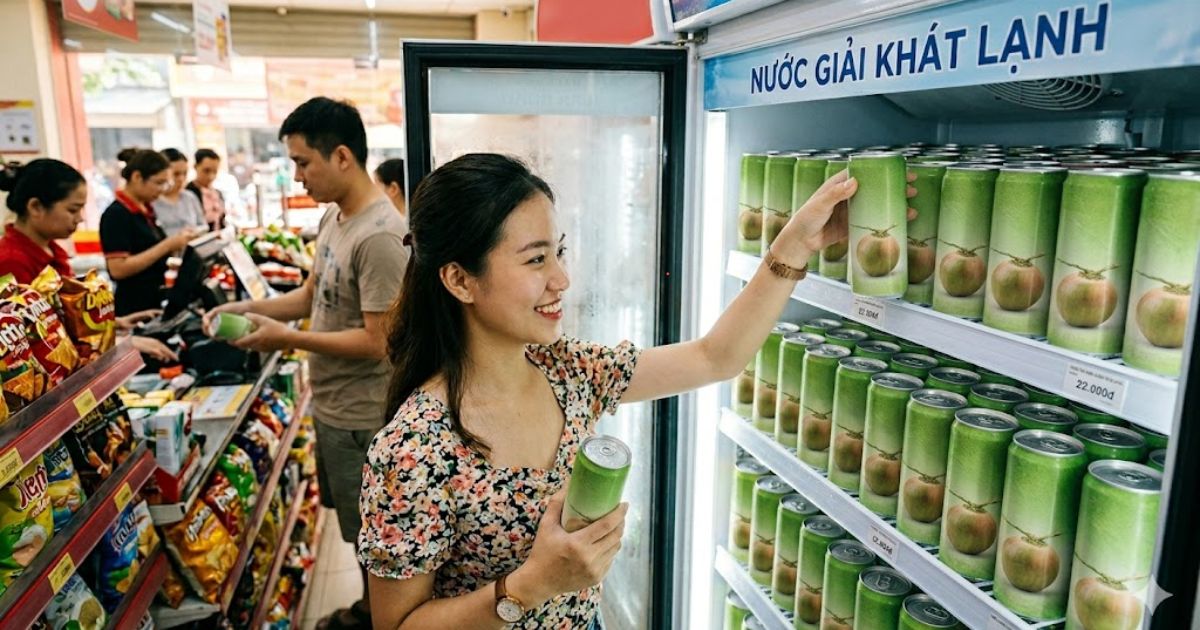
Cans are widely used for ready-to-drink coconut beverages, especially those positioned as refreshing drinks.
They are particularly effective in:
- - Convenience stores
- - Supermarkets
- - Travel retail
- - Vending machines
Key advantages include:
- - Lightweight and easy to transport
- - Fast chilling capability
- - Modern and clean appearance
In hot-climate markets, cans are often preferred because they support quick consumption and strong refreshment appeal.
2. PET bottles support convenience and visible product appeal
PET bottles are a flexible option for many coconut beverage categories.
They are ideal for:
- - On-the-go consumption
- - Resealable usage
- - Visual product display
The transparency of PET bottles allows consumers to see the product inside, which can enhance trust and appeal—especially for coconut drinks with pulp.
However, buyers should also consider:
- - Storage conditions
- - Shelf stability
- - Transport efficiency
3. Aseptic cartons fit shelf-stable and premium retail strategies
Aseptic cartons are commonly used in export programs where shelf stability is essential.
They offer:
- - Long shelf life without refrigeration
- - Clean and structured design
- - Efficient stacking and transport
Cartons are well-suited for:
- - Modern retail chains
- - Family consumption
- - Premium product positioning
They also support multiple sizes, from single-serve to family packs.
4. Glass bottles may support premium or specialty positioning
Glass bottles are often associated with premium quality and refined presentation.
They are typically used in:
- - Foodservice environments
- - Specialty stores
- - Gift-oriented products
Benefits include:
- - High perceived value
- - Strong visual clarity
- - Recyclability
However, they come with trade-offs:
- - Higher weight
- - Breakage risk
- - Increased shipping cost
III/ Packaging size matters as much as packaging type
Choosing the right size is just as important as selecting the format.
Common size strategies include:
- - Single-serve (250ml–330ml): convenience and impulse purchase
- - Medium size (500ml): balanced consumption
- - Family size (1L+): sharing and home use
Buyers should align size with:
- - Consumer behavior
- - Shelf space
- - Distributor strategy
IV/ Logistics and shelf efficiency should be reviewed early
Packaging decisions directly impact logistics performance.
Key factors include:
- - Pallet configuration
- - Container loading efficiency
- - Handling convenience
- - Warehouse storage
For example:
- - Cans and cartons are easier to stack
- - Glass requires more careful handling
- - PET offers flexibility but may require more space
Efficient packaging reduces landed cost and improves operational flow.
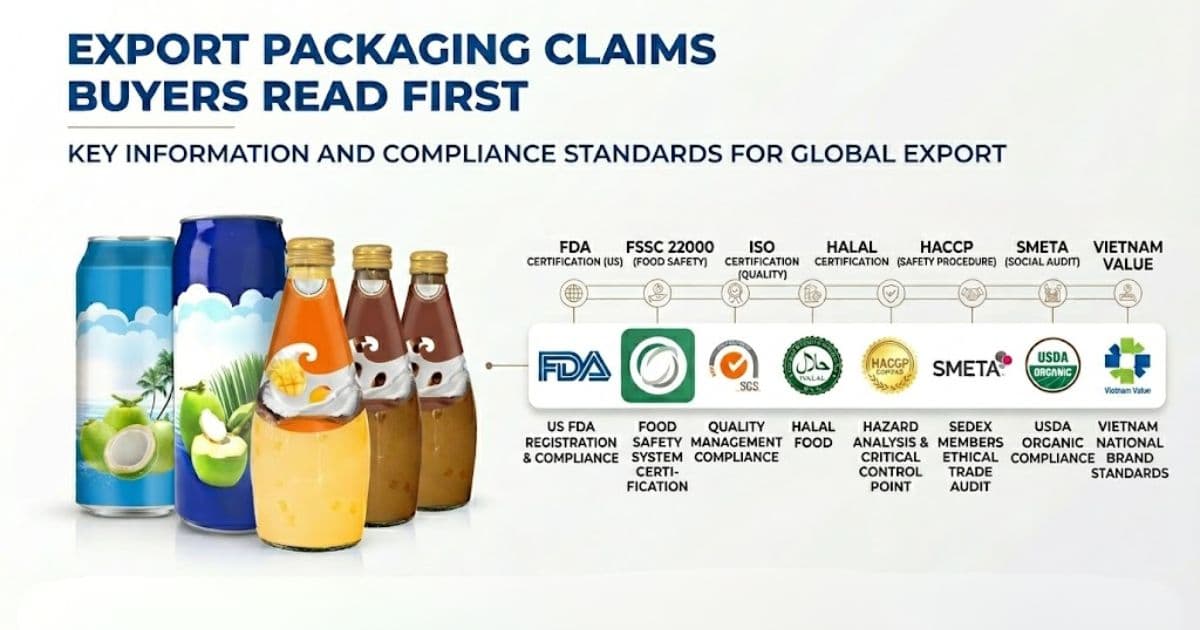
V/ Labeling and compliance must match export market needs
Even the best packaging format can fail if labeling is not compliant.
Buyers should check:
- - Language requirements
- - Nutrition information
- - Barcode placement
- - Regulatory claims
Packaging must provide enough space for clear and accurate labeling to meet market standards.
VI/ Different markets may prefer different packaging logic
There is no universal packaging solution.
Preferences vary depending on:
- - Region
- - Retail maturity
- - Climate
- - Consumer habits
For example:
- - Hot markets may prefer cans
- - Premium markets may favor glass
- - Family-oriented markets may choose cartons
Understanding local behavior is critical for success.
VIII/ Conclusion
- Selecting the right packaging format for coconut beverages requires balancing multiple factors, including consumer appeal, logistics efficiency, and market positioning.
- There is no single best solution—only the most suitable one for each market and channel.
If you are looking to expand your coconut beverage portfolio, exploring different packaging formats is a critical step toward long-term success.
👉 Contact VINUT today to explore export-ready coconut beverage solutions or request the latest product catalog.
Frequently Asked Questions
Quick answers about this topic
VINUT Team
Beverage Industry Analyst
The VINUT editorial team brings 15+ years of expertise in Vietnamese beverage manufacturing, global export markets, and B2B industry trends across APAC, EU, and Middle East regions.